Sunday, November 06, 2011

Seventh Commandment Sermon--Be Faithful


Be Faithful

As you turn our Bible passage, I think it would helpful to say something about the Ten Commandments as a whole. One of the criticisms that some people have about these commandments is that there are, they believe, worse things that someone could do than what is mentioned in the Ten Commandments. For example, many believe that forms of sexual assault are more grievous than adultery. Or they assert that not taking a day off is not nearly as much of a sin as abusing your wife and children.


And, if the good Lord left me to rank sins, I would probably have to agree with them about how they are ranked.


The thing is though, if we are looking at the Ten Commandments, we are not looking at the Top Ten worst sins. What are looking at, when we look at the Ten Commandments are commands that are basic in our life together. Instead of being exceptional or extreme, they are foundational and spiritually formational.


The Ten Commandments lay some basic stakes and build some basic fences. They create some basic moral boundaries for the people of God that lay the foundation for what they are about, who they are, and who they are called to be. Anyway…to our passage we are studying. God’s word says this.
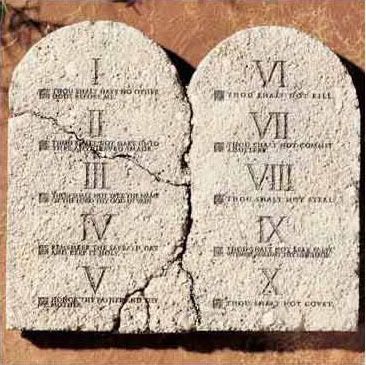
 

1 And God spoke all these words, saying:

       2“I am the LORD your God, who brought you out of the land of Egypt, out of the house of bondage.

       3“You shall have no other gods before Me.

       4“You shall not make for yourself a carved image—any likeness of anything that is in heaven above, or that is in the earth beneath, or that is in the water under the earth; 5 you shall not bow down to them nor serve them. For I, the LORD your God, am a jealous God, visiting the iniquity of the fathers upon the children to the third and fourth generations of those who hate Me, 6 but showing mercy to thousands, to those who love Me and keep My commandments.

       7“You shall not take the name of the LORD your God in vain, for the LORD will not hold him guiltless who takes His name in vain.

       8“ Remember the Sabbath day, to keep it holy. 9 Six days you shall labor and do all your work, 10 but the seventh day is the Sabbath of the LORD your God. In it you shall do no work: you, nor your son, nor your daughter, nor your male servant, nor your female servant, nor your cattle, nor your stranger who is within your gates. 11 For in six days the LORD made the heavens and the earth, the sea, and all that is in them, and rested the seventh day. Therefore the LORD blessed the Sabbath day and hallowed it.

       12“ Honor your father and your mother, that your days may be long upon the land which the LORD your God is giving you.

       13“You shall not murder.

       14“You shall not commit adultery.

       15“You shall not steal.

       16“You shall not bear false witness against your neighbor.

       17“You shall not covet your neighbor’s house; you shall not covet your neighbor’s wife, nor his male servant, nor his female servant, nor his ox, nor his donkey, nor anything that is your neighbor’s.”



Judge Roy Moore of Etowah, County Alabama was sued by the ACLU and the Alabama Free Thought Association in 1995 for displaying the Ten Commandments on the Courtroom wall. A Montgomery County judge ruled that the judge must take down the display from his wall. The Supreme Court then issued a stay of that removal, and then the Governor issued a decree that the Ten Commandments would be able to stay up, and would be defended by the National Guard of Alabama if necessary.


At the same time one person wisely uttered, “Don’t worry about the Alabama legislature hanging up that display of the Ten Commandments there. Until they figure out a way to do something about that thing about adultery, those senators and representatives will want to keep those commandments in court, and as far away from them as possible.”


I have a pastor friend who used to go around telling a joke that never really took off. He said he had found proof that God must be a female. He would receive odd looks. “How did you do that?” someone would ask.


Because the Bible says, “Thou shalt not commit adultery,” he would respond. Half the people would moan. The other half would raise a scolding eyebrow and shake their heads, and then the conversation would awkwardly transition to the next subject.

 

The truth is, that although the command, “You shall not commit adultery” is pretty straight forward, it is not heeded as often most of us would hope it would be. Studies and surveys are all over the place, but the most reliable research tells us that somewhere around a little over 1/3 of men commit adultery at one point in their lives, and somewhere near 1/4 of women do the same. Which is not so many people that transgressors can say, “Everyone else is doing it”, but enough people that most of us might be alarmed.


There are a lot of people who seem to view marriages in our society like working their way through a baseball farm system. You know, you start with some minor league mate, then after a few years you find a way to marry up from single A to Triple A. Then eventually, the plan is with these people, to hit the big leagues with someone who is hot, kind, and well-financed, and stay with them for as long as you can last.


Martin Luther said with the previous commandment—thou shalt not kill—we are commanded to learn how to live next to our neighbor. With this command we are commanded to learn how to live with the one that lies next to us in bed. (That Luther was a pretty witty and earthy fellow)


The truth is, marriage is not an easy calling. It is difficult to commit your life to someone, to raise children with them, to share—your finances, your heart, your future, your life, and your bed with someone. It takes a lot of effort and a lot of God’s grace to have a strong, faithful marriage.


I think a lot of people struggle with marriage, and being faithful within the context of marriage because they do not understand these truths: that marriage is not easy, and that marriage is a life’s calling given to us by God.


Marriage is not easy. And it is not always the big things that will drive you apart. Sometimes it is the little things that will just drive you nutty. For my wife, I am sure there are many of these things that she puts up with by suffering silently. But, when she has the baby bundled up and is ready to head out the door and I cannot find my keys or my wallet, I know it tries her patience. And as I have shared with some of you, when I drop ice on the floor and she steps on that piece of ice 20 minutes later because I did not pick it up I can hear her groan from the living room.


Marriage is not easy, for the most part, though, because it forces us to be less and less selfish. In other words, a good marriage forces us to grow as people in ways that we might not be willing to do otherwise. Don’t take my word for it. Listen to God’s Word, in Paul’s Epistle to the Ephesians.


21 submitting to one another in the fear of God.22 Wives, submit to your own husbands, as to the Lord. 23 For the husband is head of the wife, as also Christ is head of the church; and He is the Savior of the body. 24 Therefore, just as the church is subject to Christ, so let the wives be to their own husbands in everything. 25 Husbands, love your wives, just as Christ also loved the church and gave Himself for her, 26 that He might sanctify and cleanse her with the washing of water by the word, 27 that He might present her to Himself a glorious church, not having spot or wrinkle or any such thing, but that she should be holy and without blemish. 28 So husbands ought to love their own wives as their own bodies; he who loves his wife loves himself. 29 For no one ever hated his own flesh, but nourishes and cherishes it, just as the Lord does the church. 30 For we are members of His body,[b] of His flesh and of His bones. 31 “For this reason a man shall leave his father and mother and be joined to his wife, and the two shall become one flesh.”[c] 32 This is a great mystery, but I speak concerning Christ and the church. 33 Nevertheless let each one of you in particular so love his own wife as himself, and let the wife see that she respects her husband.


Submitting is not easy! It means to surrender your wants and desires for the betterment and benefit of another. Submitting means choosing not to get what you want. And the Scripture says husbands and wives are to submit to one another. It goes on say that husband ought to give of himself for his wife in the same way Christ gave of himself for the church. That means self-sacrifically. And truly honoring and respecting one’s husband is not easy work—especially when it means you often need to do the thankless things to support your family that nobody ever appreciates.


You see, when we don’t remember that marriage is work, and it is difficult at times, then what we do is have this worldview that marriage is about making ME happy, ME being fulfilled, ME feeling good, ME getting the life that I want. We read romance novels or watch movies that promise happily ever after, and when we don’t experience our “ideal” relationship in marriage we look outside our marriage to fulfill our relational and emotional needs as well as our physical urges.


Let’s face it. There are times when most of us guys get tunnel vision. And we get involved in all our work and our little projects. And our wives can talk about their concerns over and over again, and we can just blow them off. And then you gals can easily get to the point where you feel alone and taken for granted. If you haven’t found ways to do the hard work that marriage requires at these times, it can be easy to be tempted to stray to someone who treats you like you are special and gives you attention.


And let’s face it. Those honeymoon years where you can lie in bed together all day can quickly move into times in our marriage when we have to try fit in our moments of marital bliss into narrow windows of time when we are not working, the children are asleep or out of the house, the dog isn’t barking at the bedroom door, and company has not dropped by. Even then, when you are more likely to smell like diaper cream than Chanel No. 5, and you still have breathe that smells like Ruffles and onion dip, that it can be tempting to have a wandering eye, and to forget that marriage takes effort, and things won’t be like this forever.


And it is being faithful to one another in moments like these and others like them, that we grow up. It is in this kind of life together with a person we have made promises to that we learn what it is like to be faithful, and to have someone be faithful to us. We learn what it is like to see ourselves with our many faults and shortcomings, and then look next to us and see someone who continues to love and care for us in spite of them. And we can look next to us and see someone who we have grown up with and grown old with, and know that you may not have gotten rich or done anything extraordinary, but you have created something beautiful simply by staying with one another, raising kids together, sharing life together, and truly becoming the “one flesh” that the Bible describes marriage as.


And when you commit adultery, you scar that beauty, that sense of safety, that experience of unconditional acceptance and love by chasing after some idealized experience that leads nowhere. What you do when you commit adultery is you begin to treat people in your life as objects to be used instead of gifts to be treasured. You become a taker instead of a giver. You become a human parasite, sucking the life out of everyone around you to feed your unrestrained appetites, and destroying their happiness and joy and your soul in the process.


And I am going to be as blunt as I can, so that there is no doubt about what I am saying. Don’t be deceived into believing that your sin will just be between you, your spouse, and whoever that person is you have on the side. You’re unfaithfulness to your marriage will affect your children’s ability to be happy and maintain healthy relationships when they are older. It will affect their sense of confidence and security in the world around them. Your hopping into someone else’s arms and someone else’s bed will affect the ability of coworkers and friends to trust you and respect you—whether you notice it or not. And it will ultimately make those issues that you are trying to escape from by going outside your marriage bigger problems and harder to deal with. Adultery is more destructive that most of us ever anticipate.


Yes marriage takes work. But marriage is also a call from God. The passage in Ephesians said that marriage mysteriously teaches us about the relationship of Christ and the church.


Here is what part of this is saying. One of the concepts that the Bible teaches us about is covenant. A covenant is a promise between two or more parties, designed to be a blessing to all parties involved. The Bible talks about God making covenants with humanity. It describes him being faithful to the covenant he made. He keeps his promises. It is for that reason we can trust Him. We can trust Him with our lives and our eternities because he keeps his promises and he is faithful.


Marriage is a promise between a man, a woman, and God where we make a covenant. And this covenant mirrors God’s covenant with humanity, and his faithfulness to those who have put their trust in Him. As we remain true to the covenant, both by doing the work marriage entails (by truly loving and giving to and respecting one another), and by avoiding unfaithfulness, we give witness to the faithfulness of God who brought us together.


You have seen it. You have seen that couple that has been married faithfully for 50 years. They are in a church basement or the senior center. People are standing up to celebrate them and their marriage as they sit at a table. Underneath the table cloth they are holding hands. They look at each other and smile. You notice that the longer that they are together, they more they look like they have always just belonged together. They have given one another the covenant love that they promised, and God’s covenant love has went with them. Someone stands up and says, “It is rare to see a marriage last this long these days”. People nod and smile. They know that this faithful marriage has been blessed by God’s grace. The couple has blessed many in the room in ways they have not even begun to imagine. They have been a blessing because they have been faithful to their promise. They have been faithful to their call from God to be a faithful husband and wife, and it has made all the difference.


And somehow, when you think about that faithfulness, you are struck by its beauty. And it is in those moments you are to remember that they did not learn about that self-sacrificing, beautiful, faithful love from the world. They learned about it from a man who lived a perfect life and was crucified in order to remain faithful to his promise to love and redeem sinners like you and like me. And that love and truth seems to make perfect sense all over again.

Saturday, November 05, 2011

40 Ways to Get Closer to God by Jerry MacGregor w/ Keri Wyatt Kent


40 Ways to Get Closer to God
By Jerry MacGregor w/ Keri Wyatt Kent
ISBN 978-0-7642-0918-5
Published by Bethany House Publishers
Reviewed by Clint Walker

When I recieved a book entitled "40 Ways to Get Closer to God" I was expecting a basic devotional with some simple inspiring thoughts. Or something along the lines of something to accompany "The Purpose-Driven Life". (After all, the cover looks similar, doesn't it?) When I ordered this book  I thought it would be a devotional that has some basic information about who Jesus is and what the Christian faith is all about. I was mistaken. This book has much more to offer than the typical "Our Daily Bread" devotional.

What "40 Ways to Get Closer to God" offers is a primer in practicing the spiritual disciplines for the average Christian persons. Starting with the discipline of servanthood, MacGregor challenges his readers to practice each of these time tested spiritual practices by taking on one very specific challenge each day. The idea is that, after 40 days of practicing the 40 ways (although these could be done by week), then the reader has experienced a variety of ways to draw closer to God.

Each of the chapters really is simple and really does offer acheivable goals in putting these spiritual practices to work. They are each about three pages long, and then at the end of each chapter there is a small place to journal and record a brief reflection about each experience.

As I read this book, I could not help but think this would be an excellent text to use with a Sunday School class or small group during Lent. Especially with new or undiscipled believers, it would give several people a chance to really find out how they best connect with God, and learn how to meaningfully grow closer to God in ways they had not imagined.

At the beginning of each chapter there is a quote. Nearly every one of these quotes was by one of my favorite contemporary communicators on spriritual formation. The author of this text knows the material on spiritual formation, but has made it accessable to everyone. No small feat!

This book will be  used in depth by me either with my family or in our church in the next year. I love it! I am sure if you give it a chance you will too. Good job Jerry MacGregor! I will be looking for more from you!

(I recieved this book from the publisher in exchange for an honest review)

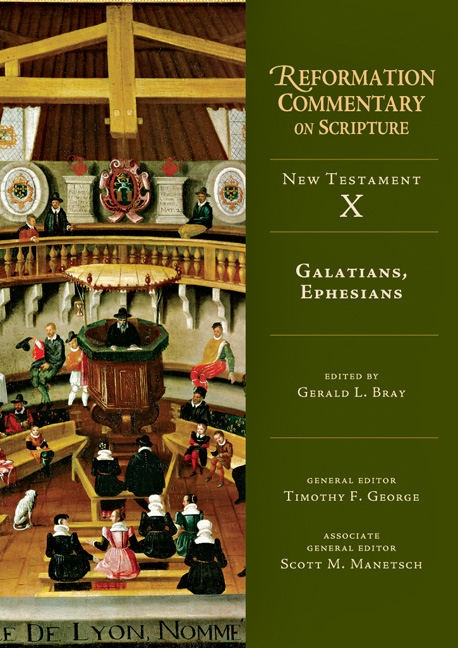
Book Review of Reformation Commentary on Scripture--Vol. 10: Galatians, Ephesians edited by Gerald Bray


Galatians, Ephesians

Reformation Commentary on Scripture: Volume X
Edited by Gerald L. Bray
Intervarsity Press
Reviewed by Clint Walker


For the last several years, Intervarsity Press has published a set of Bible commentaries that have won critical acclaim. This wonderful series is the Ancient Christian Commentary on Scripture. In this set of commentaries, the editors of each volume bring together the best of the Church Fathers and other leaders of the early church.

Now, Intervarsity Press has begun the project of the Reformation Commentary on Scripture, which is a Bible commentary that highlights the best of the Reformation scholarship on Scriptural interpretation. Going through the whole Bible, each volume will highlight what the Reformers said about a particular passage or text on Scripture.

This is very exciting, because the Reformation brought about a revolution in Scriptural interpretation and insight. Much of the most significant theological work ever done was done during the Reformation era, especially if one is a Protestant Christian. And since the Reformation happened soon after the development of the printing press, writing of theology during the Reformation era was more plenteous that at any point before.

I just received a review copy of the first volume in the set from Intervarsity Press. It is a commentary on the Biblical books of Galatians and Ephesians. I could not be more impressed.

First of all, both the series introduction and the introduction to this specific volume are wonderful to read. Each could stand alone as both enjoyable reading and impressive scholarship apart from the commentary. I particularly enjoyed George bringing attention to the fact that good scholarship and pastoral ministry were not separate ventures in the Reformation Era. Most of the great Reformers were also leaders of local congregations, and both their theology and the way they communicated those beliefs were refined through that experience (p. xiv). Relatedly, “the post-Enlightenment split between the study of the Bible as an academic discipline and the reading of the Bible as spiritual nurture was foreign to the reformers. For them the study of the Bible was transformative at the most basic level of the human person: coram deo” (p. xv).

Also, it is fun to read the Reformers side by side with one another. For me, it was especially fun to see the contrast in tone and style between Calvin and Luther in regard to the book of Galatians. This contrast was exacerbated by kind of source material chosen, as Calvin’s commentaries were selected as his primary source material for this text, and Luther’s lessons to his classes were the primary texts from Luther quoted in this commentary. The result is the best of each person’s work. For Luther, that means that he reads as both thoughtful and earthy. In the case of Calvin, his work reads as methodical, logical, and academic, which is his strong suit.

I also like reading what I will call the “scoundrels” of the Reformation in this volume. By this term “scoundrels” I mean people like Tyndale and Erasmus who were influential in the Reformation for their own reasons, but were not highly regarded or well treated by the church as a whole.

It was also interesting how contemporary some of the Reformers sound even today. I think this is because in many ways the Reformation was about getting the gospel to the people, instead of doing theology and writing books for the benefit of the church and other clergy. For example, I appreciated Bugenhagen’s simple explanation of Ephesians 5:21 (and what follows), “Paul adds that each one should submit to the other in the fear of God, so that everyone will fear of God, so that everyone will fear God and believe his brother…and not claim to know more than he ought to” (p.381).


Although I loved this book, I was disappointed in the lack of diversity in the sources that were chosen. Most were either Lutheran or Reformed. There were very few from the Anabaptist tradition represented, for example. I hope this weakness is remedied in further volumes of this fine set of commentaries.

I would recommend, if you can afford it, to find a way to get this excellent inaugural volume in this fine new commentary series.  I have loved it. I know you will too.


Friday, November 04, 2011

Martin Luther on Prayer and Life


A human heart is like a ship on a wild sea, driven by the storm winds from the four corners of the world. Here it is stuck with fear and worry about impending disaster; there comes grief and sadness because of present evil. Here breathes a breeze of hope and of anticipated happiness; there blows security and joy in present blessings. These storm winds teach us to speak with earnestness, to open the heart and pour out what lies at the bottom of it.
(Martin Luther in The Contemporaries meet the Classics on Prayer, p. 40)

Wednesday, November 02, 2011

Review of the Common English Bible from Abingdon Press


I know what many of you that read this blog are thinking. What? Another Bible translation? Why would we need that?

The short answer is "Because language is always changing!".

The long answer is more complicated than it at first appears, and has a lot more to do with traditions and marketing than one might expect. This is not just the case with the CEB, but also with the NIV, the ESV, The Message and even the NKJV. This agenda not necessarily an easy thing for publishers to admit. It is in fact true; however, that the variety of translations that we find in American English has as much to do with a variety of intended audiences and purposes of the translation teams and publishers as it does with developments in our understanding or knowledge of the ancient languages.

The Background

The last few years have seen several new translations and paraphrases of Scripture come on the scene. More and more of these translations also have particular publisher with particular constituencies and certain presuppositions that they bring to the text. Some of these publishers have in turn have recruited certain Christian leaders in specific circles to promote and contribute to their study bibles. This is nothing new, but it has accelerated in recent years.

For example, Crossway Books has worked hard to get  the English Standard Version developed under their imprint. Then they brought in the "New-Calvinists" like John Piper and Mark Driscoll to endorse and contribute with the ESV Study Bible. Because the New Calvinists tend to be more technical and literal, it is a good match to partner them with a version that emphasizes verbal equivalence.

Thomas Nelson owns and markets the NKJV.

Recently, Zondervan has also updated the NIV to include many of the improvements found in the TNIV, including a greater emphasis on inclusive language for human persons.

Less recently, NavPress contracted with Eugene Peterson to translate THE MESSAGE, which is a paraphrase from the original languages and has gained a lot of popularity across theological and denominational lines--especially for devotional use.

It is into this world of translations and their connections with specific publishers and "cliques" of Christians that the Common English Bible was born.

How the Common English Bible was Born

Representatives from a number of different mainline publishers began gathering to develop in the Common English Bible in 2009. These publishers included Chalice Press, Pilgrim Press, Church Publishing Inc., Westminster John Knox Publishers, and Abingdon Publishers (from whom I received this review copy).

The Common English Bible Committee has several different goals. One of their goals was to produce a translation with a diverse number of English speaking scholars on board. This included people of different racial backgrounds, and people of a variety of denominational and theological backgrounds (from UCC to Nazarene to non-denominational and everywhere in between).

Another goal of this translation is to render it in inclusive language, especially as it concerns humanity. In this way the CEB is similar to the NRSV.

The CEB is different from the NRSV in that it is written for an contemporary, everyday audience with an eighth grade reading level. This is approximately the same vocabulary level as the USA Today newspaper.

Also unique about the CEB is the priority of its purpose of developing a version of Scripture that is easily read in worship. For the whole translation the publishers developed reading groups to help them develop clarity and ease of public reading by lay persons in public.

I cannot emphasize too much how important this final step is in making the CEB an excellent translation of Scripture for my use. This is especially true in mainline denominations, which put a higher emphasis on the public reading of Scripture than do evangelical groups.  I currently am forced to use NKJV in worship at my church per church policy. It reads so choppy and awkwardly, and I almost always feel like I have to explain what I just read in order to help people understand the basic story of the text I just shared. This would not be the case if I had the opportunity to read the CEB in worship.

Digging Deeper: My evaluation of the CEB with examples

Due  to the CEB's effort to be contemporary, there are several ways that the translation reads different than a standard denominational curriculum. To see how this works, it will be helpful to look at a few specific passages. Let us begin with one of my favorites: Ephesians 2:8-9.
In the NIV it reads like this:
8 For it is by grace you have been saved, through faith—and this is not from yourselves, it is the gift of God— 9 not by works, so that no one can boast.

While in the CEB it reads like this:
 8 You are saved by God’s grace because of your faith.[a] This salvation is God’s gift. It’s not something you possessed. 9 It’s not something you did that you can be proud of.

In these verses let me point out a few differences in the passage:
  1. The CEB has simplified the sentence structure so that it does not need hyphens. It has broken down 1 long sentence into three short ones.
  2. The CEB intentionally uses contractions as part of the commitment it has to common speech.
  3. The CEB chooses "proud of" instead of "boast". Boast is not that common of a word in common speech. Pride is more so.
  4. The CEB reads more conversationally than the NIV, which reads more legal
Do I like all these changes? Sometimes. For worship reading and teaching I would often prefer the CEB. For study and even for some preaching and teaching, some more verbal equivalence in sometimes helpful.

One of the most criticized translations by the CEB has to do with translating "blessed" as happy. For me, that "blessed" word is essential for teaching what the text is like through preaching. I would not like "happy" at all. But it might be helpful for someone in another context.
Another criticism is the rendering of the term "justification". This is a little bit more of a challenge of the CEB when translating the passage, because there are a lot of arguments, which I do not completely comprehend, regarding the word "justification" and its meaning. The CEB, believing that the term "justification" is not necessarily an easy concept or vocabulary word, choses to simply render the term justify as "made righteous". If I want to preach a deep theological sermon, would I want to explain the more legal and theological term "justification"? Perhaps. But I do not have a problem with translating the term justification "made righteous" for those who are needing to read a smooth, easy to understand text.

Final Thoughts
I think the CEB is a fine translation of Scripture. Will I run out and encourage my church to replace its pew Bibles? Probably not. Will I eagerly encourage young believers and friends to read from the translation? I think I might!

Its strength is that it reads smoothly and incorperates mainline concerns as well as thoughtful evangelical concerns as well. I am all for inclusive language, so I love that about this translation.

There are a number of pleasing things about the Common English Bible's presentation. It uses maps from the National Geographic Society. It's cover, font, and text are put together in a classy way, which makes this new Bible a pleasure to stick my nose in. Some of the translation notes help with understanding the text a little better as well.

The CEB has accomplished its stated goals to be "Relevant, Readable, and Reliable". I hope it is used for years to come!

Sunday, October 30, 2011

Thought this was funny

The sermon to offend everyone....: Reflection on the Sixth Commandment


Thou shalt not kill. Four words. They sound pretty straight forward. The way that they we interpret these words have been anything but straight forward.

Thou shalt not kill. Four words. Moses received these words from up on high, but when he returned from the mountain, he found the Israelites worshipping a golden calf. When he discovered this, he sent out Levite priests to slaughter folks who had bowed the knee to this evil idol. Three thousand were killed that day. Even though God had just said, “Thou shalt not kill”.

Thou shalt not kill. Four words. Four words vigorously discussed and debated about in regard to what they mean to our lives together in our society. Many of our most contentious issues politically revolve around how we interpret this passage. How does the sixth commandment apply to things like birth control, abortion laws, our wars in Iraq and Afganistan, the execution of Ghaddafi, assisted suicide and the right to die movement, capital punishment, and other such issues?

Thou shalt not kill. Four simple words. And yet, by the time we get to the teachings of Jesus they are words that should guide us toward a life that is free from anger, revenge, score settling and violence.


So, what are we to make of the four simple words? How are they supposed to make their way into our hearts and lives? How are they to guide us toward a grace-filled, blessed life?

Furthermore, what do they really mean? What was God trying to say through them anyway? I have had a lot of questions in my life about those four little words.

And as I prayed about how to present this passage this morning, that is how I felt led to share this message with you today. I thought instead of me simply telling you what to believe in regard to this passage, I would have you join me on my spiritual and intellectual journey as I have sought, and continue to seek, clarity in relationship to this small, succinct, and very wise command.

I realize as I do this, you and I may not come out at the end of this process with the same attitude and perspective. That is ok. We are Baptists. We are not required to agree. But as I hope as I share how I have worked through these issues you will respect where I am coming from, and I will work on, if we disagree, showing you the same respect in return.
And I hope you will know that I come to this issue from a deep love of Scripture and faithfulness to Jesus, and a desire to be faithful obiedient to it no matter what the cost.
 

So, I have to tell you, starting off, a little bit more about who I was growing up. I was, from a young age, a person who often tried to avoid a fight, but more often than not found myself in physical altercations. How this happened is complex, but I think I can explain it. First, I was always, growing up, a little bit larger than people my age. I was at one hundred pounds by third grade, around 160 by sixth grade, and just under 200 pounds before 9th grade. And, that was all before I hit my growth spurt, entered puberty, and really started growing.

I was also, as you may have noticed in a more refined way now, a tender-hearted, sensitive soul. I was an am a people pleaser. And, for the most part a conflict avoider.

At the same time, I had this temper, that would flare up more often than I would like it to, which would come out through angry words screaming, and once in a while through some more physical way, such as breaking things or hitting something, and sometimes through tears as well.

All of this made me a ripe target for the young punks who wanted to move up in respect and fear of their fellow classmates through taking on the big guy. Which in turn, meant that I would often end up in fights. I was taught never to start a fight, which was a rule I almost always complied with. I was also taught that if someone tried to start a fight, I had every right to finish it. Which is something I learned how to do if necessary.

I have to admit, it did feel really good to go toe to toe with someone and win in a fight. In fourth grade, a guy was picking on a friend of mine. I told him if he wanted to pick on someone, he should try someone his own size. He punched me. I punched him in the nose. Blood spurted everywhere. I broke his nose on the first punch. It was such a rush to bring bodily harm to someone. And when the principal confirmed the story—that I acted in self-defense—I received no punishment whatsoever, and quite a few “atta-boys” from friends and family.

As I grew older, I channeled most of my aggression through sports. I played football. I wrestled. I learned that I played better when I could get myself in a really angry and violent toward everything I hated about my life, and then funnel that anger and that violence toward the person I was competing against. My senior year in high school I had a guy in a headlock, put his arm over his mouth and nose so he couldn’t breathe. He was gasping for air and finding none, like you do when you are underwater for too long and trying to hold your breathe. Finally I pinned him. Having his breathe, and in many ways his life, in my hands, it was such a high. I still have not forgotten it.

All this to share this, growing up I did not question much of the violence I saw around me. In war. In fights. In politics. In anything. I did not want to go into the military because I did not want to have some strange man screaming and yelling at me. I knew I would end up yelling right back at him over and over again until I was discharged or punished in some extreme way. Besides, I was too big to do more than one or two pull ups. I knew it would not be good.

I was also pro-life. Have been for as far back as I can remember.

Flash forward to seminary from there. I had played four years of football. I had finished two years of seminary. I was taking an ethics class. The ethics class required us to take on one issue for our research paper. I did not want to do much with environmental ethics and faith, because to be honest I was over the leftist propaganda on that issue. I had already been pretty clear on several other issues. I ended up studying the ethics of war and peace. It wasn’t a hot button issue by 1997. With my pick-up truck and short hair I certainly could not have been mistaken for a hippie, and with my portly, informal appearance I could hardly be mistaken for the militaristic type. The Cold War had ended. Our military was not in Iraq. This made this a perfect issue to study objectively. No drama. No agenda. Just trying to learn what the word of God says. Turned out I did not just learn a lot about war and peace, I learned a lot about what the Bible said about what the Catholic Church calls a “culture of life” in general.

The Creation story shows us that God values life. He created it. Human life was brought into being by God’s Word. After the fall, we see brother murder brother, and this was strongly condemned. By the time we get to Noah and the Ark, what we see is a world that is becoming increasingly violent. This violence was a large reason why the flood was sent.

Throughout the law, not only is there the command “Thou shalt not kill”, but there are all sorts of laws that protect life, including the life of an unborn child. Besides that, there are ritualistic laws that teach the people of Israel to honor life. And to protect the lives and the well-being of even those that are not from our country but live among them, or people who are too poor to have the resources to protect themselves. These laws were radically compassionate for their time.

Yet, in the Old Testament law, we also see a place for capital punishment of many crimes. In addition we see commands for warfare, and in the midst of warfare. And practices of warfare that go beyond anything we would think appropriate today. Things like killing not only every warrior, but every man, woman, child, and animal of one’s enemies. If you like reading some gory stuff, just read your Old Testament stories.

At the same time, though, you often see that the Scripture sees those who do violence, even if they do so in justifiable causes, to be considered less pure. Ceremonially this is definitely true. David couldn’t build the temple because he had too much blood on his hands, but Solomon was given permission by God to do so.

You also see God at times how God delivers his people from military threat without them having to go into battle. This is the case when the Israelites escaped Israel through the Red Sea. 2 Kings 19 tells a story about how God went and killed 180,000 people in their sleep when a mighty army was attacking Israel, and the people did not even have to fight against those folks. There is this underlying stream of thought that comes to fruition in Zecheriah 4:6…which says, “not by might, not by power, but by my Spirit says the Lord”.

So we come to the New Testament with this command that tells us “don’t kill” and this violent world that the Israelites lived in. We see them having a high regard for life, but also involved in many violent endeavors, like many of the nations around them were as well.

In the middle of this world, comes Jesus. Jesus, in Matthew 5-7, begins to speaks some pretty radical words. Words like these, from the New International Version:

21 “You have heard that it was said to the people long ago, ‘You shall not murder,[a] and anyone who murders will be subject to judgment.’ 22 But I tell you that anyone who is angry with a brother or sister[b][c] will be subject to judgment. Again, anyone who says to a brother or sister, ‘Raca,’[d] is answerable to the court. And anyone who says, ‘You fool!’ will be in danger of the fire of hell.  23 “Therefore, if you are offering your gift at the altar and there remember that your brother or sister has something against you, 24 leave your gift there in front of the altar. First go and be reconciled to them; then come and offer your gift. 25 “Settle matters quickly with your adversary who is taking you to court. Do it while you are still together on the way, or your adversary may hand you over to the judge, and the judge may hand you over to the officer, and you may be thrown into prison. 26 Truly I tell you, you will not get out until you have paid the last penny.

And these:

    38 “You have heard that it was said, ‘Eye for eye, and tooth for tooth.’[h] 39 But I tell you, do not resist an evil person. If anyone slaps you on the right cheek, turn to them the other cheek also. 40 And if anyone wants to sue you and take your shirt, hand over your coat as well. 41 If anyone forces you to go one mile, go with them two miles. 42 Give to the one who asks you, and do not turn away from the one who wants to borrow from you. 43 “You have heard that it was said, ‘Love your neighbor[i] and hate your enemy.’ 44 But I tell you, love your enemies and pray for those who persecute you, 45 that you may be children of your Father in heaven. He causes his sun to rise on the evil and the good, and sends rain on the righteous and the unrighteous. 46 If you love those who love you, what reward will you get? Are not even the tax collectors doing that? 47 And if you greet only your own people, what are you doing more than others? Do not even pagans do that? 48 Be perfect, therefore, as your heavenly Father is perfect.

These passages, and others, seem to say that the command to not murder was to lead us as far away from violence as possible. It was, as a matter of fact, designed by God not to simply keep us from killing one another, but if we believe Jesus it was designed to keep us from hating one another, wishing harm on one another, wanting vengeance on another, or anything like that. All of this seems to run counter to the Jesus way.

So what does “Thou shalt not kill” mean? For me, as I continued to study, it meant what it said, and much more. Because the command was not only a call to not kill, but an invitation to a life in the Spirit where I would and could be a person of grace, peace, reconciliation, and love. In other words, I believe in being completely pro-life.


In regard to abortion, this meant that I believed that abortion was wrong. I discovered in fact that early church was actively involved in efforts to prevent abortion and infanticide from early in its history. Often rescuing children that were abandoned because of their gender or their disability, and taking them into their home, Christians had a powerful witness in the ancient world because they were the original right to lifers.

Note, however, that the early church’s pro-life activities were amazingly pro-active. They took children in that nobody wanted. They raised them at their own expense. They didn’t make their pro-life stand simply a political stand. They made it a lifestyle and a costly commitment.

The New Testament is remarkably silent regarding capital punishment. It seems clear thought that when God does have an opportunity to offer someone life instead of death, he certainly does it. He tells the woman who is about to be executed in John 8 to go and sin no more. He speaks of himself as one who wants to set captives free. And in America, as Chuck Colson wisely points out, our standards for capital punishment are in some ways not as stringent as Scripture’s, which calls for eyewitnesses to a crime of murder in order for it to be a death-penalty case, for instance.

In regard to issues regarding end of life, I don’t believe in assisted suicide. Looks like murder to me according the Scriptures. Having said this, I don’t think artificially keeping people alive by machines is necessarily mandated by Scripture either. The Bible says that for “everything there is a season”. It is not our place to play God by taking a life prematurely, or trying to use machines to extend it indefinitely.

And in regard to issues of war and peace, I must again listen to the one who said, “Love your enemies” and “turn the other cheek”. Although this issue is difficult for many to wade through, and many Christians disagree, I personally could not participate in military service in good conscience.

This is, a stance, interestingly enough, that was also endorsed by the early church until the government took authority over the church at the time of Constantine.

Don’t get me wrong. I do not condemn others who have. In fact I admire their courage, commitment and others-centeredness in their service. And I believe our nation should do everything to offer the best health care and social and emotional support for people who have put their lives on the line on behalf of our country. The gospel is a gospel of mercy and compassion that extends to all.

But when I ask myself, “Who would Jesus want me to kill?” I can only answer, “Nobody!” Even in the case of war.

I would rather be overly-obedient to the commands like “Love Your Neighbor”, “Love Your Enemy”, and “Thou shalt not kill” than to compromise my conscience in this regard. And I would rather die or suffer for standing for what I believe in this regard than to simply go along with the crowd instead of what I believe Jesus preaches. Some of you may believe this stance to be weak or cowardly. I believe it to be both courageous--especially in the middle of our culture of violence—and right.

I also believe it to be in line with the model of Jesus, who when arrested could have led armies to free himself, his friends, and his countrymen. Instead Jesus allowed foreign mercenaries to hang him on a cross to do the bidding of corrupt political leaders. And he bled. And he died. He died so that we could life—eternal life.

And he gave us the mission of going out into the world with that same self-sacrificial life and that same hopeful message. What is that message? That life is a gift given to us by God. And it is a good gift. And that God loves each of us so much that his will is that we “should not perish, but by believing inherit eternal life”.

Thursday, October 27, 2011

Fall Pics 2011


This is a picture of the tree out of our front window the night before the storm. Pretty nice view, huh?

This is a picture of the Arkansas River from the Nepasta Bridge. I love the Nepasta Bridge spot in the river. The only spot I like looking at better with the Arkansas is where the river bends about 3 miles before you get into Fowler. 


This is a field right off the Nepasta Road between Highway 96 and Highway 50. For some reason I like looking at this field as well. I love the fall!!


Battle of the Bulge: Feast day is not a feel good day

Every week I have a cheat day from my diet. On my cheat day I don't keep track of what I eat. Since it is a feast day, I eat a lot of my favorite foods that are forbidden every other day. There is just one problem with this. My body has become used to eating healthier.

I used to have a cast iron stomach. I could eat or drink lots of carbs, and not be affected at all, with the possible exception of bad gas. These days when I eat a lot of rich, restaurant prepared food I end up going to bed with a stomach ache, and my mood just tanks. I don't know why this is. In ways I am thankful for this change. In other ways I am disappointed. It is what it is. I just thought it was interesting.

My latest greatest suggestions for college football realignment

Each day it seems there is a new situation realignment is facing. Here is what I think we should see...or is it what I want to see...who knows.

Big 12
I would expand back to 12

I would add BOTH Louisville and West Virginia
If Missouri leaves I would also add BYU.

Pac 12
I would continue expansion to 14, maybe 16

I would add teams in this order:

Colorado St.
Boise St.
New Mexico
SMU or Air Force

BIG 10
I would lobby really hard to add Notre Dame
If that works, then I would also look to add one more team

ACC
Add UCONN and Rutgers

SEC
Add Missouri
Try and add Louisville and West Virginia as well
If not, add a couple of CUSA Texas Schools for recruiting purposes


Wednesday, October 26, 2011

Being an Oregon Ducks fan is a family tradition!


Resources for Sunday School and Church on my Desk

Posted by Picasa

Lots of Books to Review!

Posted by Picasa

One group of Review Books

Posted by Picasa

The other group of Review Books

Posted by Picasa

Parenting Posts: The Balancing Act

One of the challenges of thoughtful parenting, so far, in my opinion, is that it is a challenge to juggle competing good values in a way that is healthy for our little Karis.

For instance, our experience at church. On one hand, we want our child to behave at church. On the other hand, we do not want to teach Karis that church is this drab and judgmental place where her parents are tense and always screaming "NO" at her. This is hard. At some point, she is going to have to learn to not run around the church during worship. On the other hand, when she climbs up the platform and walks toward the pulpit toward me I hear Jesus say indignantly, "Don't prevent the children from coming to me. For unless you recieve the kingdom of God like a little child...."

Another is balancing our desire for her to communicate assertively, with our desire with our child to not become a demanding, spoiled-rotten brat. Karis is very verbal. She is very passionate. And, she is often very clear about what she wants. And, if you do not give her what she wants, he assumption is that you must not have understood, so she communicates more forcefully. For instance, Karis wants a ball. She begins her request like a question, "Ball?". If she does not get what she wants right away she begins to say louder and louder, "Ball. BAll, BALL, BALLLLLL!" So our job is to get her to communicate her needs and desires forthrightly and clearly, but to also realize that she does not always get what she wants. Not always easy. Especially with a girl who knows her own mind as well as Karis does for a 16 month old.

It seems to me that a lot of parenting is a balancing act. You want your kids to learn responsibility, but not be up tight. You want your kids to be compassionate, but not a doormat. You want your kids to take pride in their appearance, without being vain. The list could go on and on.

What other balancing acts can you think of? Does this ring true to your experience? If so, how so?

I would love to hear from you....

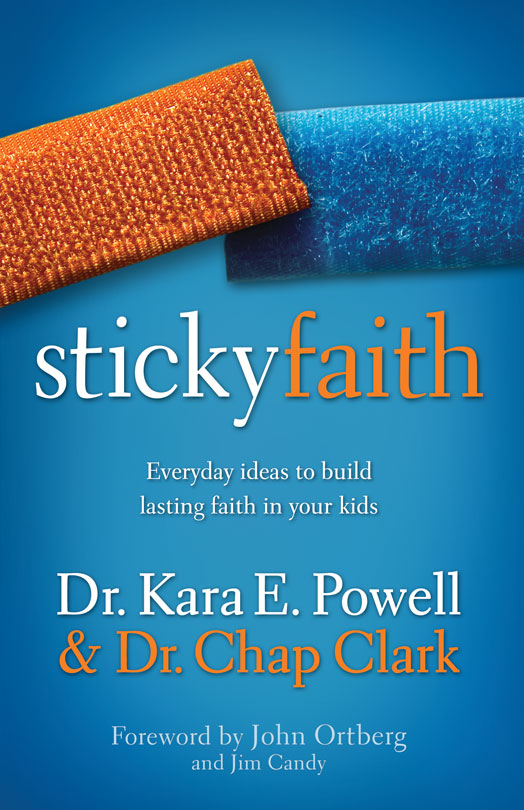
Book Review of Sticky Faith by Kara Powell and Chap Clark


Sticky Faith

By Kara E. Powell and Dr. Chap Clark

ISBN 978-0-310-32932-9

Zondervan Publishing

Reviewed by Clint Walker


Drop into many churches in the United States and you will hear parents and grandparents making the same complaint. The church will be full of older folks, with a few middle-aged people sprinkled in. In most of these churches you will hear how the church was once full of children, but now there are hardly any young adults or children present. They will go on to say that some of their children live nearby, and yet they cannot get them to join them in their church involvement. “What are we to do?” they ask, “How could have things been different?”


Into this world of concern about young people retaining their faith come the Fuller Youth Institute, and its leaders Kara Powell and Chap Clark. Combining keen insight with painstaking research, Powell and Clark believed they have uncovered some thoughtful ways parents can raise their kids so that their faith “sticks” even after they leave home. Their learning is compiled in the book Sticky Faith. Much of what they have to share is very helpful, and parents would be wise to heed it.


Over and over again, children and teenagers cite their parents as their primary role models and their heroes. Thus, Sticky Faith directly challenges parents to be very intentional in their child’s spiritual development, and addresses them as the primary influencers that they are.


The book challenges parents to be involved in their children’s lives on a number of fronts. First, it encourages parents to live their faith transparently before their children, and to invite their children into a family that functions as a community of faith. Sticky Faith gives parents helpful hints about how to have spiritual conversations with their teenage children. The book exhorts parents to develop larger, intentional networks of caring adults to support themselves and their children as they work to lead their children to Jesus. Through the whole book, Sticky Faith argues in a number of different ways that meaningful intergenerational relationships are essential to a child’s longevity in the church and overall spiritual vitality.


I enjoy the way the book is set up. Sticky Faith helps parents know more about what their child is going through, and that it is normal. It helps parents with specific practices they can have as parents to be stronger in leading their children into an authentic life of faith that lasts through college and beyond. It is a book that is less driven by guilt than by faith. The authors even occasionally point out times where they have struggled to implement the principles that they describe. Their humility encourages me, and makes me want to hear more from them.


Occasionally I was amused with the discussion of larger churches, and their inability to integrate young adults into “big church”. I serve in a small church, and there are several facets of “sticky faith” that we practice just by virtue of being small. At times, some of the things that Chap and Kara shared seemed to be obvious. But if they felt the need to say what they said, maybe the ability to relate to teens and children in a meaningful way is rarer than I expected.


Based on both Kara and Chap’s research studies, Sticky Faith is a gem of a book that should be in the hands of both pastors and youth workers across the country. This book is full of the cutting edge information about the spiritual lives of teens can endure into adulthood. And, although some of the discoveries may not be all that earthshattering, Sticky Faith is, at the very least, full of helpful reminders on how to love our children well, and hints on how to  guide them best to Jesus.

Monday, October 24, 2011

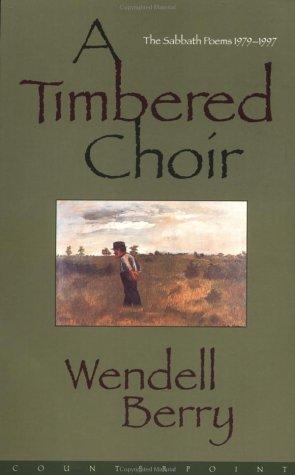
1995 Sabbath Poem I from A Timbered Choir by Wendell Berry

A man with some authentic worries
And many vain and silly ones
I am well-schooled in sleeplessness;
I know it from the inside out.
I breathe, and I know what's at stake.

But still sometimes I'm sane and sound,
however heart or head may ache;
I go to sleep when I lie down,
With no determined care to breathe
I breathe and live and sleep and take.

A sabbath from my weariness,
I rest in unwaking trust
Like clouds and ponds and stones and trees.
The long arising Day will break
If I should die before I wake.


Thursday, October 20, 2011

Book Review of Existential Reasons for Belief in God by Clifford Williams

THE BOOK:

Existential Reasons for Belief in God: A Defense of Desires and Emotions for Faith
by Clifford Williams
ISBN 978-0-8308-3899-8
IVP Academic
Reviewed by Clint Walker

REVIEW:

I have to admit. I am not impartial about anything written or said by Dr. Clifford Williams. Dr. Williams my professor in my Honors Introduction to Philosophy class my freshman year at Trinity International University. He was, infact, the teacher of the first class I ever took in college. His class was wonderful. It led a friend of mine to decide he was going to major in philosophy. And it taught us all how important it was to bring together the life of the mind and the life of faith.

It is no wonder that the first book of his that I have ever gotten to read is Existential Reasons for Belief in God: A Defense of Desires and Emotions for Faith. In this fine book Williams attempts to deconstruct the dualism between Emotions and Reason, Faith and the Intellect. He specifically does this in relation to decisions of faith, arguing that there is nohting irrational or immoral about having faith decisions generated by both our intellectual and emotional lives. In fact, as responsible humans, the realities of our emotional selves and our reason-driven selves should both be factored in to making wise, true, and ethical decisions. This is especially true regarding decisions about ultimate reality.

Existential Reasons for Belief in God is very deliberate and methodical in how it makes its case. It begins by setting the scene of arguments for faith in the world of philosophy, defining terms, and familiarizing his readers with the issues that need to be addressed. Then, it makes a well-reasoned argument in favor of "existential" arguments for faith in God. Next, Dr. Williams spends several chapters addressing objections to his thesis.

In addressing objections, Dr. Williams, true to his character, does not set up straw men to knock down. Instead, he addresses intelligent and thoughtful concerns with a lot of grace and equal measure of strong reason.

Next, Existential Reasons for Belief in God  takes a few more chapters to further commend the importance of both existential and intellectual paths to a life of faith.

The result is a wonderful resource, and a treasured book to be kept on my shelf for many years.
All in all, I enjoyed this book. I would not commend it to everyone, as it is pretty heavy reading for the average person. But, to those who love the world of ideas, and love doing a lot of in-depth reading, I would recommend this book heartily. Happy Reading.

Tuesday, October 18, 2011

Sabbath Poem from Wendell Berry in A TIMBERED CHOIR


What stood will stand, though all be fallen
The good return that time has stolen
Though creatures groan in misery
Their flesh prefigures liberty
To end travail and bring to birth
Their new perfection in new earth
Let the trees of the woods all sing
And every field rejoice, let praise
Rise up out of the ground like grass
What stood, whole in every piecemeal
Thing that stood, will stand through all
Fall--field and woods and all in them
Rejoin the primal Sabbath's hymn
(1979, VI, p. 13)

Book Review of Humilitas by John Dickson

Book Info:
Humilitas: A Lost Key to Life, Love and Leadership
by John Dickson
ISBN 978-0-310-32862-9
Zondervan
Reviewed by Clint Walker
Review:
Dickson's study of humility in Humilitas is a wonderful groundbreaking book. It is part study of a virtue throughout history, and part call to personal and spiritual transformation. It is engaging and smart, and I recommend every leader grab this book and read it closely.

As I said, one part of the book discusses the history of humility. It speaks about how humility was depised by many philosophers and leaders in the ancient world. Then, it goes on to show how the whole attitude of ancient culture toward humility changed after the crucifixion and resurrection of Jesus. This is, the author shows, without dispute.

The book also discusses why humility is good, and how humility is effectual in several arenas of life and leadership. In its final section, the author attempts to offer some advice and disciplines to generate humility in one's life.

This book is smart, very readable, and compelling. I would recommend Humilitas to anyone and everyone who wants to be a stronger and a better person.

Book Review of Welcome to the Story by Stephen J. Nichols

Book Info:

Welcome to the Story: Reading, Loving & Living God's Word
by Stephen J. Nichols
ISBN 978-1-4335-2230-7
Crossway Books
Reviewed by Clint Walker
Review:

I am always on the lookout for books that offer overviews of Scripture as a whole. They are helpful for me, and they are helpful for the people I work with

This particular book is especially good. It offers a overview of the narrative arc of God's Word, with an emphasis toward major themes. Specifically, Welcome to the Story chronicles the overarching themes of Scripture as it goes along: creation, fall, remption, and restoration. Then the author talks about what this story teaches us about who God is and who we are. Finally, the author delves deeper in how understanding Scripture this way can form our spirits and change our lives.

What I especially like about this book is that it understands Scripture as GOD'S story. The Bible is designed for GOD to speak to us, for us to understand who GOD is, for us to see what GOD is doing in the world, and then for us to decide if we want to be a part of the big thing GOD is doing in the world.

This is a good resource to have on my shelf, and then to share with those who are asking, "What is the Bible all about?"

Book Review of Hungry for God by Margaret Feinberg

Book Info:
Hungry for God
by Margaret Feinberg
ISBN 978-0-310-33207-7
Zondervan Publishing
Reviewed by Clint Walker

Review:
Margaret Feinberg is one of my favorite authors. I have a certain affinity for her because she is around my age. She has also lived in the same regions I have. She is now living in Colorado, as I am. But, she also did a stint living in Alaska, as I have as well.

I also enjoy her writing because it is the wonderful combination of a contemplative heart, an active and curious mind, and a contemporary down to earth voice. Her previous books kept my attention.

Hungry for God is her most recent release. It continues in the tradition that I described above. Specifically, this book is written for the person that is eager to hear God's voice, but is not sure how that is done or what that means.

In Hungry for God, Feinberg deftly combines story and biblical principles into an inviting guide to a deeper and more personal relationship with the Creator. She challenges her readers to be attentive to the way that God is present in their everyday lives, and gives some specific examples to her readers about how that can be done.

The book goes on to share about ways that God has historically spoken to believers, how he guides and directs, as well as how God convicts and challenges. She gives tips to seekers on how they can equip themselves to better listen to God. Finally, she offers some helpful insight on how to continue in a conversational relationship with God. Hungry for God is a good book.

This may seem petty, but the biggest turn off for me about the book was the cover. The cover is, infact, a picture of Margaret. Margaret is an attractive woman, and this is an attractive photograph. I just hate buying books with huge pictures of the author on front. Probably the only exception to this rule for me are authors that lived in previous centuries. I even think Dave Ramsey's books with his picture on the front are a little offputting. I don't like this for two reasons. One, it was overdone in Christian books in the 70s and early 80s. Second, I think a lot of the books that do this are marketed toward a more feminine audience. And, I don't want to run around holding a "girly book". He He.

Anyway, if you can get past the cover looking like it is a magazine cover in the check out line, I would suggest grabbing this book and spending some time reading it.

Reformation Commentary of the Bible: Old Testament Volume XIII--Psalms 73-150

Reformation Commentary of the Bible: Old Testament Volume XIII--Psalms 73-150  Edited by Herman J. Selderhuis IVP Academic ISBN 978-0-8308-2...