I run into a lot of interesting articles. Here are a few I thought would be interesting reading for you!
Which makes you more creative, coffee or beer? (Not as clear cut as one might think)
Tim Keller on suffering well
Why you should read Calvin's commentaries
Beautiful story about 'chesed', or covenant loyalty--about basketball great Bob Cousy
The grass is always greener on the other side, they say. Here is the opposite, the problems of every state
An example of size prejudice, how overweight patients are often undertreated with chemotherapy
Can you really loose a part of your finger and not know it? This guy did!
Wednesday, October 02, 2013


Thursday, September 19, 2013
THIS IS A TEST, THIS IS ONLY A TEST
One of the growing edges in my faith in the last 3 months or so is acting on the belief that God wants me to be more positive, optimistic, and possibility minded. I am more naturally melancholy and sarcastic, so this has taken some openness and effort on my part, and a lot of work by the Holy Spirit on my heart.

My last week has been rough. Jen has had surgery for breast cancer. I got a speeding ticket heading back to Rapid to quickly make it to an appointment with the doctor that came up last minute. Our home phone went out, and we had to have it repaired, and I bought a new phone system because I thought the old one was broken. And due to both higher stress levels and less diligence on following my diet, my weight loss has stalled a little bit.
This lesser amount of diligence continued this morning, when I took the back road along the river, one of my favorite little roads in all of town, to check my lottery tickets and get a Mountain Dew pick me up. As I drove, the city maintainence department was mowing the grass along the river. They hit a patch of asphalt buried under the tall grass. It hit my winshield.

All I heard was a loud blast. I stopped. My window was ruined. But, I am unharmed.

Now at this point, I have a decision. I can choose my attitude. I can get angry. I can choose to believe that this is just one more event in the last couple of months to prove that nothing really seems to be going right. I have been there before. I have had that attitude before. Or, I can choose to look at things differently. So I began to ask myself a series of questions.
What if the window wasn't safety glass? What if I had the window down and a large rock hit my head with that kind of force? What if the kids had been in the car? Might something have happened to them? Thankfully, none of those things happened. God has blessed me. It could have been a lot worse.

Besides that, the lawn mower was a child of a member of our church. He was a great guy. He was courteous, intelligent, and agreed that my version of events is what happened. He could have tried to deny it was him, asked for proof, etc. Instead he went and gathered up all the pieces of asphalt where the car got hit, looked for more, so that what had happened would not happen again. Here is the pile:

I am safe. Don't even have a scratch. The city is paying to have the window fixed. I got to meet some great new people at City Hall, in the city maintenence department, and at the glass shop. I am blessed, even if today's circumstances were not ideal.
So I am choosing to be thankful, and see the rays of sunshine through the storm clouds. I know that I am blessed, and some silly freak accident is not going to change that attitude.
That is all.
Thursday, September 05, 2013
Embrace the Call--Sermon on 8.25.13
Embrace the Call
We all have different journeys. Different cards we
are dealt. Each of us, because of our upbringings, have assets and gifts that
we bring to the table from our personal histories. We also have challenges and
limitations we face based upon our personal histories.
God was good enough to bless me with a wonderful
wife, two super cool little kids, and a dog named Jake. Now, I don’t worry too
much about the dog, but I do, at times, get concerned about my wife and
children.
One of the things that I get concerned about from
time to time is how their life has been altered because of my choice to accept
the call of Christ to full-time Christian ministry. Sometimes, I believe it is
an asset to be in a preacher’s family. Other times, I believe it is a burden
that has been placed upon them.

With Jennifer, I worry about expectations people
have for her. You know the expectations. Big poofy, bouffant hair. Perhaps a
beehive. Playing the piano. Having a southern accent. Dressing her husband in a
shiny suit with a pinky ring. Making sure his toupee is on just right. All
while playing the piano perfectly. And, of course, Jennifer fits none of those
expectations.

Then there are the kids.The other day, Karis and I
were playing on the floor. “Pastor,” she said, “could you come here for a
second.”
“Don’t call me ‘Pastor’ Karis, call me Daddy,” I
said.
But she kept insisting. PASTOR. PASTOR. PASTOR.
Jennifer asked, “What does Pastor do?”.
“He talks to people, and tells them what to do,”
she said.
The conversation went from there. I thought I was
in some clerical twilight zone, where my child was having some alien, aberrant
experience on Planet Pastor. It was creepy.
I think of my friends who are PKs. One is a
fundamentalist pastor in the country near Kannapolis, NC. He and his brother
married sisters from one of the countries that lived on the Eastern end of the
former Soviet Union. The other two are atheists.

I say all of this concerns me at times, and it
does. But I am also aware of this, God has called me for as long as he has
called me to do full-time Christian ministry. And that will have its challenges
and its joys for all of us. But, it is our job to EMBRACE THE CALL. The call of
God to say what he wants me to say, to go where he wants us to go, and to do
what he wants us to do.
Jeremiah was a son of a priest. He grew up in a
town called Anatoth. Anatoth was known for having a priest that was on the
wrong side of a battle for who would be king three hundred years before
Jeremiah was born. The priest Abiathar, after David died, stood on the side of
Solomon’s brother in his quest for the Kingdom of Israel. When Solomon took
power, he banished him from Jerusalem and sent him back to Anatoth.
Jeremiah grew up a pastor’s kid. And then, while
he was young, perhaps in junior high, he hears God call him into the ministry. God
says from the moment he was conceived God had a plan for Jeremiah. He was to be
a prophet to the nations. He was to tell people God’s Word, often stepping on
their toes, and he was to say what God told him to say whether the people who
listened to Jeremiah wanted to hear it or not. And almost immediately, Jeremiah
balks.
“Ummm. God…first of all, I am not a good speaker.
Secondly, I am too young…” You see, Jeremiah was a priest’s son. He had seen
the life prophets had. He had been the preacher’s kid, and so he was making the
excuses on why he could not do what he felt God calling him to do.

I know how he feels. Why would God call me? No
matter how much I try and improve my voice, I am still going to sound like I
grew up among a bunch of loggers and mill workers in Southern Oregon. I am fat
and balding. There is no way I am going to have that glossy, full-head of hair
like Joel Osteen, Benny Hinn, or David Jeremiah.
“Don’t say, ‘I am too young’” God replies in the
middle of Jeremiah’s excuses, “you are going to say what I want you to say, you
are going to go where I want you to go, and I am going to be with you” He
actually says that he would rescue Jeremiah, which if I were Jeremiah I would
start to have questions about what I am going to be rescued from.
God tells Jeremiah he is going to be used to
uproot and tear down, to destroy and overthrow, to build and to plant. His
words will be powerful Words. Hard words. God’s words.
God’s call comes to Jeremiah. It is not an easy
call, but he has the courage to take it on. He embraces the call of God.
Now, with churches that have positions like a
pastor, as ours does, or elders, or bishops, or deacons, it can be easy to
think only some special ones of us are called by God. The rest of us, well, we
are just along for the ride, trying to do what that strange creature called the
“Pastor” tells us to do.
Nothing could be further from the truth.
The truth is that each and every one of us, as we
began this summer discussing, has gifts from God, to be used in God’s service, to
bring God glory.
Each and every one of us, Psalm 139 says, was knit
together in our mother’s womb. Each and every one of us has been given skills,
abilities, as well as gifts from God to serve Christ and his kingdom. Each of
us has also been given opportunities, whether we feel gifted or not, to do our
part to be a signpost for God, speaking his word, pointing with our lives like
an arrow to heaven.

The book of Revelation calls us a kingdom of
priests. Each with a unique call that God has given us, to be who he has made
us to be. He calls each of us into small and large acts of obedience in service
to his church and his kingdom. I challenge you: EMBRACE THAT CALL.
You know that person you have been avoiding,
because you know if you say hi to them or drop by their home they will be
talking with you for an hour about every ailment they have and every difficulty
everyone around them is going through. You know God is leading you to visit
with them, because you know they are lonely, and they need your attention and
your Christian love. Obey that prompting of the Holy Spirit. EMBRACE THE CALL.
You have thought about going on a mission trip for
years. Maybe to Haiti. Maybe somewhere else. You are nervous about travelling.
You are afraid you are going to get sick. You wonder if the people you are
going to work with will like you, or want to deal with you. You think maybe you
are too old for such ventures. STOP with your EXCUSES. If God is leading you to
go, EMBRACE THE CALL.

You work with this person who has gone through a
lot in the last year. And because they have had to struggle with a lot, they
are beginning to wonder if there is more to life than just working, eating,
running errands, and going to sleep. You sense that they might be open to
hearing about Jesus Christ, and how having a personal relationship with Christ
can change their life for the better, adding hope and joy and purpose to their
lives. You are nervous about sharing your faith. You are wondering if your
friend would think you are a freak, or you worry that you will not find the
right words when you need them. Put your excuses behind you. EMBRACE THE CALL.
You know what God is leading you to do. Writer Fredrich Buechner says ““The place God calls you to is the place where your deep
gladness and the world’s deep hunger meet.” And for many of us I think that
works. Have courage to do what God is leading you to do. EMBRACE THE CALL.
I would say that if we follow the example of
Jeremiah, sometimes our deep gladness plays a lesser role than the fact that we
love God so much that we have to be obedient to him, happy or sad, and simply
EMBRACE THE CALL, and trust that God will work through us.
God
calls each of us to take on the role he has called us to play, and to be
obedient to what he wants us to do. We have heard that, I hope, more than once,
this summer.
But
as believers, we are called first and foremost to be disciples of Jesus Christ.
And so we come to this table. Some of us are joyful. Some heartbroken. And we
recommit ourselves, not to a number of tasks, but simply to devotion to our
Lord and Savior Jesus Christ. As we read Jeremiah, it is God’s call that leads
him, God’s strength that sustains him, God’s power that compels him to embrace
his call. Everything is born out of a relationship with God.
The
same is true of us. So let us come to this table, and let us take time with
Jesus. Let us remember what he has done for us. Let us remember why he did it.
And let us be renewed in our commitment to him. Then, as we go, mysteriously we
will be empowered to EMBRACE THE CALL to serve the one we worship, adore, and
love. Amen.
THE WRESTLER--a newspaper article
The Wrestler

One of my favorite characters in the Bible is
Jacob. He is one of my favorite people in Scripture not because he always did
the right thing, or because he was perfect, but because I can identify with him
more closely than most Bible characters.
Jacob spent his life scrapping for everything he
got. He was a twin with his brother Esau. While Esau came out of his mother
Rachel’s womb first, Jacob was grabbing at his heel trying to get ahead of his
brother on the day he was born.
Jacob was the youngest, so he had to fight harder
to get ahead. And that is what he did. He tricked his bigger and stronger
brother out of his greater share of his father’s inheritance. Then he stole his
father’s blessing to carry on the family name and mission. After that his
brother wanted to kill him, so he had to run.
He went to his mother’s homeland, and married two
women. His father-in-law tricked him once, but with skillful animal husbandry
he found a way to get ahead with him as well. He spent most of his life
fighting for a blessing.
Then came the day when he had to meet his brother.
After decades of being estranged, he was frightened and afraid. He sent his
servants, wives, and kids ahead of him, in case his brother wanted to kill him.
He made camp by the side of a brook. Still struggling. Still fighting for a
blessing. Still longing for approval.
A stranger came to him in the night. They engaged
in hand to hand combat. For hours upon hours they fought. All through the
night. After a while, it became clear to Jacob that he was wrestling a
supernatural being. Either an angel or God himself.
They wrestled until the sun was about to come up.
The strange being said he had to go. Jacob asked the person’s name. He wouldn’t
share it. Then Jacob said he would not let the being go without a blessing. He
received the blessing, and then the being disappeared into thin air. Jacob
believed he had wrestled with God, and won a blessing. He had an injury to his
hip, he would walk with a limp, but he went forward in faith that God had
blessed him.
My question is, why did Jacob wrestle God for a
blessing he had received decades ago? And the answer is, because that is who
Jacob was. Always fighting. Always wrestling. And God was willing to either
send an angel or come in human form and wrestle with Jacob. And once again
offer the blessing. Jacob was a fighter. He always had to fight for what he
got. He got through life by sheer force of will. God understood that, and
accepted and loved Jacob as he was.
I think there are a lot of us like Jacob. We start
life just a little bit out of step, or feeling like we are a little bit behind
everyone. And we feel like we have to catch up. Even when we encounter God and
are blessed by Him, we have to keep fighting, keep wrestling, keep striving to
get where we want to be. We are the underdog, always trying to win against
impossible odds. We may have been blessed with a great family, enough money to
get by on, a car that runs, and a roof over our heads. We still feel like we
have fight and struggle with men and God for acceptance, approval, belonging,
and even love.
Jacob’s story reminds people like us of two
things. First, God loves us as we are, and meets us where we are at in our
lives. Second, God wants to bless us. It is often us who want to strive and
fight and battle for a blessing that we already have. Or, instead of
surrendering our lives to God and receiving that blessing, we want to fight and
battle for everything we get. We want to earn the approval of God and people,
and God offers it for free.
Wednesday, September 04, 2013
SERMON ON DOING JUSTICE PREACHED ON 8.11.13
DO JUSTICE
Text of this message is Isaiah 1

Most of you who know about my spiritual journey
know a few things about me. One thing you may or may not have figured out at
this point is that I am a both a committed Christian, and I am a recovering
fundamentalist—or at least recovering from my fundamentalist upbringing.
I grew up in churches full of wonderful folks that
loved Jesus and loved God’s Word. And for that, I will forever be thankful. I
grew up going to camps with Bible quizzes and in Sunday School classes that
emphasized and rewarded memorization of Scripture. This is a good thing.
The struggle that I had with churches that were
more fundamentalist was two-fold. Strangely, both of these struggles were born
out of the values that the church taught me in the first place, love of Scripture
and love of Christ.

The first struggle I had as I grew both in my
knowledge of Scripture and as I matured intellectually was that a lot of the
things that the church I grew up in passed off as Christian doctrine were not
as much doctrine as they were legalisms. Pastors would yell at kids who walked
into church with earrings, but there were places I found in the Old Testament
where men were commanded to have earrings. We were told that guys and gals
should not swim together in modest swimming attire, but David danced in his
undies through the palace complex of Saul—and Scripture seems to commend him
for it. I was told that the Bible said that the King James Version is the only
true translation of Scripture into the English language, when in fact a little
bit of research and intellectual maturity blow that whole theory out of the
water.

The second struggle I had was that although the
church commended teaching the “whole counsel of God”, there were themes that
pastors never shared about in their messages, and never taught about in their
studies. One of those themes was God’s call to stand for justice for the
oppressed, and to be compassionate toward those who were suffering and less
fortunate. Sure, when we had people in our church who had a hard time, we would
help them out. But, there was no dealing with all that Jesus and the prophets
had to say about social justice and compassion for the poor and how that ties
into a life of holiness.
It was not until I was a sophomore in college and
taking a “Themes in Biblical History” course that encountered what the
Scripture had to teach on such matters. Particularly through a book by a man
named Ron Sider called, “Rich Christians in an Age of Hunger”.
This passage we are looking at here is one of the
many throughout Scripture that encourages the people of God to turn their
attention toward those that are denigrated and forgotten, those that are
ignored and denied a fair shake, those who are poor but denied mercy. God says, through the prophet Isaiah, that if
we pay attention to those who are mistreated and forgotten, and take up their
cause, then he will support us and bless us. But if we neglect those folks,
then there will be a price to pay.
The picture Isaiah paints is pretty vivid. They
come to church. They are at all the special services. The people of God take
all of their special offerings. They sing the right songs in perfect pitch.
They observe everything correctly. And yet, as they lift up their hands in
praise, there is blood on their hands. Not the blood of the sacrifices, it is
implied, but the blood of their neighbors whom they have robbed, ignored,
mistreated and neglected.
God says he is sick and tired of all of their
worship services. They are all just a big show. The people of God have gotten
the ritual, but missed the call of God that the ritual pointed them toward. And
so God is present at their offerings, Isaiah says, but he has his face in his
hands and is trying to put in his earplugs. Their worship was a joke. It was a
joke because their lives and their actions didn’t match what they were
professing with all of this religious show.
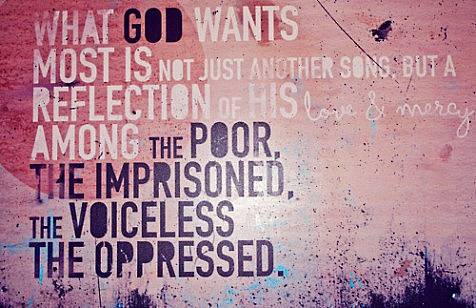
This message was not all that unusual. Amos called
the wealthy church folks in his time “cows”. Micah calls people to “do justice,
and love mercy”. Ezekiel points to Sodom and Gommorah’s ignorance of the poor,
not their sexual indescretions to explain why the communities had fire and
brimstone poured down upon them. Jesus referred to the Pharisees as
“whitewashed tombs” because they were like the people of Isaiah’s day. They had
the appearance of religiosity, but the evidence of actually loving God and
loving neighbor in their life was lacking.
You see, we human beings have a tremendous ability
to compensate for a lack of authentic, personal faith with ritual and rules.
People will argue denominational polity for hours in service to their religious
heritage, and then be rude to the person serving them the meal afterward. They
will wear a cross that goes from their collar to their belt, and ignore their
grandmother dying in a nursing home a few blocks away, begging for a visit.
They will go to a church service and go to eat afterward, talk about the sermon
and the music at the table, and then neglect to give the single mom with three
kids to support a decent tip as they walk out the door of the restaurant.
And yet, at the same time, when faith is combined
with love of neighbor that leads to action, amazing things happen, and God
works. There can be no doubt that many of the advances of our society for
equality and justice have been born in the church, and led by believers that
obeyed God’s call to free the oppressed and have mercy on those everyone else
ignores.
The abolitionist movement was spearheaded and led
by persons of Christian conviction. If you want to see a perfect example of
this, watch the movie Amazing Grace, which chronicles the story of William
Wilberforce. He spent most of his life seeking to abolish slavery in England,
because he was a Christian who believed that God was a God of justice for all
people.

The women’s sufferage movement was, in the
beginning, a Christian movement, advocating for the rights of women. It relied
on the example of Jesus and teachings of Scripture as it called for American
Christians to honor the voices and rights of women.
The civil rights movement was born in the church,
and carried on by the church. And, although the leadership was dominated by the
people who were oppressed because of their skin color, the movement was given
credibility, power, and strength by white persons of priviledge who went to
places like Alabama and Mississippi to fight for the rights of folks that were
being denied basic equality because of the color of their skin.
Nearly every evangelist of days gone by partnered
their evangelistic outreach with ministry to those who were less fortunate. St.
Francis cleaned lepers wounds. Preachers like D.L. Moody and John Wesley
founded and supported orphanages. The earliest Christians were known for
adopting abandoned children and taking them in as their own. Doing justice and
aiding the oppressed has been something many churches have done since the
beginning.
And today, here in Hot Springs, we do many things
to help and remember those in need. We have a spaghetti supper to help out
folks with a meal. We have a clothes closet to help people with those needs. We
are active in the ministerial association, which gives to others in need. We try and make sure each child has a fair
start in school in our community with our school supply and backpack drive. We
also send medical missions to Haiti, so that people can, for at least a little
bit, have some of their basic health care needs addressed. These are all good
things.
Having said that, there is still much we can do.
When we hire somebody to do work for us, do we pay
them a fair wage, or do we tend to pay them as little as we can get away with?
Do we spend our money where people treat their
employees well, and pay them a living wage?
There is a business, based out of California,
which has long committed to do just that. It is called In-and-out burger. It is
a drive-through, like McDonalds. It charges a little bit more, and offers a
high quality product. One of the reasons that it costs a little bit more is
that the employees are paid a little bit better. Managers at an In and Out can
make enough to live comfortably. Why do these people do this? Out of Christian
conviction. Doubt me? Visit one sometime and look for the Bible verses on the
wrappers and boxes they serve their food with. It is a good witness. There are
folks I know that live in that area. They admire their stand for their
employees, and they know why they do it. They community is blessed by
Christians who do justice, and help the oppressed.
What
companies do you buy your products from? To they treat their employees right?
Do you stand
up for people when they are being treated poorly by others?
There is a
television show called “What Would You Do?” The whole premise of this show is
putting people in situations where they have an opportunity to act to support
others when they are being treated unjustly. In a store, a restaurant, on the
street etc.
Are you
aware of how our economic policies make it nearly impossible for peasants in
other countries to earn a living wage?
Are you
aware of how many people are being sexually trafficked in America and overseas?
Or how big of a problem prostitution is in the Dakotas? Especially during rally
time and hunting season? Do you say or do anything about it?
Are you
aware that our neighboring county is either one of the poorest or the poorest
in the nation nearly every year? Does that concern you? Do you think it breaks
the heart of God?
Are you
aware of how long it is taking our government to provide care to soldiers it
was promised to?
Do you think that is right?
Have you
seen racial prejudice at work around you? Do you speak out against it? Do you
stand up for those who are mistreated because of the color of their skin, or
where their family comes from? Why not?
There are a
number of ways we can look out for the widow and orphan. That we can stand up
for the oppressed. That we can do justice for those who are mistreated, and
show compassion for our neighbors that have been hit hard by life and
circumstances. And we can repent for the injustices we have stood for and
perpetuated, been the beneficiaries of and been silent about.
And when we
do that, God promises his forgiveness and grace to be active among us. Though
our sins were like scarlet, they will be white as snow it says. God’s grace is
promised to be active in our lives. It will also flow through us. As we stand
up, and do justice, in the name of Jesus. Amen.
Tuesday, September 03, 2013
HOSPITAL FOR SINNERS SERMON--LABOR DAY 2013
THE TEXT WAS LUKE 14:1-14
Situations like this were not an uncommon
occurrence in my upbringing:
The church ladies were serving up the dishes at
the potluck. I got to the section that had potato salad and I pulled my plate
back. “You don’t want any potato salad?” Mrs. Irwin asks.
“No, I hate potato salad. Blahh,” I responded.
It was at this point I would feel a firm hand on
my shoulder, or a quick tap on the back of my head. “Son….MANNNERS”
“No thank you, Mrs. Irwin. I need to save room for
your yummy chicken casserole,” I would respond.
“I am sorry,” my mom would say, “you try and teach
them but….”
“I completely understand,” Mrs. Irwin would say,
“I raised four of my own.”

Table manners. Keep your elbows off the table.
Chew with mouth closed. Don’t talk with your mouth full. Ask to be excused from
the table. Eat what you are served. Ask for someone to pass the food, don’t
lunge across the table to get it. At least not in polite company.
Table manners were a little more lax when it came
to Thanksgiving dinners in Alaska in high school. Someone would pray for the
meal. At that point, one of the few meals that were prayed over. Perhaps
everyone would share something they are thankful for. Then there was an
announcement, usually from my uncle, which said something like this, “Get while
the getting is good, because in this family we wait for one another like one
pig waits for another.”
At this point people angled and made strategic
alliances to get the food that they wanted in the order that they wanted it.
Rarely was there a shortfall of food on holidays. There was usually at least a
week’s worth of leftovers. But there was still was an ethic to suspend proper
table manners for the first part of the meal in an attempt to make an
aggressive move toward the grub you wanted. In the process there was lots of
joy, laughter, and light-hearted teasing as we all ate.

Around that period of time, there is a story about
a lack of table manners that is still in dispute to this day. It has to do with
eating moose steak. It was a particularly good piece of meat as I remember, and
I am not usually a steak guy. They had been cut into little strips and
flavored. I had grabbed the last piece of meat before my cousin Casey. I was
taunting him. Taking little bites of this strip of steak, moaning, talking
about how good it was. So my Aunt Tammy came up behind me, grabbed my fork,
pulled the remainder of the meat away from me (half of it was in my mouth), and
ate herself. She denies this ever happened. I maintain that it did happen.
And when I got older, and was a youth pastor, I
discovered a different kind of table manners among middle school teens. The
girls, in some strange cooperative venture that I still have yet to understand,
would unpack their lunches, with gobs of good food, and then share the food in
some cooperative venture. Easily sharing with friends, freely grabbing a bite
from a friend’s plate.

The boys on the other hand, created a little
fortress around their food with their arms. They had to protect their meal from
interlopers. Because if someone saw something they liked, they may dive in and
grab a friends food without asking and eat it before they could do something.
It was very primal.
Every culture has table manners. The table manners
are not arbitrary. They are “relationship rules”, designed to help facilitate
positive relationships and good feelings among those gathered around the table.
They are also designed to create boundaries for behavior among the people who
are gathered around the table, and those who are not. There are a lot of rules
and traditions about the table.
In the parable we read, Jesus is invited to the
home of a prominent Pharisee for a meal. This was a meal full of both religious
and political import. The Pharisees were the religious rulers of Israel,
spearheading a moral reform movement among the people. They tended to focus on
following all the rules, and following their rules instead of focusing on
loving relationships with God and others, however, and this put them in a
conflict with Jesus.
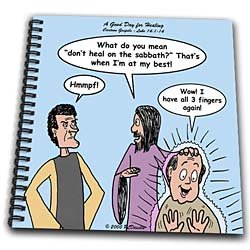
At one point, Jesus begins to teach the people at
the table. His teaching challenges and confronts them and the prejudices.
The first teaching has to do with their seating
arrangements. He was noticing how the guests at the meal were jockeying for
position with one another so that they could sit in the place of highest honor.

He reminds them of the ancient teaching, the
teaching that goes back even to the book of Proverbs. He does so by telling a
thinly veiled parable of attending a wedding feast. In The time of coming to
the table is a time to be humble. Don’t jockey for position, trying to take the
place of honor. That could really get you in trouble. Because if you start
taking a seat of honor, you might be asked by the usher to move to the back.
And you will be drug back to the cheap seats in front of everyone. Instead,
take a position of humility, in the back. Then if someone thinks you need to be
in a position of greater honor, you will be brought up to that position in
front of everyone. Then people will understand that you are both humble and
honorable. Jesus then says the key point: Those who exalt themselves will be
humbled, and those who humble themselves will be exalted.
After he tells this story, Jesus launches into a
teaching that builds upon what he has just said, this time from the perspective
of the host of the party. He says when you throw a party, don’t just invite the
folks that can do things for you, or people that are a part of the
well-respected cool crowd. Instead, invite those folks that nobody included at
that time to a fancy party. The poor, the crippled, the blind, the lame. The
folks who can’t repay your invitation to your party to a party at their
place…because they cannot afford a party at all. Invite the folks that are
otherwise rejected, lonely, pushed aside, neglected. Invite those folks to your
party that nobody else can put up with, that nobody else wants to love or deal
with. That is what God wants you to do.

Jesus said earlier in Luke’s gospel, “I have
not come to call the righteous, but sinners to repentance.” (Luke 5:32). He
says that he has come to seek and save the lost (Luke 15). In this passage and
others it is clear, Jesus intends to create a church that is a hospital for
sinners, not a monument for the saints.
You see, the Pharisees of Jesus’ day had many of their moral
ideas right. But they had a tin man’s faith. Jesus was saying to them, “If you
only had a heart, Pharisees, you would see that the gospel is about justice and
compassion. Even more it is about redemption and renewal. It is about setting
right the broken things in the world. It is about healing the broken. It is
about helping sinners find faith and hope, life and love.
The Pharisees of that day forgot what we often forget as
well. That the church is not simply a monument to the saints, or a place for
good people to do good things. The church is a place where people who
desperately need the life-changing, life-transforming healing power of Jesus can
participate in the way of Jesus and find their life is renewed, transformed and
changed by God’s grace.

There was a title of a book that I loved a few years back. It
was a book about the church, and ideas about leading churches and leading
people to faith in Jesus Christ. The book was called NO PERFECT PEOPLE ALLOWED
and then the subheading in small letters said, “all others welcome”.
I have often dreamed of having that on a banner on the front
of a church I lead: NO PERFECT PEOPLE ALLOWED: all others welcome. I would love
to have this is NEON or something because it tells what the mission of the
church is, a mission that we as church members and participants often forget.
The church is not about perfect people huddling up in order
to hide from the rest of the world. The church is about being in the world to
heal the world. Especially to heal the world from its sin-sickness, its
lonliness, its aimlessness, its lostness.
This week, as we remember Dr. Martin Luther King Jr.’s I have
a dream sermon, and it was a sermon, I think of a similar dream for God’s
church. That God’s church would have open doors to addicts and refugees, the
disabled and the disenfranchised, those that don’t seem to dress the right way,
or smell the right way, or who don’t know what the ‘churchy’ thing to say is at
the right time.
The church is not for people who think they have everything
together and don’t have any struggles. The church is for people like you and I
that sin and we know it. We need Jesus. We need Jesus in our lives to help us
to stop being greedy and selfish, to stop from being bitter and mean. We need
to be transformed. Because if we are left as we are, we are sunk.
And so we come here today, seeking hope. Seeking knowledge.
Seeking support. Seeking to know that we are not alone in this world, with just
us and our sin, but that God is with us. Restoring us. Reviving us. Redeeming
us.
The table manners of the kingdom is that all are welcome, and
none should be denied. The table manners of the kingdom tell us that we should
not seek to be served but to serve. The call of the kingdom tells us that we
are not supposed to build an institution by human standards, but that we are to
be a part of the movement of the Holy Spirit that takes this old, broken world
and makes it into a new world.
And, in the process, we are to acknowledge that we are among
those who need to be rescued from sin. We are among those who need to be made
whole by the savior. We are among those who need God to make us into a new
creation. That it is not just them that need a redeemer, but it is me, Clint
Walker, and you as well.
So won’t you come to Jesus today. Won’t you name yourself
among the imperfect? Won’t you be made new? And won’t you join the church
proclaiming to the world that this church, UNITED CHURCHES, is a healing place
for wonderful imperfect folks like yourselves. I hope you will.
Monday, September 02, 2013
Subscribe to:
Posts (Atom)
Reformation Commentary of the Bible: Old Testament Volume XIII--Psalms 73-150
Reformation Commentary of the Bible: Old Testament Volume XIII--Psalms 73-150 Edited by Herman J. Selderhuis IVP Academic ISBN 978-0-8308-2...

-
On Getting Out of Bed By Alan Noble IVP ISBN 978-1-5140-0443-2 Reviewed by Clint Walker Have you ever gotten a good night’s sleep, and stil...
-
Book Discussion: The Shack Overview Questions If you were to rank the book: THE SHACK on a scale of 1-5, what would you rate it and why woul...

