Thursday, September 05, 2013

Embrace the Call--Sermon on 8.25.13

Embrace the Call
We all have different journeys. Different cards we are dealt. Each of us, because of our upbringings, have assets and gifts that we bring to the table from our personal histories. We also have challenges and limitations we face based upon our personal histories.
God was good enough to bless me with a wonderful wife, two super cool little kids, and a dog named Jake. Now, I don’t worry too much about the dog, but I do, at times, get concerned about my wife and children.

One of the things that I get concerned about from time to time is how their life has been altered because of my choice to accept the call of Christ to full-time Christian ministry. Sometimes, I believe it is an asset to be in a preacher’s family. Other times, I believe it is a burden that has been placed upon them.


With Jennifer, I worry about expectations people have for her. You know the expectations. Big poofy, bouffant hair. Perhaps a beehive. Playing the piano. Having a southern accent. Dressing her husband in a shiny suit with a pinky ring. Making sure his toupee is on just right. All while playing the piano perfectly. And, of course, Jennifer fits none of those expectations.


Then there are the kids.The other day, Karis and I were playing on the floor. “Pastor,” she said, “could you come here for a second.” 

“Don’t call me ‘Pastor’ Karis, call me Daddy,” I said.

But she kept insisting. PASTOR. PASTOR. PASTOR.

Jennifer asked, “What does Pastor do?”.

“He talks to people, and tells them what to do,” she said.


The conversation went from there. I thought I was in some clerical twilight zone, where my child was having some alien, aberrant experience on Planet Pastor. It was creepy.
I think of my friends who are PKs. One is a fundamentalist pastor in the country near Kannapolis, NC. He and his brother married sisters from one of the countries that lived on the Eastern end of the former Soviet Union. The other two are atheists.


I say all of this concerns me at times, and it does. But I am also aware of this, God has called me for as long as he has called me to do full-time Christian ministry. And that will have its challenges and its joys for all of us. But, it is our job to EMBRACE THE CALL. The call of God to say what he wants me to say, to go where he wants us to go, and to do what he wants us to do.

Jeremiah was a son of a priest. He grew up in a town called Anatoth. Anatoth was known for having a priest that was on the wrong side of a battle for who would be king three hundred years before Jeremiah was born. The priest Abiathar, after David died, stood on the side of Solomon’s brother in his quest for the Kingdom of Israel. When Solomon took power, he banished him from Jerusalem and sent him back to Anatoth.

Jeremiah grew up a pastor’s kid. And then, while he was young, perhaps in junior high, he hears God call him into the ministry. God says from the moment he was conceived God had a plan for Jeremiah. He was to be a prophet to the nations. He was to tell people God’s Word, often stepping on their toes, and he was to say what God told him to say whether the people who listened to Jeremiah wanted to hear it or not. And almost immediately, Jeremiah balks.

“Ummm. God…first of all, I am not a good speaker. Secondly, I am too young…” You see, Jeremiah was a priest’s son. He had seen the life prophets had. He had been the preacher’s kid, and so he was making the excuses on why he could not do what he felt God calling him to do.


I know how he feels. Why would God call me? No matter how much I try and improve my voice, I am still going to sound like I grew up among a bunch of loggers and mill workers in Southern Oregon. I am fat and balding. There is no way I am going to have that glossy, full-head of hair like Joel Osteen, Benny Hinn, or David Jeremiah.

“Don’t say, ‘I am too young’” God replies in the middle of Jeremiah’s excuses, “you are going to say what I want you to say, you are going to go where I want you to go, and I am going to be with you” He actually says that he would rescue Jeremiah, which if I were Jeremiah I would start to have questions about what I am going to be rescued from.
God tells Jeremiah he is going to be used to uproot and tear down, to destroy and overthrow, to build and to plant. His words will be powerful Words. Hard words. God’s words.

God’s call comes to Jeremiah. It is not an easy call, but he has the courage to take it on. He embraces the call of God.

Now, with churches that have positions like a pastor, as ours does, or elders, or bishops, or deacons, it can be easy to think only some special ones of us are called by God. The rest of us, well, we are just along for the ride, trying to do what that strange creature called the “Pastor” tells us to do.

Nothing could be further from the truth.

The truth is that each and every one of us, as we began this summer discussing, has gifts from God, to be used in God’s service, to bring God glory.

Each and every one of us, Psalm 139 says, was knit together in our mother’s womb. Each and every one of us has been given skills, abilities, as well as gifts from God to serve Christ and his kingdom. Each of us has also been given opportunities, whether we feel gifted or not, to do our part to be a signpost for God, speaking his word, pointing with our lives like an arrow to heaven.


The book of Revelation calls us a kingdom of priests. Each with a unique call that God has given us, to be who he has made us to be. He calls each of us into small and large acts of obedience in service to his church and his kingdom. I challenge you: EMBRACE THAT CALL.
You know that person you have been avoiding, because you know if you say hi to them or drop by their home they will be talking with you for an hour about every ailment they have and every difficulty everyone around them is going through. You know God is leading you to visit with them, because you know they are lonely, and they need your attention and your Christian love. Obey that prompting of the Holy Spirit. EMBRACE THE CALL.
You have thought about going on a mission trip for years. Maybe to Haiti. Maybe somewhere else. You are nervous about travelling. You are afraid you are going to get sick. You wonder if the people you are going to work with will like you, or want to deal with you. You think maybe you are too old for such ventures. STOP with your EXCUSES. If God is leading you to go, EMBRACE THE CALL.


You work with this person who has gone through a lot in the last year. And because they have had to struggle with a lot, they are beginning to wonder if there is more to life than just working, eating, running errands, and going to sleep. You sense that they might be open to hearing about Jesus Christ, and how having a personal relationship with Christ can change their life for the better, adding hope and joy and purpose to their lives. You are nervous about sharing your faith. You are wondering if your friend would think you are a freak, or you worry that you will not find the right words when you need them. Put your excuses behind you. EMBRACE THE CALL.

You know what God is leading you to do. Writer Fredrich Buechner says ““The place God calls you to is the place where your deep gladness and the world’s deep hunger meet.” And for many of us I think that works. Have courage to do what God is leading you to do. EMBRACE THE CALL.

 I would say that if we follow the example of Jeremiah, sometimes our deep gladness plays a lesser role than the fact that we love God so much that we have to be obedient to him, happy or sad, and simply EMBRACE THE CALL, and trust that God will work through us.

God calls each of us to take on the role he has called us to play, and to be obedient to what he wants us to do. We have heard that, I hope, more than once, this summer.

But as believers, we are called first and foremost to be disciples of Jesus Christ. And so we come to this table. Some of us are joyful. Some heartbroken. And we recommit ourselves, not to a number of tasks, but simply to devotion to our Lord and Savior Jesus Christ. As we read Jeremiah, it is God’s call that leads him, God’s strength that sustains him, God’s power that compels him to embrace his call. Everything is born out of a relationship with God.

The same is true of us. So let us come to this table, and let us take time with Jesus. Let us remember what he has done for us. Let us remember why he did it. And let us be renewed in our commitment to him. Then, as we go, mysteriously we will be empowered to EMBRACE THE CALL to serve the one we worship, adore, and love. Amen.


THE WRESTLER--a newspaper article

The Wrestler

One of my favorite characters in the Bible is Jacob. He is one of my favorite people in Scripture not because he always did the right thing, or because he was perfect, but because I can identify with him more closely than most Bible characters.
Jacob spent his life scrapping for everything he got. He was a twin with his brother Esau. While Esau came out of his mother Rachel’s womb first, Jacob was grabbing at his heel trying to get ahead of his brother on the day he was born.

Jacob was the youngest, so he had to fight harder to get ahead. And that is what he did. He tricked his bigger and stronger brother out of his greater share of his father’s inheritance. Then he stole his father’s blessing to carry on the family name and mission. After that his brother wanted to kill him, so he had to run.
He went to his mother’s homeland, and married two women. His father-in-law tricked him once, but with skillful animal husbandry he found a way to get ahead with him as well. He spent most of his life fighting for a blessing.

Then came the day when he had to meet his brother. After decades of being estranged, he was frightened and afraid. He sent his servants, wives, and kids ahead of him, in case his brother wanted to kill him. He made camp by the side of a brook. Still struggling. Still fighting for a blessing. Still longing for approval.

A stranger came to him in the night. They engaged in hand to hand combat. For hours upon hours they fought. All through the night. After a while, it became clear to Jacob that he was wrestling a supernatural being. Either an angel or God himself.

They wrestled until the sun was about to come up. The strange being said he had to go. Jacob asked the person’s name. He wouldn’t share it. Then Jacob said he would not let the being go without a blessing. He received the blessing, and then the being disappeared into thin air. Jacob believed he had wrestled with God, and won a blessing. He had an injury to his hip, he would walk with a limp, but he went forward in faith that God had blessed him.
My question is, why did Jacob wrestle God for a blessing he had received decades ago? And the answer is, because that is who Jacob was. Always fighting. Always wrestling. And God was willing to either send an angel or come in human form and wrestle with Jacob. And once again offer the blessing. Jacob was a fighter. He always had to fight for what he got. He got through life by sheer force of will. God understood that, and accepted and loved Jacob as he was.

I think there are a lot of us like Jacob. We start life just a little bit out of step, or feeling like we are a little bit behind everyone. And we feel like we have to catch up. Even when we encounter God and are blessed by Him, we have to keep fighting, keep wrestling, keep striving to get where we want to be. We are the underdog, always trying to win against impossible odds. We may have been blessed with a great family, enough money to get by on, a car that runs, and a roof over our heads. We still feel like we have fight and struggle with men and God for acceptance, approval, belonging, and even love.

Jacob’s story reminds people like us of two things. First, God loves us as we are, and meets us where we are at in our lives. Second, God wants to bless us. It is often us who want to strive and fight and battle for a blessing that we already have. Or, instead of surrendering our lives to God and receiving that blessing, we want to fight and battle for everything we get. We want to earn the approval of God and people, and God offers it for free. 

Wednesday, September 04, 2013

SERMON ON DOING JUSTICE PREACHED ON 8.11.13

DO JUSTICE
Text of this message is Isaiah 1


Most of you who know about my spiritual journey know a few things about me. One thing you may or may not have figured out at this point is that I am a both a committed Christian, and I am a recovering fundamentalist—or at least recovering from my fundamentalist upbringing.

I grew up in churches full of wonderful folks that loved Jesus and loved God’s Word. And for that, I will forever be thankful. I grew up going to camps with Bible quizzes and in Sunday School classes that emphasized and rewarded memorization of Scripture. This is a good thing.

The struggle that I had with churches that were more fundamentalist was two-fold. Strangely, both of these struggles were born out of the values that the church taught me in the first place, love of Scripture and love of Christ.


The first struggle I had as I grew both in my knowledge of Scripture and as I matured intellectually was that a lot of the things that the church I grew up in passed off as Christian doctrine were not as much doctrine as they were legalisms. Pastors would yell at kids who walked into church with earrings, but there were places I found in the Old Testament where men were commanded to have earrings. We were told that guys and gals should not swim together in modest swimming attire, but David danced in his undies through the palace complex of Saul—and Scripture seems to commend him for it. I was told that the Bible said that the King James Version is the only true translation of Scripture into the English language, when in fact a little bit of research and intellectual maturity blow that whole theory out of the water.


The second struggle I had was that although the church commended teaching the “whole counsel of God”, there were themes that pastors never shared about in their messages, and never taught about in their studies. One of those themes was God’s call to stand for justice for the oppressed, and to be compassionate toward those who were suffering and less fortunate. Sure, when we had people in our church who had a hard time, we would help them out. But, there was no dealing with all that Jesus and the prophets had to say about social justice and compassion for the poor and how that ties into a life of holiness.
It was not until I was a sophomore in college and taking a “Themes in Biblical History” course that encountered what the Scripture had to teach on such matters. Particularly through a book by a man named Ron Sider called, “Rich Christians in an Age of Hunger”.
This passage we are looking at here is one of the many throughout Scripture that encourages the people of God to turn their attention toward those that are denigrated and forgotten, those that are ignored and denied a fair shake, those who are poor but denied mercy.  God says, through the prophet Isaiah, that if we pay attention to those who are mistreated and forgotten, and take up their cause, then he will support us and bless us. But if we neglect those folks, then there will be a price to pay.


The picture Isaiah paints is pretty vivid. They come to church. They are at all the special services. The people of God take all of their special offerings. They sing the right songs in perfect pitch. They observe everything correctly. And yet, as they lift up their hands in praise, there is blood on their hands. Not the blood of the sacrifices, it is implied, but the blood of their neighbors whom they have robbed, ignored, mistreated and neglected.
God says he is sick and tired of all of their worship services. They are all just a big show. The people of God have gotten the ritual, but missed the call of God that the ritual pointed them toward. And so God is present at their offerings, Isaiah says, but he has his face in his hands and is trying to put in his earplugs. Their worship was a joke. It was a joke because their lives and their actions didn’t match what they were professing with all of this religious show.


This message was not all that unusual. Amos called the wealthy church folks in his time “cows”. Micah calls people to “do justice, and love mercy”. Ezekiel points to Sodom and Gommorah’s ignorance of the poor, not their sexual indescretions to explain why the communities had fire and brimstone poured down upon them. Jesus referred to the Pharisees as “whitewashed tombs” because they were like the people of Isaiah’s day. They had the appearance of religiosity, but the evidence of actually loving God and loving neighbor in their life was lacking.


You see, we human beings have a tremendous ability to compensate for a lack of authentic, personal faith with ritual and rules. People will argue denominational polity for hours in service to their religious heritage, and then be rude to the person serving them the meal afterward. They will wear a cross that goes from their collar to their belt, and ignore their grandmother dying in a nursing home a few blocks away, begging for a visit. They will go to a church service and go to eat afterward, talk about the sermon and the music at the table, and then neglect to give the single mom with three kids to support a decent tip as they walk out the door of the restaurant.

And yet, at the same time, when faith is combined with love of neighbor that leads to action, amazing things happen, and God works. There can be no doubt that many of the advances of our society for equality and justice have been born in the church, and led by believers that obeyed God’s call to free the oppressed and have mercy on those everyone else ignores.

The abolitionist movement was spearheaded and led by persons of Christian conviction. If you want to see a perfect example of this, watch the movie Amazing Grace, which chronicles the story of William Wilberforce. He spent most of his life seeking to abolish slavery in England, because he was a Christian who believed that God was a God of justice for all people.


The women’s sufferage movement was, in the beginning, a Christian movement, advocating for the rights of women. It relied on the example of Jesus and teachings of Scripture as it called for American Christians to honor the voices and rights of women.


The civil rights movement was born in the church, and carried on by the church. And, although the leadership was dominated by the people who were oppressed because of their skin color, the movement was given credibility, power, and strength by white persons of priviledge who went to places like Alabama and Mississippi to fight for the rights of folks that were being denied basic equality because of the color of their skin.

Nearly every evangelist of days gone by partnered their evangelistic outreach with ministry to those who were less fortunate. St. Francis cleaned lepers wounds. Preachers like D.L. Moody and John Wesley founded and supported orphanages. The earliest Christians were known for adopting abandoned children and taking them in as their own. Doing justice and aiding the oppressed has been something many churches have done since the beginning.
And today, here in Hot Springs, we do many things to help and remember those in need. We have a spaghetti supper to help out folks with a meal. We have a clothes closet to help people with those needs. We are active in the ministerial association, which gives to others in need.  We try and make sure each child has a fair start in school in our community with our school supply and backpack drive. We also send medical missions to Haiti, so that people can, for at least a little bit, have some of their basic health care needs addressed. These are all good things.

Having said that, there is still much we can do.

When we hire somebody to do work for us, do we pay them a fair wage, or do we tend to pay them as little as we can get away with?

Do we spend our money where people treat their employees well, and pay them a living wage?

There is a business, based out of California, which has long committed to do just that. It is called In-and-out burger. It is a drive-through, like McDonalds. It charges a little bit more, and offers a high quality product. One of the reasons that it costs a little bit more is that the employees are paid a little bit better. Managers at an In and Out can make enough to live comfortably. Why do these people do this? Out of Christian conviction. Doubt me? Visit one sometime and look for the Bible verses on the wrappers and boxes they serve their food with. It is a good witness. There are folks I know that live in that area. They admire their stand for their employees, and they know why they do it. They community is blessed by Christians who do justice, and help the oppressed.

What companies do you buy your products from? To they treat their employees right?

Do you stand up for people when they are being treated poorly by others?

There is a television show called “What Would You Do?” The whole premise of this show is putting people in situations where they have an opportunity to act to support others when they are being treated unjustly. In a store, a restaurant, on the street etc.

Are you aware of how our economic policies make it nearly impossible for peasants in other countries to earn a living wage?

Are you aware of how many people are being sexually trafficked in America and overseas? Or how big of a problem prostitution is in the Dakotas? Especially during rally time and hunting season? Do you say or do anything about it?

Are you aware that our neighboring county is either one of the poorest or the poorest in the nation nearly every year? Does that concern you? Do you think it breaks the heart of God?

Are you aware of how long it is taking our government to provide care to soldiers it was promised to?

Do you think that is right?

Have you seen racial prejudice at work around you? Do you speak out against it? Do you stand up for those who are mistreated because of the color of their skin, or where their family comes from? Why not?

There are a number of ways we can look out for the widow and orphan. That we can stand up for the oppressed. That we can do justice for those who are mistreated, and show compassion for our neighbors that have been hit hard by life and circumstances. And we can repent for the injustices we have stood for and perpetuated, been the beneficiaries of and been silent about.

And when we do that, God promises his forgiveness and grace to be active among us. Though our sins were like scarlet, they will be white as snow it says. God’s grace is promised to be active in our lives. It will also flow through us. As we stand up, and do justice, in the name of Jesus. Amen.


Tuesday, September 03, 2013

HOSPITAL FOR SINNERS SERMON--LABOR DAY 2013

THE TEXT WAS LUKE 14:1-14

Situations like this were not an uncommon occurrence in my upbringing:

The church ladies were serving up the dishes at the potluck. I got to the section that had potato salad and I pulled my plate back. “You don’t want any potato salad?” Mrs. Irwin asks.

“No, I hate potato salad. Blahh,” I responded.

It was at this point I would feel a firm hand on my shoulder, or a quick tap on the back of my head. “Son….MANNNERS”

“No thank you, Mrs. Irwin. I need to save room for your yummy chicken casserole,” I would respond.

“I am sorry,” my mom would say, “you try and teach them but….”

“I completely understand,” Mrs. Irwin would say, “I raised four of my own.”


Table manners. Keep your elbows off the table. Chew with mouth closed. Don’t talk with your mouth full. Ask to be excused from the table. Eat what you are served. Ask for someone to pass the food, don’t lunge across the table to get it. At least not in polite company.

Table manners were a little more lax when it came to Thanksgiving dinners in Alaska in high school. Someone would pray for the meal. At that point, one of the few meals that were prayed over. Perhaps everyone would share something they are thankful for. Then there was an announcement, usually from my uncle, which said something like this, “Get while the getting is good, because in this family we wait for one another like one pig waits for another.”

At this point people angled and made strategic alliances to get the food that they wanted in the order that they wanted it. Rarely was there a shortfall of food on holidays. There was usually at least a week’s worth of leftovers. But there was still was an ethic to suspend proper table manners for the first part of the meal in an attempt to make an aggressive move toward the grub you wanted. In the process there was lots of joy, laughter, and light-hearted teasing as we all ate.


Around that period of time, there is a story about a lack of table manners that is still in dispute to this day. It has to do with eating moose steak. It was a particularly good piece of meat as I remember, and I am not usually a steak guy. They had been cut into little strips and flavored. I had grabbed the last piece of meat before my cousin Casey. I was taunting him. Taking little bites of this strip of steak, moaning, talking about how good it was. So my Aunt Tammy came up behind me, grabbed my fork, pulled the remainder of the meat away from me (half of it was in my mouth), and ate herself. She denies this ever happened. I maintain that it did happen.

And when I got older, and was a youth pastor, I discovered a different kind of table manners among middle school teens. The girls, in some strange cooperative venture that I still have yet to understand, would unpack their lunches, with gobs of good food, and then share the food in some cooperative venture. Easily sharing with friends, freely grabbing a bite from a friend’s plate.


The boys on the other hand, created a little fortress around their food with their arms. They had to protect their meal from interlopers. Because if someone saw something they liked, they may dive in and grab a friends food without asking and eat it before they could do something. It was very primal.

Every culture has table manners. The table manners are not arbitrary. They are “relationship rules”, designed to help facilitate positive relationships and good feelings among those gathered around the table. They are also designed to create boundaries for behavior among the people who are gathered around the table, and those who are not. There are a lot of rules and traditions about the table.

In the parable we read, Jesus is invited to the home of a prominent Pharisee for a meal. This was a meal full of both religious and political import. The Pharisees were the religious rulers of Israel, spearheading a moral reform movement among the people. They tended to focus on following all the rules, and following their rules instead of focusing on loving relationships with God and others, however, and this put them in a conflict with Jesus.


At one point, Jesus begins to teach the people at the table. His teaching challenges and confronts them and the prejudices.

The first teaching has to do with their seating arrangements. He was noticing how the guests at the meal were jockeying for position with one another so that they could sit in the place of highest honor.


He reminds them of the ancient teaching, the teaching that goes back even to the book of Proverbs. He does so by telling a thinly veiled parable of attending a wedding feast. In The time of coming to the table is a time to be humble. Don’t jockey for position, trying to take the place of honor. That could really get you in trouble. Because if you start taking a seat of honor, you might be asked by the usher to move to the back. And you will be drug back to the cheap seats in front of everyone. Instead, take a position of humility, in the back. Then if someone thinks you need to be in a position of greater honor, you will be brought up to that position in front of everyone. Then people will understand that you are both humble and honorable. Jesus then says the key point: Those who exalt themselves will be humbled, and those who humble themselves will be exalted.

After he tells this story, Jesus launches into a teaching that builds upon what he has just said, this time from the perspective of the host of the party. He says when you throw a party, don’t just invite the folks that can do things for you, or people that are a part of the well-respected cool crowd. Instead, invite those folks that nobody included at that time to a fancy party. The poor, the crippled, the blind, the lame. The folks who can’t repay your invitation to your party to a party at their place…because they cannot afford a party at all. Invite the folks that are otherwise rejected, lonely, pushed aside, neglected. Invite those folks to your party that nobody else can put up with, that nobody else wants to love or deal with. That is what God wants you to do.


Jesus said earlier in Luke’s gospel, “I have not come to call the righteous, but sinners to repentance.” (Luke 5:32). He says that he has come to seek and save the lost (Luke 15). In this passage and others it is clear, Jesus intends to create a church that is a hospital for sinners, not a monument for the saints.

You see, the Pharisees of Jesus’ day had many of their moral ideas right. But they had a tin man’s faith. Jesus was saying to them, “If you only had a heart, Pharisees, you would see that the gospel is about justice and compassion. Even more it is about redemption and renewal. It is about setting right the broken things in the world. It is about healing the broken. It is about helping sinners find faith and hope, life and love.

The Pharisees of that day forgot what we often forget as well. That the church is not simply a monument to the saints, or a place for good people to do good things. The church is a place where people who desperately need the life-changing, life-transforming healing power of Jesus can participate in the way of Jesus and find their life is renewed, transformed and changed by God’s grace.


There was a title of a book that I loved a few years back. It was a book about the church, and ideas about leading churches and leading people to faith in Jesus Christ. The book was called NO PERFECT PEOPLE ALLOWED and then the subheading in small letters said, “all others welcome”.

I have often dreamed of having that on a banner on the front of a church I lead: NO PERFECT PEOPLE ALLOWED: all others welcome. I would love to have this is NEON or something because it tells what the mission of the church is, a mission that we as church members and participants often forget.
The church is not about perfect people huddling up in order to hide from the rest of the world. The church is about being in the world to heal the world. Especially to heal the world from its sin-sickness, its lonliness, its aimlessness, its lostness.

This week, as we remember Dr. Martin Luther King Jr.’s I have a dream sermon, and it was a sermon, I think of a similar dream for God’s church. That God’s church would have open doors to addicts and refugees, the disabled and the disenfranchised, those that don’t seem to dress the right way, or smell the right way, or who don’t know what the ‘churchy’ thing to say is at the right time.

The church is not for people who think they have everything together and don’t have any struggles. The church is for people like you and I that sin and we know it. We need Jesus. We need Jesus in our lives to help us to stop being greedy and selfish, to stop from being bitter and mean. We need to be transformed. Because if we are left as we are, we are sunk.


And so we come here today, seeking hope. Seeking knowledge. Seeking support. Seeking to know that we are not alone in this world, with just us and our sin, but that God is with us. Restoring us. Reviving us. Redeeming us.
The table manners of the kingdom is that all are welcome, and none should be denied. The table manners of the kingdom tell us that we should not seek to be served but to serve. The call of the kingdom tells us that we are not supposed to build an institution by human standards, but that we are to be a part of the movement of the Holy Spirit that takes this old, broken world and makes it into a new world.

And, in the process, we are to acknowledge that we are among those who need to be rescued from sin. We are among those who need to be made whole by the savior. We are among those who need God to make us into a new creation. That it is not just them that need a redeemer, but it is me, Clint Walker, and you as well.


So won’t you come to Jesus today. Won’t you name yourself among the imperfect? Won’t you be made new? And won’t you join the church proclaiming to the world that this church, UNITED CHURCHES, is a healing place for wonderful imperfect folks like yourselves. I hope you will.

Thursday, August 29, 2013

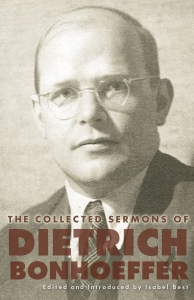
Book Review of The Collected Sermons of Bonhoeffer ed. by Isabel Best

Enlarge

The Collected Sermons of Bonhoeffer
edited and Introduced by Isabel Best
ISBN 978-0-8006-9904-8
Fortress Press
Reviewed by Clint Walker

In my first year after seminary, I served with a senior pastor and mentor who was well-read, intelligent, and thoughtful. One of the blessings of that brief moment of mentoring is that it was, in many ways, like a residency or an paid internship my first year in ministry. The time with Dave Hansen ended up being a fine transition from the seminary world to the world of full-time Christian service. Rather than being either dismissive or wistful about seminary study, Dave taught me how to use my education and intellectual skills for the work of the ministry.

One of the first challenges I had when I continued to read deeply of theological and biblical scholarship after seminary is to not make my learning theoretical, but to make it practical. As I met with a few other guys to read Calvin's Institutes in a diner before we would start our day in service to the church once a month, I was reminded that Calvin and Luther were pastors as well as academics. Their theology was tried and tested and lived in the world with other believers.

Perhaps this is one reason I love The Collected Sermons of Bonhoeffer. Bonheoffer's sermons show a first class mind and theological intellect wrestling with communicating Biblical truth to every day people. Each of the sermons gives us examples of the depth of Bonhoeffer's thinking, but that thoughtful interaction with Scripture is communicated to people in their stations in life, relating to what they are going through. It is simply brilliant.

Isabel Best has also done an excellent job in compiling the Collected Sermons of Bonhoeffer in such a way as to tell us the story of Bonhoeffer as well. We see, as she shares sermons chronologically and strategically, a development in Bonhoeffer's thinking, his personal mission, and his ministry as a whole. We read his sermons in Barcelona, Berlin, London, and Finkenwalde. We follow the life of Bonhoeffer through his sermons, and Best's skillful introductions to each one of them.

Since I have received this resource from Fortress Press to review, I have been patiently making my way through the text. Reading sermons as devotionals at times, I have personally been moved and challenged by Pastor Dietrich's preaching. And, on moments I need it, I will return once again to this fine book.

This is a resource needed on every pastor's bookshelf.

Saturday, August 24, 2013

Sabbath: A Poem from 2007

It's strange
gazing back
at
a full day
of
activity
and
feeling empty
and
enclosed
once again
as it
comes
to a
hasty
close

It's strange
staring away
an
empty day
of
deck chairs
and
soda pop
and
feeling full of
dreams and affection
as the sun
sets
in purples
and oranges

It's strange
how we
refuse
ourselves
the things
that fuel
us
and fuel
ourselves
with
the refuse
of a
life
frantically
lived.

Book Review of 10 Prayers You Can't Live Without by Rick Hamlin


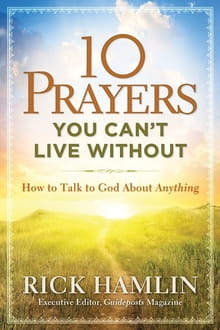
10 Prayers You Can't Live Without: How to Talk to God about Anything
by Rick Hamlin
ISBN 978-0-8249-3218-3
Guideposts
Reviewed by Clint Walker

Have you ever felt like you needed to pray and did not know how? Or have you ever felt like there was more to a life of prayer than you have discovered yet? Many of us have, and we don't do anything about it. Instead we just stay spiritually stagnant, unwilling or unable to grow to be the person of prayer that we long to be.

It is into this community of people who want to pray more, or pray better, but do not quite know how that Rick Hamlin shares 10 Prayers You Can't Live Without. This book contains 10 relatively simple prayers that can change anyone's life. Each of these ways of praying is thoroughly Biblical, and will add depth to a persons spiritual journey.

As is typical of Guideposts, there are plenty of stories to illustrate each prayer the author presents. Some of the stories are fairly cheesy (rescuing a skunk from a yogurt container--really?). Others stories are very moving, such as the story of Robin Roberts' mother's Christmas prayer after her husband had died earlier in the year.

When I ordered this book to review from a media group, I neglected to notice that the book was written by Guideposts. What I knew about Guideposts was that it was the devotional that old ladies read, and that the folks with Guideposts talked a lot about angel visitation. So, the book kept moving to the back of my review cue. I was pleasantly surprised to find the depth and thoughtfulness that has went into this book, and may even have to give the Guideposts folks another shot at gaining my attention and support.

I plan on using this book either in a teaching series, or as a guide for a sermon series in the next year or two. I think anyone who reads this fine book will find something that they can grow from on their Christian journey.

Book Review of Landmarks by Bill Delvaux


Landmarks: Turning Points on Your Journey Toward God
by Bill Delvaux
ISBN 978-1-4336-7922-3
B & H Publishing Group
Reviewed by Clint Walker

Bill Devaux is a teacher, coach, and minister to men and boys. He is also the founder of Landmark Journey Ministries in Tennessee. As the author of Landmarks: Turning Points on Your Journey Toward God, Delvaux gives us a glimpse of his work, as well as some of the thinking and energy behind it.

The point of Landmarks, as I read it, is that every life has certain crossroads that determine the direction one's life will go. They are "landmarks" as they are places in our journey that anticipate arriving at, and we can also point back to, and know that they made a huge difference in who we have become. Like the little historical markers along the freeway, they are places in our personal and spiritual journey where we can say, "Something important happened here!"

Each of these landmarks are fairly general. They are that way on purpose, because they are crossroads that everyone must come to on their journey of faith. Furthermore, how we navigate these landmarks makes all the difference in the rest of our journey through life.

Most of the items that Delvaux lists as landmarks are not necessarily single moments, but choices made, perhaps even imperceptibly, over a period of time. For instance, one chapter discusses idols, and how we choose what we truly worship, and how we take up other gods besides God, even if we don't know what we are doing. Another chapter discusses how we form bonds, and how we need to be bonded to Christ for a healthy faith. One chapter discusses the importance of a choice of a mate.

As I studies the ministry Delvaux leads, I began to ponder how these principles guide his work with men and boys on manhood,. Does he use these landmarks to guide a certain "rite of passage" journey from childhood to adulthood. This book might work as a guide for discussing such matters.

This is a thoughtful book, and an interesting read from this first time author. I look forward to what he will write and have to say next.

Thursday, August 22, 2013

Self-instructed doctoral program 1.2


A couple of days ago, I said I was not going to be able to ever get a doctorate, and so if I wanted to learn what I wanted to learn, I needed to set up my own doctoral program and find ways to learn what I want to learn on my own.

So, one of the challenges in creating my own learning plan is narrowing my focus of what I want to learn. On my plate are several learning projects that have been waiting in the balance for a while. I was trying to bring them together under one focus. What I have decided to do is base my study on the importance of narrative in spiritual formation and congregational leadership. My "degree plan" looks something like this Tell me what you think of this as a learning plan:


INTRODUCTION
Narrative-Driven Models of Spiritual Formation
     Story of God, Story of Us Conference
   
     Study of the Following Texts

FOUNDATIONS
Biblical Foundations of Narrative-Driven Discipleship OT: Study of the work of Walter Bruggemann

Biblical Foundations of Narrative-Driven Discipleship NT: Study of the work of N.T. Wright

Theological Foundations of Narrative-Driven Discipleship: Study of the Work of Stanley Hauerwas and Kevin Van Hoozier

Historic Foundations of Narrative-Driven Discipleship: Spiritual Formation among the Communion of Saints

CONGREGATIONAL LEADERSHIP

Narrative-Driven Community Foundations--Understanding the community as story-formed

Narrative-Driven Leadership Development:  Spiritual Direction of Leadership Teams

Narrative-Driven Outreach: Forming a church's identity as a missional congregation

Narrative-Driven Preaching--Proclaiming the narrative of Christ to a story-formed community

The Practice of Remembering the Narrative--Worship as telling and entering into the Christ-narrative

Narrative-Driven Pastoral Care I --Spirituality of Place in the life of the believer

Narrative-Driven Pastoral Care II--Spiritual Direction of Individuals through Narrative integration

Narrative-Driven Educational Praxis--Teaching as Story Formation w/ the Aprentis Curriculum


Dissertation: TBA


Tuesday, August 20, 2013

Rewriting my life goals

I have wanted to go on and get further education since I was about a year out of seminary. I never really felt like I wanted to leave the ministry to get the education, but I always thought I would like to get a D.Min, and perhaps teach a few Bible classes at a school somewhere. Or get a Ph.D. after about 20 years in the ministry and become a professor.


As I grew older and more experienced in ministry, my priorities for wanting to go back for more schooling changed. I wanted to learn more! I wanted to study things I had not gotten to study as much when I was younger. I wanted to get into an environment that challenged me to use my brain in the ways that only an education can challenge me. I wanted to gain expertise in some areas.

This month, I have turned 40. This was really my year to look at doctoral programs. We are out of school debt. The kids are getting a little older. The car will be paid off soon. I am losing weight, which will make travel easier. I thought, maybe if I can find something by the end of this year, then in the fall of 2014 I would begin my journey.

Then life happened. Baby bills were not completely covered. Jennifer has gotten breast cancer. Church attendance is down a little. More and more it becomes apparent that the dream of getting further education is really not in the cards for me. I can't afford it. I can't be away from my family that much. I have different priorities.

It has become equally clear to me, especially as I look back on pastors of old, that I can still pursue my education, and do a lot of in-depth learning that I want to do, I am just going to have to create my own learning environment. I am going to develop my own curriculum, write papers based on my studies, and make my own personal doctoral program. Might not get me in the door teaching anywhere, but it will allow me to gain the knowledge that I want. I am going to need to find mentors that will support me, and keep me accountable.

So, in the next few weeks I am going to create my own "working pastor's ph.d.' for myself, and then seek to achieve what I have set out to do. Wish me luck. Wish me strength. And pray that I have the courage to follow through..

Saturday, August 17, 2013

Book Review of The Intentional Christian Community Handbook by Dan Janzen


The Intentional Christian Community Handbook
by David Janzen
ISBN 978-1-61261-237-9
Paraclete Press
Reviewed by Clint Walker

When I was in college, I had romantic dreams about living in intentional community. I had visited Jesus People USA for worship my freshman year, and was impressed with both the intentionality and the diversity of that community. I was also impressed with their impact-filled ministries that they owned and operated. This fantasy continued until I felt called to get theological education, and also felt the need to pay off my debt before entering into some sort of Christian communal venture.

That was twenty years ago. I am now invested in leading a traditional congregation, raising a family, and providing for those I love. However, there is still some small part of me that is drawn to the hope and possibility of sharing life and resources together with others as we unite in ministry and seek to live more simply.

In the last ten years, different models of sharing life in intentional Christian community have begun to arise, and the idea of communal living has began to make a comeback. It is with the history of the Christian communities founded in the 60s and 70s, as well as the knowledge of more contemporary models that are being formed that David Janzen shares his research and wisdom.

The book begins by allowing the reader to see the big picture of what is going on with different ways of living in intentional Christian community. Models of Christian community and cultural concerns are considered. Then, a process of discernment in engaging intentional Christian community is described. This process is both a flexible and a helpful guide to navigating such a big decision.

The book spends some time sharing how to create an intentional Christian community, and helping participants in these communities navigate through some important challenges and developmental stages in the venture. This part of the book will be invaluable in guiding people who are starting communities as they walk through the process together.


Finally, Janzen writes about how more mature Christian communities need to serve as resources, guides, and community planters for other communities. I think this is essential if the movement is going to continue and grow.

I think this book, a book about organizing a movement that at times can seem disconnected and disorganized, will be essential for the future. What a great resource, for those of us that are interested in the concept more theoretically, and for others who are living in intentional Christian community on a daily basis.

Wednesday, August 14, 2013

Book Review of the Easy Burden of Pleasing God

The Easy Burden of Pleasing God by Patty Kirk

The Easy Burden of Pleasing God
By Patty Kirk
ISBN 978-0-8308-4303-9
IVP Crescendo
Reviewed by Clint Walker

Sometimes we make things more complicated than they should be, or than they need to be. Patty Kirk says that there are some people who are making the Christian faith a spiritual equivalent of a Rube Goldberg design. So she has written The Easy Burden of Pleasing God as a counterargument against complex systems of spiritual ascent or demanding paths of discipleship.

Kirk argues that we need to live our faith as a life, not a job description. Too often, we have a to-do list of what we need to do to be a good Christian. We organize our lives to just enough of this, or do give this much, it an attempt to please (I would say appease) God. She goes on to say what God really wants is for us to live with him, walk with him, trust him, and accept his love.

If one truly walks in grace, and lives one's life as God's beloved, immersed in God's love, than good works naturally spring from that. Our devotion will lead us to love our neighbor, serve in missions, and the like. But the beginning has to be about being willing to allow God to make us his. Everything else flows out from that. At least, this is the lesson I get from the book.

This book is one of several books to come out in recent months that is a part of IVP's Crescendo line of books. This line of books is a set of books that has a target audience of Christian women. Look for several other high quality books to come from this line from IVP in the coming years.

In the meanwhile, grab this treasure with a cup of coffee, and read it slowly, bathing in the grace of God.

Tuesday, August 13, 2013

Book Review of Ministry in the Digital Age by David Bourgeois


Ministry in the Digital Age: Strategies and Best Practices for a Post-Digital World
by David Bourgeois
ISBN 978-0-8308-5661-9
IVP Praxis
Reviewed by Clint Walker

A few years ago, a group of pastors and I decided to create a workshop for pastors and church leaders regarding internet tools for pastor's and teachers. We shared about social networking, blogging, some denominational opportunities, and much more. People wondered, how do I get my church online? How do we find an internet presence?

That was a few years back. Today, even more has changed. And things will continue to morph as we go forward in the church and in ministry. To this conversation comes Ministry in the Digital Age, a timely and thoughtful book written by David T. Bourgeois. David contends that we live in a post-website world, and we need to adjust with ideas and strategies to fit our changing digital landscape and our goals and objectives.

One of the most interesting facts that Bourgeois shares is that the number of smartphones people have, and how the smartphones are revolutionizing people's internet habits. It is expected that by 2014 (next year) the number of smartphone subscriptions will match the number of people on the planet (p. 20). It is also very possible that this year, more people will access the internet through their phone more often than they do through PCs (p. 21). There are currently more mobile phone subscriptions in the United States than there are people (p. 40). What does all of this mean? That perhaps your best portal for reaching the online community is not to design an internet presence that clunks around with a slow processor, and is not wireless enabled. Because if you are still thinking that most of your potential church members are sitting down to a laptop and clicking around for a church like yours, you are mistaken.

The next wonderful point that Bourgeois makes is that internet use is now more RELATIONSHIP driven than INFORMATION driven. People go online to connect. They want to find a romantic relationship outside of the people they run into everyday, they find a way to access a digital dating forum. They want to shop, they go to Amazon or Craigslist. Shopping is a business relationship. Facebook has more time spent on it than any other website in the world.

All this doesn't mean that websites are bad, and that everyone should just have a Facebook page. Far from it. What it does mean is that ministries, churches, and organizations need to orient their entire digital presence toward answering the question: how do we build relationships with people through the web. One's internet presence should not be thought of like an advertisement in the paper. Instead, it should be thought of as a place to connect, interact, and partner with people to share the good news and do the work of the gospel.

The rest of the book does a great jobs with nuts and bolts ideas of building an internet presence that fits any one organizations goals and objectives. Pitfalls are identified, and some creative ways of looking at one's digital strategy are shared. This is a great resource for a church and its leadership board, as well as a myriad of other Christian organizations or ministry groups. Ministry in the Digital Age should be a textbook in seminaries and a guidebook for church leadership boards.

Monday, August 12, 2013

Gastric Sleeve Week 9 Video Blog:

I am discouraged I only lost one pound, but considering the eating out, the family, the birthday party, and Jen being diagnosed with breast cancer, one pound is not all that bad of a result, at least so I am told....


Wednesday, August 07, 2013

Book Review of Formed for the Glory of God by Kyle Strobel


Formed for the Glory of God: Learning from the Spiritual Practices of Jonathan Edwards
by Kyle Strobel
ISBN 978-0-8308-5653-4
Intervarsity Press
Reviewed by Clint Walker

I remember in my seminary class on Christian Education, our professor made an effort to have us read a book on on Spiritual Formation in Congregational Life. Coming from a more evangelical background, I shared with my professor my struggles with the book. "This is such a different way of talking about church," I told him, "I have to slow down, filter, and then reinterpret this book through my current vocabulary to understand what the author is getting at."

My professor told me that this was his goal. He wanted us to be conversant with work done on Christian Education that used Spiritual Formation language. His vision was very prescient. This is because I believe that the "Christian Education" model of church is dying, and is quickly being replaced by a "spiritual formation" model of explaining how we do the work of discipleship.

Reading and studying Formed for the Glory of God will create similar challenges for those readers who are a part of the spiritual formation conversation, but are not used to the language and approach of the Puritans to spiritual practices. Strobel does his best to be our guide into the world of Puritan spiritual formation through its most articulate spokesman, Jonathan Edwards. He teaches us a new vocabulary as we journey with him. We learn of the practice of soliloquy in spiritual formation. Then we ponder the centrality of the concepts of beauty and grace in understanding how souls are truly transformed.

Much of the first three chapters of Formed for the Glory of God, the reader is given an overview of Edwards' theology that is relevant to his understanding of how persons grow close to God. It is a deep, thoughtful survey of Edwards' beliefs, which are deeply rooted in Calvinism. Strobel does an excellent job of both explaining this theology, and talking about why it is relevant to a conversation on spiritual formation.

The next section of the book talks more generally about how God changes people. What I thought was most interesting was the conversation about replacing the language of spiritual disciplines with Edwards' language about "means of grace". For Strobel, the language of spiritual disciplines tends to lean toward works righteousness and/or a therapeutic model of self-salvation. While Strobel has some good points, I tend to disagree.

I have always thought of the model of practicing spiritual disciplines as a relational journey. The practice of these disciplines helps me to listen and attend to what God is doing, and connect with him in a meaningful way. It is not me changing my life when I practice spiritual disciplines. When I practice spiritual disciplines I am just using time honored practices of making myself available to God to speak to and transform.

I think Strobel gets his aversion to the language of spiritual disciplines because it has its historical roots firmly planted in the ground of Catholicism. And, in Catholic writings on spiritual formation, there is a lot that lends itself toward works righteousness in the more historic works, and there is a lot of fluffy self-help stuff in contemporary thought. Nevertheless, I do not see the need to throw out perfectly good language because some have abused it. The same could be done with the phrase "means of grace" with enough effort and research.

As Formed for the Glory of God continues, there is some really good work that Strobel does in sharing some of Edwards' spiritual practices. The discussion of the difference between meditation and contemplation in Edwards' thought was instructional and helpful for me personally. Also, hearing about some of the spiritual practices of Puritan New England will be useful and I continue to understand how God is working on me, and how I can find ways to yield my heart to him more faithfully.

This little paperback packs more of a punch than it lets on. It is deep, thoughtful, and well-researched. I think it needs to be on the bookshelf of every pastor interested in Reformed Spirituality, and this work needs to be considered within discussions on how spiritual formation works across traditions.


Tuesday, August 06, 2013

The Unexpected Journey Ahead


This picture was taken two months ago, when we had a party for Karis' third birthday, and Mattea's first birthday. Jennifer had just completed her surgery. My surgery was at the end of the following week. We worried about juggling kids, eating right, losing weight, and what was going to happen with the church following VBS.

This day was a happy day. We had fun with friends from church, my mom was in town, I got to barbeque and wear a beach shirt for most of the day. What could be better?

Now, two months later, the world looks a lot different. As of yesterday our suspicions were confirmed, Jennifer has breast cancer. It is a disease that her mother and grandmother have survived, and she plans to beat it as well.

As of today, we are unsure of what is ahead. We can't get in to see the surgeon until next week. They have not told us what kind of cancer we are looking at. The have not told us what "stage" we are at either. We are waiting for news, and eager to get an aggressive game plan established. But, for right now we are waiting. We are, so to speak, in "cancer limbo land".

Our plans are to be as aggressive as possible in fighting the cancer that is trying to kill Jennifer.

Many of you are asking how Jennifer is. The answer is, it depends. She has her good moments and her bad moments. Sometimes she is on the brink of tears, then she is angry and screaming, and then she just wants to hold those she loves as close as she can. And, this is all to be expected. Especially at this stage in the process of living with cancer. She is working on staying positive, and doing pretty well at it. There are also sometimes she is afraid she will die and her children will not remember her.

The truth is, people do die from breast cancer, but a majority do survive. Mortality rates are higher for people Jennifer's age, but that is because early detection is much more common among older women. And the breast tissue among younger women more is more dense, which makes discovery of lumps and bumps more challenging.

Interestingly, we may have gastric sleeve surgery to thank for detecting Jennifer's breast cancer when she did. Perhaps over 50 lbs of weight loss made the cancerous mass more easily detectable, and easier to discover.

Here are a few of the articles I have discovered about breast cancer with younger women.

http://www.youngsurvival.org/breast-cancer-in-young-women/learn/statistics-and-disparities/

http://www.webmd.com/breast-cancer/features/who-gets-breast-cancer-who-survives


Thursday, August 01, 2013

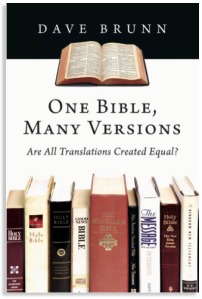
Book Review of One Bible, Many Versions by David Brunn

One Bible Many Versions

One Bible, Many Versions: Are All Translations Created Equal?
by Dave Brunn
ISBN 978-0-8308-2715-2
IVP Academic
Reviewed by Clint Walker

I grew up in a fundamentalist Baptist church. In this congregation, it was taught that the King James Version of the Bible was the only acceptable version of Scripture to read, study or accept as true. As a matter of fact, a member of a different church that I attended for part of my high school years wrote a book with this thesis entitled Valiant for Truth.

I have since come to a more reasonable, and a more intellectually grounded understanding of this issue, and have copies of most English versions in my personal library. There are some versions which I prefer, and others which I do not think do as good of a job in translating the original text, and there are other versions that I think read very poorly. Some translations I consider "devotional" and others I prefer for more in-depth study. My preferences on how the issue of gendered language also influence which text I prefer.

So, I brought some baggage with me as I began to read One Bible, Many Versions by Dave Brunn. As I ordered this book I began to wonder how the author was going to come down on the translation issue. Would the book be an apologetic for a particular type of translation? Would it rank the translations based on the author's preferences and standards? Thankfully Dave Brunn does none of these things.

Instead, what Mr. Brunn does is show that different translations, with their different goals and purposes in translation, are interdependent on one another. Some translations serve better in one context than another. And, despite the way that certain versions market themselves, nobody anywhere does a literal word for word translation. It would be to difficult to understand. One Bible, Many Versions goes deep into the translation process to show exactly how difficult the translation task is, sometimes pulling out specific passages, identifying the differences between translations, explaining the rationale for some of the differences, which are sometimes equally reasonable and biblical between sides of the debate.

What I thought was most fascinating was when Brunn identified that when Biblical writers were quoting Old Testament passages, they were not always interested in a word for word translation from Greek or Hebrew. Nor did they always stick to the Hebrew translation or the Greek translation. Perhaps, it is implied, we are a little more legalistic about matters of translation than the authors of Scripture were.

All in all, for a student of Scripture, particularly one who has had some academic training and interest, this is a really interesting and fascinating read. It is detailed, smart, understandable, and well-reasoned. While the author has his particular perspectives, he does not keep that from offering grace to other translators and other versions even when he disagrees with them on a particular manner.This book is a breathe of fresh air, and I hope it finds its way into the hands of many.


Reformation Commentary of the Bible: Old Testament Volume XIII--Psalms 73-150

Reformation Commentary of the Bible: Old Testament Volume XIII--Psalms 73-150  Edited by Herman J. Selderhuis IVP Academic ISBN 978-0-8308-2...