A fellow blogger used to do this Monday Morning Quarterback kind of thing where he would blog about how worship went the weekend before. I think this might be helpful. Only I am calling mine "The Day After", reminding myself of the apocalyptic movie of my youth. I think I will review with less of a tick-tock and more of a general summary.
The Night Before
I am preaching in a different way than I ever have before while here at FBC North Platte. I am not sure that it is working, although my wife says it is.
Until about 2 years ago, I was generally a manuscript preacher. This means that I wrote out my entire sermon. I was trained to use sermon manuscripts in seminary, and Jene Bridgewater was one of my preaching mentors, and she always used a manuscript (usually finished an hour before worship).
Over time, I began to experiment with an outline that was shaped like a bulletin, and was only one page long. The first column visible was a cover, and the next three columns were the outline for the sermon. This allowed for a more conversational style, and more eye contact with persons in the congregation. I have continued this practice in North Platte.
When I came to North Platte, I prayed about what to preach, and I repurposed some sermons that had outlines with them. Now, after 6 months, the congregation likes to have a note-taking outline each Sunday. Sigh.
With this outline, a Powerpoint is also expected for the message. This had been the case for some of my sermons in Hot Springs, but when there were Powerpoint notes, they often were my sermon notes as well.
When I started this three part routine, I began by trying to put together the preaching outline first, and then derive my bulletin outline and Powerpoint from the prepared message. Lately this has turned around. I develop the Powerpoint and the bulletin outline first, and then draft the preaching outline the evening before, having it derived from how I put together the other two versions of the sermon. I think this works well.
This last week, knowing that people occasionally have a hard time knowing where we are in the bulletin outline, I took the bulletin outline of the message, and expanded on that with other material to flesh out the sermon. This seems to be a better process than vise versa, and the three-fold approach helps me to be more familiar with the material
Sunday School
I am sitting in with the children's class. I want to make kids ministry a priority here, even if we don't have a lot of kids yet. And, it avoids have to choose one adult class over another, or having to bounce around from class to class. It also allows us to use the two-adult rule.
We use an "internet" curriculum. It is not bad, but I think, as far as curriculum goes, we can do better. Especially if we want to grow the program.
Worship
I am still figuring out worship here at First Baptist. Historically, the service has been rather formal and somewhat traditional. Recently, there has been some movement toward contemporary worship and a more informal organization of the service. This more contemporary part of the service has been well done for the most part, but it is hard to sustain the momentum and depend on this every Sunday.
This last Sunday was a perfect example. We had nobody available for praise team. We attempted to have a mix between a more formal, scripted service and a less formal service with limited information. As we make changes, people still struggle to adapt. And I struggle to adapt to their "structure", and make it something comfortable for me.
There were hiccups, and not everything we tried worked (especially the children's song on video). Eventually we will get to a place ( I hope) where I don't feel like I am trying to implement other folks' vision for worship while also trying to do something that fits what I feel comfortable with.
The Sermon
People here in North Platte are Midwestern reserved. So I never really know how it is going. There are lots of times I feel like going to a manuscript would help me to craft my words better. And keep in better step with people's note-taking efforts.
I tend to move around a lot with my messages these days. I am not sure how that is working either. In the last three weeks, in part out of a recommendation from my Executive Minister, I try and make my way from the platform, down the stairs, to the floor, and then back up to the pulpit before I finish.
Even as I preach with notes, I tend to look at my notes less. This means that there are times the sermon does not flow the way it was planned, but it makes for a more heart-felt conversation between myself and the church.
I had a senior-pastor that discouraged the conversational tenor of my messages, telling me I could do conversational preaching if I wanted, but it would not work and it would not last very long. I always have that in the back of my head.
The sermon was on the armor of God. I finished the message with the refrain "Are you ready for the battle? Are you ready?"
After Worship
We had folks over for lunch. We are trying to be hospitable, and to teach the church to be the same way by setting a good example.
It was a good time, although toward the end of the dinner I got to speaking to much and listening to little. Which meant some of the other folks were eager to leave sooner than they might have been otherwise. Not a bad thing. I just need to reign myself in and facilitate a broader dinner conversation.
I like having people over for meals. And, practicing hospitality is something Scripture tells us to do.
Monday, July 31, 2017


Sunday, July 30, 2017
Beginning to Blog Again
I started blogging for three reasons. First and foremost, I needed the practice in writing, and having the discipline of developing an online journal would help in that process. Secondly, I wanted a way of recording my thoughts and opinions in an articulate way before they escaped me. Third, before Facebook was open to the public, blogging offered a unique way to network socially.
Since December 2004, I have slowly dropped off in my writing production on Friar Tuck's. Part of this is due, I am sure, to the rise of social networking. I am also confident that part of this lack of blogging discipline is due to different priorities in my life from when I started the practice. However, another reason is that I have not done as well at time-management and reflection to have this as a priority.
Also, the nature of blogging has changed. In the early days of this blog, it was highly confessional. That was a good thing and led to some raw, honest, powerful conversations. As my ministry profile has increased, and my personal life has expanded, it has been harder to share more openly about what is going on in my life. Moderation is good. Just like our President doesn't need to tweet his every thought, I don't need to blog all of mine.
However, I do feel convinced that my personal journey and my ministry journey will be benefitted if I choose to blog more often. So I am going to try and make at least one post a day for the next month or so, and see if I can make blogging into the powerful tool for intellectual growth and professional development that it once was.
Since December 2004, I have slowly dropped off in my writing production on Friar Tuck's. Part of this is due, I am sure, to the rise of social networking. I am also confident that part of this lack of blogging discipline is due to different priorities in my life from when I started the practice. However, another reason is that I have not done as well at time-management and reflection to have this as a priority.
Also, the nature of blogging has changed. In the early days of this blog, it was highly confessional. That was a good thing and led to some raw, honest, powerful conversations. As my ministry profile has increased, and my personal life has expanded, it has been harder to share more openly about what is going on in my life. Moderation is good. Just like our President doesn't need to tweet his every thought, I don't need to blog all of mine.
However, I do feel convinced that my personal journey and my ministry journey will be benefitted if I choose to blog more often. So I am going to try and make at least one post a day for the next month or so, and see if I can make blogging into the powerful tool for intellectual growth and professional development that it once was.
Tuesday, July 25, 2017
Book Review of Teach Us To Want by Jen Pollock Michel

by Jen Pollock Michel
ISBN 978-0-8308-4312-1
IVP Crescendo
Reviewed by Clint Walker
I actually finished this book about a year ago. I then had the distinct privilege in going to a presentation about the book by the author. I have been very impressed. even though I am just getting around to writing the review.
Teach Us to Pray is a wonderful, readable, and also intellectually powerful study of the Lord's Prayer as a prayer that trains our desires. Deeply conversational and confessional in nature, Michel takes the Lord's Prayer step by step, at times leading her readers toward conviction of their sinful and unhealthy desires, and at times positively encouraging the readers, reminding them that God made human beings to be desiring creatures.
Throughout Teach Us to Pray Michel reflects and tells stories well. The book is very quotable, and so at the bottom of this post, I will have some quotes I have harvested from the book. Although written by a woman for a line of books directed at women, the book is easy to connect to for people of both genders.
This book deserves to be read for years to come.
"We pray best when we need God most" (p. 197)
"Holiness is formed in us more unspectacularly and more incrementally than we expect--wherever the practice of small everyday faithfulness is required of us" (p. 198)
"Storytelling and story keeping: these are acts of faith. They preserve faithfulness." (p. 189).
"We easily dismiss desire, arguing that the goal of Christian life is obedience" (p. 23).
"The Bible is not just information about God: It is the living voice of God" (p. 47).
"Holy trust believes that whatever God chooses to give is enough" (p. 84)
"To say that God is good is not the same thing as saying that life is good." (p. 101)
"Clarity and certainty are not the soil in which faith grows." (p. 112).
"Desire expressed in prayer risks on grace" (p. 118).
"In asking for God's provision we're admitting our inability to self-sustain" (p. 127).
Monday, June 19, 2017
Book Review of Faithful Presence by David E. Fitch

Faithful Presence: Seven Disciplines That Shape the Church for Mission
by David E. Fitch
IVP Praxis
ISBN 978-0-8308-4127-1
Reviewed by Clint Walker
Right before I moved, I received the book Faithful Presence from IVP Press. After I moved here to North Platte, I also received a copy of this book from our Executive Minister Robin Stoops. It has taken me a while to carefully read through this book, but I have finally finished the text.
The central idea of Faithful Presence is that there are seven spiritual practices that simultaneously promise God's presence and lead us into a missional presence in our world. Each one of the practices promises that God will "show up" as we live out and share these disciplines. The practices are:
- The Discipline of the Lord's table
- The Discipline of Reconciliation
- The Discipline of Proclaiming the Gospel
- The Discipline of Being with the Least of These
- The Discipline of Being with Children
- The Discipline of Fivefold Gifting
- The Discipline of Kingdom Prayer
Fitch then goes on to share a model for living the disciplines as the church in three realms:
- Close circles: Believers in Christian community (the church) submitted to Christ and one another
- Dotted circles: Believers in the neighborhood submitted to Christ and one another as they live their faith outside of church buildings or the safety of a "holy huddle".
- The half circle: Where the Christian and christian community goes out into the world as a guest, seeking to live and share the presence of God in that space
I found this book powerful, intellectually stimulating, and believe it will be a significant text in how the church seeks to live on purpose in the world to reach the world for years to come. Eschewing quick fix programs at every opportunity, this book shares values and attitudes believers should embrace in their life together, and as they seek to live on mission in their community and world. Biblically grounded, culturally wise, and pragmatically astute, Fitch lays a foundation for church's in the future that is based on historical models of Christian community and outreach, without embracing traditions and structures that have hamstrung Western Christian mission in recent years.
This is a must read for pastors, church leaders, and followers of Jesus seeking to live their lives in a way that grounds them deeply in their faith, and empowers them to multiply their faith as well.
Our deacon board is studying this book together right now, and seeking to move forward in ministry and mission with the guidance it provides.
Friday, June 09, 2017
Shoptalk: Funerals are different wherever you go....
I am preparing my first memorial service for a member of our church here at First Baptist Church of North Platte, NE. As I do so, I am reminded that different places do things radically different based on the region of the country, the size of the congregation, the size of the community, and the culture of the people that make up the church and the community.
Here are some of the differences:
Reading of the Obituary
Some people think this is necessary in a service, and some people do not. They like or dislike this tradition for the same reason. I think the history of it stems from a melding of the secular and sacred, with the reading of the obituary being an official secular announcement of death. Much like when ministers would say, "by the power vested in me by the state of _____________"
Procession with the Body
This sometimes was dependent on the nature of the facility. In certain churches, this has to be done immediately following the service. Then people can be greeted and visit. Other churches process the body to the back of the sanctuary, often in an overflow area. Others have released the crowds of folks, and brought the body to hearse well after the service. One church I served in, for example, processing with the body was difficult because stairs had to be navigated.
The Funeral Home
These folks all have a different way of operating from one another in relation to pastors and churches. Some places are low on capital funds, and so they insist in having the family of the deceased write personal checks to musicians, pastors, and church ladies for the church service. Others make that kind of thing a part of their package deal. Some funeral homes like having pastors present with the family as they meet with them. Several do not.
Funeral Meal
In some places, a church plans to prepare a meal for nearly everyone in town. Another congregation only allows folks who are family and who are serving with the funeral staff. Some prepare elaborate meals for everyone. Others buy Subway sandwiches and provide side dishes and deserts that are homemade. One church I served prepared "open-faced sandwiches" prepared by church ladies. Still others simply offer a cookie and beverage reception.
There are several other differences I can't think of. What variations have you noticed?
Here are some of the differences:
Reading of the Obituary
Some people think this is necessary in a service, and some people do not. They like or dislike this tradition for the same reason. I think the history of it stems from a melding of the secular and sacred, with the reading of the obituary being an official secular announcement of death. Much like when ministers would say, "by the power vested in me by the state of _____________"
Procession with the Body
This sometimes was dependent on the nature of the facility. In certain churches, this has to be done immediately following the service. Then people can be greeted and visit. Other churches process the body to the back of the sanctuary, often in an overflow area. Others have released the crowds of folks, and brought the body to hearse well after the service. One church I served in, for example, processing with the body was difficult because stairs had to be navigated.
The Funeral Home
These folks all have a different way of operating from one another in relation to pastors and churches. Some places are low on capital funds, and so they insist in having the family of the deceased write personal checks to musicians, pastors, and church ladies for the church service. Others make that kind of thing a part of their package deal. Some funeral homes like having pastors present with the family as they meet with them. Several do not.
Funeral Meal
In some places, a church plans to prepare a meal for nearly everyone in town. Another congregation only allows folks who are family and who are serving with the funeral staff. Some prepare elaborate meals for everyone. Others buy Subway sandwiches and provide side dishes and deserts that are homemade. One church I served prepared "open-faced sandwiches" prepared by church ladies. Still others simply offer a cookie and beverage reception.
There are several other differences I can't think of. What variations have you noticed?
Monday, May 15, 2017
When is Stubbornness a Virtue

The difference between stubbornness and perseverance is discernment. I had a friend who was stubborn. He kept working jobs that net little to know income. He wouldn't listen to anyone. He argued with his wife, yelled at his kids, and constantly strove to get ahead. But, he put blinders on. He thought that if he kept doing the same thing the same way eventually it would work, even though it never worked. I feel bad for him.
I know another person. He had a dream. People mocked him. Progress was slow at first. People worried about him. He had his failures. However, he learned from his failures and pressed on. He was tenacious. Eventually, despite everyone's doubts, he experienced success. He persevered. Sometimes you need to know when to quit. Sometimes you need to have the grit to press on.
When is stubbornness a virtue (of perseverance) and when is it just unwise? How do you tell the difference
More Hemmingway, less Dickens
One of the things that I have enjoyed about being at First Baptist Church of North Platte is the increased level of participation of lay people in worship leadership. Lay people choose and lead praise songs. They lead the hymn singing and make the announcements. Members of the church do the offering, take greater responsibility for the Lord's Supper, and do missions presentations during worship.
Our order of worship is generally less formal than the church I arrived here from. However, one of the few portions of our service that is "scripted" is the offering and the offering prayer. During each service, there is an introduction to the offering that serves as a "mini-devotion" exhorting folks to give. One of my predecessors has years of these things typed up. Sometimes I borrow his work. Other times I borrow from my liturgical resources, drawing out the invitation to the offering and the offering prayer. I find in both cases, I edit the texts I am given. This is because, I believe in worship resources, we need more Hemmingway and less Dickens.
A lot of worship resources use large words and long sentences. They write in an intelligent fashion, but not in a way that connects as clearly with the everyday person in the pew. So, when I transcribe many of these resources in the last few months, I am changing high rent words into language that is more common. I am chopping up longer sentences into shorter more succinct ones. I am exchanging flowery language for more earthy words. We need less Dickens, and more Hemmingway.
Wednesday, May 10, 2017
When Things Don't Go the Way You Had Hoped

I left worship a little frustrated last week. I tried to lead folks toward doing something new in worship. It did not work as I had planned, desired, or expected. We thought we had our bases covered, but people behaved in a way I did not anticipate. Folks I had hoped to earn the support of were mildly disappointed. I spent the last few days feeling bad. I think I am over it now.
How do you respond when you do something different, and it doesn't "flow"? Do you abandon the project, deciding that we have tried this once, it did not work, and we will never try anything like that again? Do you consider that new routines are more difficult, and try again with some adaptations again the next opportunity you have? Do you beat yourself up for days, or realize that bumps in the road are part of the journey?
God has given me a more tenacious and stubborn temperament. So, I would generally opt to try again, making improvements in communication and design that are necessary. Often changes like changing a golf grip, establishing a new health routine, or trying communion a different way require going through the awkward phase of trying something new before things feel like they work and fit. There is a part of me that says to myself in moments like these--moments when things don't go as planned and people complain--that I should abandon new experiences and the possibility of failure and stick to what has always been done.
How do you respond to moments like these in your life? Do you try again, or chose to abandon your effort to try something new?
Thursday, March 30, 2017
Monday, March 20, 2017
Book Review of the Road Back to You by Ian Morgan Cron and Suzanne Stabile

The Road Back to You: An Enneagram Journey to Self-Discovery
by Ian Michael Cron and Suzanne Stabile
ISBN 978-0-8308-4619-1
IVP Formatio
Reviewed by Clint Walker
I read this book about 6 months ago, and it has been marinating in my mind since then.
Prior to reading this book, I was never a big fan of the enneagram. The first reason for this aversion was I associated "enneagram" with "pentagram". The second was the way the enneagram was used in circles that were spiritually insightful, but had no adherence to Christian teaching.
After reading The Road Back to You by Cron and Stabile, I have both an educated understanding of the true history of the enneagram, and greater knowledge of the enneagram's usefulness to personal development. The enneagram was developed by a Christian teacher named Evagrius, whose development of the enneagram corresponded to helping people avoid one of the seven deadly sins that was most closely related to their personality type. Since then, this tool has been used by spiritual seekers across faiths and around the world. Lately, social scientists have begun to do their own work with this inventory of personality analysis. Some of their work has been fruitful.
So the enneagram journey teaches you to own your strengths, while also acknowledging that one's gifts and strengths have a "dark-side" that requires growth and work to overcome. The internet tests and some of my friends I trust say they believe I am a 5. That may be correct, perhaps with a 6 wing.
If this is correct, it would mean that I would have to confront the fact that some people think of me as more detached, that often I will experience my emotional responses hours or even days after the emotional trigger has been pulled by someone (I had an employee I supervised who referred to this as being a "crock-pot" thinker). Also, I may have a tendency toward a "scarcity" mentality.
This book has some growth steps and helpful description of each personality type. It also has some helpful anecdotes that will give readers a mental picture of what each personality type may look like in real life situations.
All in all, I thought Cron and Stabile were both intelligent and down to earth, informative and engaging. I am eager to hear what others I know of think of this text.
Wednesday, March 15, 2017
Testing the Waters: Haphazardly intentional preaching in a new place

These first few months at North Platte, as in most churches, I am trying to get a read for the congregation, the community, and my fit here. Most churches think most other churches are the same as them. The truth is, each pastorate, each pastor, each congregation, and each congregational culture are a lot different. And, while there are some common skills that transfer across settings, each church ministry is unique. Each church I have served had a different way of doing accounting, a different leadership structure, a different facility for worship with different resources.
As most of my regular readers know, I think of ministry as more of an art than a technology. So while there are disciplines to effective ministry, it is also a matter of improvisation, feel, connection, expression, and relationship.
Right now, in North Platte, I am working through a sermon plan that may be a little haphazard, but is also thoughtful, intentional, and purposeful. I am testing the waters as I sure up some foundational matters of life together and of faith in Christ.
For the first month, I preached a series called "Coming Home". It was based on a series I worked through before, but with a lot of modifications. The plan through this series was to lay the groundwork for some core principles for doing church well. Through this series I reminded the congregation that they were to be a congregation of radical grace and forgiveness, that they were to be a "family" on a mission for Christ, and that in order to fulfill that mission and grow in their journey with Christ they needed to stay connected to him.
This month, I have been preaching through the Lord's Prayer. This has a multi-pronged goal. First, I want to have something practical to connect with folks. I want them to reclaim their heritage as a praying church. I want to remind the church of the kingdom values that they have. And, in a more practical sense, I want to have a sermon series that is both topical and exegetical.
After Easter, I am looking at crafting a sermon series based on the book of Ephesians. This continues the themes of a church on mission, and of victorious Christian living, but also allows the church to experience a series that is strictly "bible to life". Ephesians calls us to resurrection living, but also reminds us that we are living in a spiritual struggle between darkness and light, and that our loyalties, commitments, and decisions have not only personal implications, but implications beyond what we can think of imagine.
This allows me to continue to "sure up the foundations" through preaching, but also allows me to develop three sermon series' of different types to see how the church hears and responds to the gospel most effectively.
What about you? How do you approach the preaching task in new settings? What expectations of and aspirations of others do you come with?
Thursday, March 09, 2017
Book Review of To the Cross by Christopher J. H. Wright
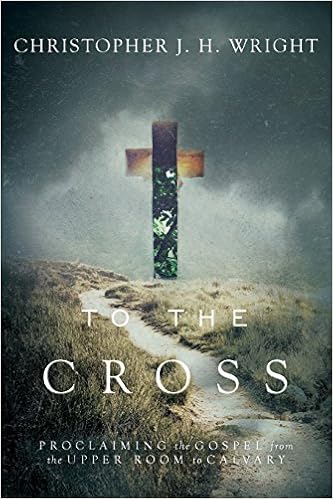
To The Cross: Proclaiming the Gospel from the Upper Room to Calvary
by Christopher J. H. Wright
ISBN 978-0-8308-4499-9
IVP Books
Reviewed by Clint Walker
This is a simple, yet beautiful book. It takes us on a journey from the Lord's Supper, through the events leading up to the crucifixion, and the crucifixion itself. There is also some mention of the resurrection that is coming, especially in helping us understand the human longing for ultimate grace and forgiveness.
To the Cross is a collection of sermons preached to one congregation in England by Christopher J. H. Wright, who is both a pastor and a scholar. In his book, he uses current, everyday examples to explain what is going on, but he also cuts to the point about what is going on during Maundy Thursday and Good Friday. Each chapter is both readable, and yet brings new insights and clearer communication about Holy Week and the message of the good news of Jesus.
This book would make a great Lenten or Holy Week read. It would also be a great resource for a group study.
Book Review of Jesus Behaving Badly by Mark L. Strauss
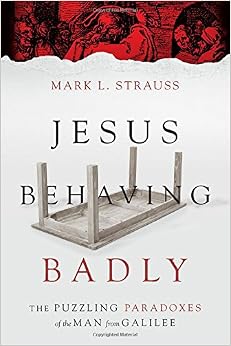
Jesus Behaving Badly: The Puzzling Paradoxes of the Man from Galilee
by Mark L. Strauss
ISBN 978-0-8308-2466-3
IVP Books
Reviewed by Clint Walker
Sometimes the popular picture of Jesus is not the most accurate depiction of who the Christ really was. If we are not careful, we can buy into some version of "South Park Jesus" who wants to help us with self-esteem enhancement, is more interested in being nice than be in being true, and who comes across as a needy, whiny fellow in a sweater vest who wants to be everyone's buddy.
The truth is, Jesus was far more tough, surprising, and unpredictable than we would anticipate at first glance. Mark Strauss argues in Jesus Behaving Badly that at first glance many of Jesus's actions and ideas may come across as offensive and politically incorrect in today's culture. With chapter titles such as "Environmentalist or Earth Scorcher: Killing Pigs and Cursing Trees" or "Hellfire Preacher or Gentle Shepherd: Scaring the Hell Out of You", Strauss brings modern concerns into conversation with the ancient text. In doing so, he shows that the Bible is more relevant than many folks think, and Christ is more interesting than many people give him credit for.
This book would be great for a Sunday School class or small group. If used, the result will be to know the person and message of Jesus better, and to dig into the Word of God in ways people perhaps had not considered before.
Saturday, March 04, 2017
Book Review of Lincoln on Leadership for Today
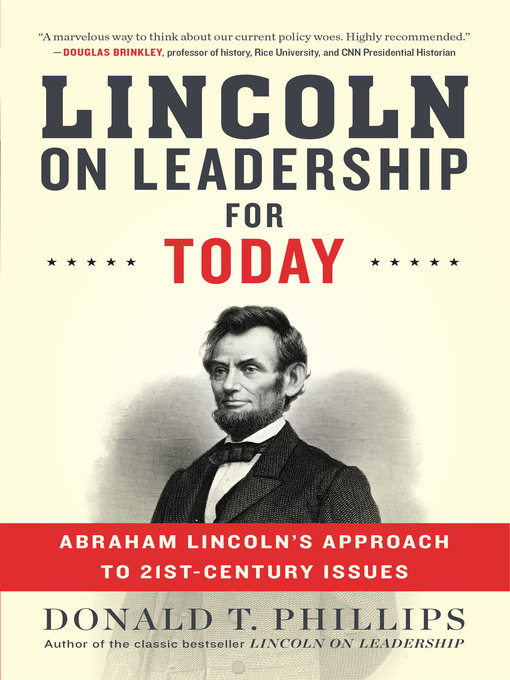
Lincoln on Leadership for Today: Abraham Lincoln's Approach to 21st Century Issues
by Donald T. Phillips
ISBN 978-0-544-81464-6
HMH Books
Reviewed by Clint Walker
Donald T. Phillips has written several enjoyable biographical leadership books. Many of them glean principles of leadership from well-known American political leaders from history, and well-regarded sports figures. I particularly enjoyed Phillip's book on Vince Lombardi and leadership. One of the great things about his previous books is that Phillips takes examples from these folks' lives, and then shows how the principles that they lived by can help guide us as leaders today as well.
Lincoln on Leadership for Today expands its range from the focus of previous books. In this book, Phillips has some chapters that focus in on leadership issues in our culture today and how to address them, but this book seems to also address how Lincoln's political attitudes may have been expressed in a 21st century political setting. How would Lincoln deal with globalization? What would Lincoln say about the Confederate flag controversy in South Carolina? Gun Control?
While I think that applying Lincoln's wisdom is somewhat helpful in our world today, I think Phillip's attempt to make Lincoln answer political hot button issues from the 21st Century, while creative is fraught with difficulty. Some issues have more direct relevance than others. All in all, I find that the project comes up with some pretty simplistic answers for some pretty complex issues, and this is disappointing to me. This is a fun read, but not something that will stick with me for years to come.
Monday, February 13, 2017
Savoring the Sweet Hour of Prayer
One of the challenges that pastors face that most people do not consider is the pressure to produce. At one point in the last church I served I was leading a Sunday school class, two midweek bible studies, a young adult study, preparing the youth lesson for the youth team, and preaching two sermons. Now, to some teachers in public schools this may sound like a lot. To which I would counter, for the most part you have a set curriculum to use, while teaching in the ministry often has a mandate of uniqueness and creativity that is unique to the ministerial profession. Either way, the point is, there are many times when one is called upon to go into one's study and find a unique word, not just for the congregational meeting of one hundred or so, but also for the faithful gathering of handful of faithful souls who attend a Bible Study.
This pressure to produce can lead to the temptation to use one's devotional time as grist for the mill of one's teaching time. This is all the more the case today in the age of social media, where one should also produce insightful and thoughtful words and information for one's flock. But, in my opinion this is not a healthy practice.
To explain why this is not healthy, let me describe how a healthy pastor integrates their personal life and their teaching and preaching. There are many things from my personal life that I might share from the pulpit or with people I am teaching. However, when I do so I usually ask permission to share with others from my wife, or sometimes my kids. This is because there are somethings that are best for our relationship if we keep to among ourselves instead of sharing with everyone. Healthy relational intimacy requires intimate conversations and experience that is not shared with others. Even my children have come to understand this. There is a song my oldest daughter sings to comfort my youngest daughter. And, they have a very clear understanding that this song is not to be shared with others outside the home. It is just for them as sisters.
The same guidelines for intimate conversation apply to our relationship with God. While some things you learn in your quiet time may be appropriate to share with teaching and leading others, there needs to be some boundaries in one's prayer and study. Some moments where we savor the sweet hour of prayer, and not peddle our intimate moment with the Savior to advance our ministry.
Just my thoughts.
This pressure to produce can lead to the temptation to use one's devotional time as grist for the mill of one's teaching time. This is all the more the case today in the age of social media, where one should also produce insightful and thoughtful words and information for one's flock. But, in my opinion this is not a healthy practice.
To explain why this is not healthy, let me describe how a healthy pastor integrates their personal life and their teaching and preaching. There are many things from my personal life that I might share from the pulpit or with people I am teaching. However, when I do so I usually ask permission to share with others from my wife, or sometimes my kids. This is because there are somethings that are best for our relationship if we keep to among ourselves instead of sharing with everyone. Healthy relational intimacy requires intimate conversations and experience that is not shared with others. Even my children have come to understand this. There is a song my oldest daughter sings to comfort my youngest daughter. And, they have a very clear understanding that this song is not to be shared with others outside the home. It is just for them as sisters.
The same guidelines for intimate conversation apply to our relationship with God. While some things you learn in your quiet time may be appropriate to share with teaching and leading others, there needs to be some boundaries in one's prayer and study. Some moments where we savor the sweet hour of prayer, and not peddle our intimate moment with the Savior to advance our ministry.
Just my thoughts.
Monday, January 30, 2017
Book Review of the Essential Guide to Becoming a Disciple by Greg Ogden
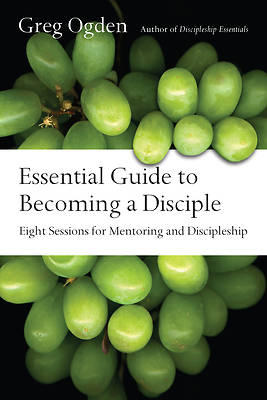
The Essential Guide to Becoming a Disciple: Eight Sessions for Mentoring and Discipleship
by Greg Ogden
ISBN 978-0-8308-1149-6
IVP Connect
Reviewed by Clint Walker
Greg Ogden is passionate about discipleship. And, he has a methodology that has worked for him. I have used his book Discipleship Essentials in both mentoring and small group discipleship, and found that if people are invested in the process, the curriculum can be profitable and enjoyable for students and teachers alike. Now, Ogden has written The Essential Guide to Becoming a Disciple which is a simpler, smaller guide to kick start the mentoring/discipleship process based upon Jesus' Great Commission to his disciples in the gospel of Matthew.
This is an eight-session curriculum, although Ogden freely admits it may take more than eight meetings to get through the study. Each session begins with a core truth, then has a brief bible study, an article to read, and then some discussion/life application questions. The process really makes the participants think through what they believe, and begin to process what Jesus has commanded his people to do and who he has commanded them to be as disciples.
I am going to get this curriculum, gather together two or three people, and get started learning and growing with some of them about the basics of being a disciple of Jesus.
Book Review of Ministry Mantras by J.R. Briggs and Bob Hyatt

Ministry Mantras: Language for Cultivating Kingdom Culture
by J. R. Briggs and Bob Hyatt
ISBN 978-0-8308-4136-3
IVP Praxis
Reviewed by Clint Walker
Don't let the cover fool you. When I read the title and looked at the cover of this book, I wondered for a brief moment if it was a book for Bible-believing Christian churches, or if it was some syncretism of eastern spirituality and Christian teaching. However, after spending a few minutes looking through this book I discovered that this is a great new book, deserving to be in church libraries and pastor's desks across the country.
The word "mantra" has been adopted into the English lexicon decades ago. In religious practice, it was a word or phrase that was repeated to aid in an experience of the divine. In our modern time, it is a slogan or a truism. Briggs and Hyatt use the term to speak of slogans and proverbs that are easily remembered and memorized with summarize truths of life and ministry for churches and church leaders.
The book is divided into several sets of sayings. The topics of the mantras range from teaching stewardship to placing one's attention in the right place while offering pastoral care. Each slogan has a brief teaching and explanation of its meaning. I think the book could be read in bite size chunks, or read in fewer sittings. I recommend both however. Read it all the way through, then use certain sayings at certain times, re-reading the book like a devotional, perhaps sharing in meetings that require a devotional thought or two.
I will have this book on my desk and in my bag for a while, pondering the words that are said.
Friday, December 09, 2016
The Apostles' Creed by Alister McGrath (Lifeguide Bible Study)

The Apostles' Creed
by Alister McGrath
IVP Connect
ISBN 978-0-8308-1095-6
Reviewed by Clint Walker
Even though I do not belong to a creedal denomination, I have often turned to the creeds and confessions for teaching and guidance in understanding and articulating the Christian faith. This gives a good cursory overview of some of the Apostle's Creed, but there seems to be some content missing. This study should have been eight chapters, not six. Thus, it is with some measure of disappointment, then, that I don't have more encouragement to offer in regard to the offering from IVP Connect regarding the Apostles' Creed.
There are a few things to commend about this small bible study guide. First, McGrath does a great job at transitioning the truth of the Scripture that is found in the creed to clear application in his readers life. Nobody will do this Bible study and walk away saying that they simply went through an intellectual exercise.
My concern about this is McGrath fails to engage two central concerns of the Creed thoroughly enough. First of all, sufficient attention is not given to the Holy Spirit, in my opinion. Secondly, little attention is given to the statement I find most difficult to justify in Scripture--namely the descent of Christ into hell.
Book Review of Marriage and the Mystery of the Gospel
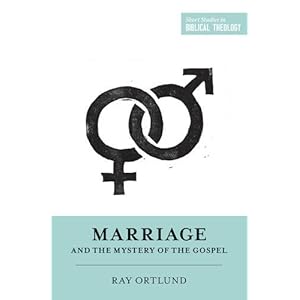
Marriage and the Mystery of the Gospel
by Ray Ortlund
ISBN 978-1-4335-4687-7
Crossway
Reviewed by Clint Walker
This is a sweet, smart, hard-hitting book that surveys both the metaphor and the practice of marriage in the times of Scripture, and what it means for us as married Christians today. In the process of this book, Ortlund shows just how much is at stake in healthy, faithful marriages, and how God can use the healthy, faithful marriage to teach about the Biblical picture of who God is, as well as an awesome witness to the world. Brief and well-referenced, I recommend this book highly.
Book Review of Modern Orthodox Thinkers

Modern Orthodox Thinkers: From the Philokalia to the Present
by Andrew Louth
IVP Academic
ISBN 978-0-8308-5121-8
Reviewed by Clint Walker
Every couple of years I go down to Kansas for a ministry/spiritual formation conference. At this conference, I also visit the Eighth Day Bookstore. It is run by an ecumenically minded orthodox fellow. This year I picked up some art work while I was there as well. More and more, as technology makes our world smaller, we are encountering people of other religious traditions. This is not only true among those in interfaith circles, it is is true as different strains of the Christian family encounter one another and interact more frequently.
In Modern Orthodox Thinkers Andrew Louth seeks to help those unfamiliar with the Orthodox tradition understand contemporary practices of Orthodox Christians worldwide. This book is heady stuff. It will require slow, deliberate, thoughtful reading. However, the goal of Louth seems to not only make us aware of modern Orthodox thought, but the thinkers of the last century or two in that tradition. Thus, each chapter tackles the contribution of a different person, and many of those chapters have pictures or illustrations of the theologian mentioned. I like this approach.
More and more, Christian teachers and ministers, and especially those interested in spiritual formation, are going to need to become more familiar with Orthodox practices and theology. This book would be a good start for thinking Christians to make a good start in that direction of ecumenical understanding.
Subscribe to:
Posts (Atom)
Reformation Commentary of the Bible: Old Testament Volume XIII--Psalms 73-150
Reformation Commentary of the Bible: Old Testament Volume XIII--Psalms 73-150 Edited by Herman J. Selderhuis IVP Academic ISBN 978-0-8308-2...

-
On Getting Out of Bed By Alan Noble IVP ISBN 978-1-5140-0443-2 Reviewed by Clint Walker Have you ever gotten a good night’s sleep, and stil...
-
Book Discussion: The Shack Overview Questions If you were to rank the book: THE SHACK on a scale of 1-5, what would you rate it and why woul...

