Friday, August 05, 2016

Book Review of Wesley and the Anglicans by Ryan Nicholas Danker


Wesley and the Anglicans: Political Division in Early Evangelicalism
by Ryan Nicholas Danker
ISBN 978-0-8308-5122-5
IVP Academic
Reviewed by Clint Walker

Since I have become a pastor of a federated church, I have tried to develop more knowledge about the function of denominations and their history. By far, my biggest learning curve has been trying to understand the "people called Methodist", even though I am told I was baptized as a Methodist as an infant, and my earliest memories of a church experience is Vacation Bible School at the First United Methodist Church in Roseburg, Oregon.

In particular, I have tried to understand John Wesley, Methodism's founder, from an impartial perspective. I am fascinated by Wesley's evangelistic fervor, and his ability to combine compassionate ministry with a deep heart for evangelism. On the other hand, Wesley's writings were so extensive that quoting him becomes a kind of spiritual Rorschach test, with people plucking a quote from Wesley here and there to validate and at times enforce their own point of view. Danker adds a lot to understanding Wesley in a more meaningful way, by understanding his ministry in the context of larger ministry movements taking place in England and the colonies at the time.

In Wesley and the Anglicans Dr. Ryan Danker attempts to prove that Wesleyan Methodism's incompatibilities with Anglican Evangelicalism had to do with political ideology as well as  theological differences. Wesley's Aldersgate experience puts him in the context of the revivalism of the evangelical moment of his time. His creating a separate structure of organizing believers from the Church of England makes him unique. He was more Anglican than separatists, but by creating a separate structure to disciple persons that worked outside of Anglican control, he was also seen as dangerous by both ecclesiastical and political powers. Throughout his book, Danker develops a new understanding of Wesley from the political currents of the times, and how they were related to religious concerns.

Sometimes it is easy to forget that the church of England was the church of the established government, and that most uprisings against that government, either from the Scots with Presbyterianism, or the Cromwellian forces with Puritan Separatism melded political rebellion with religious reform. Danker chronicles the unique story of Wesley, who did not lead a political uprising, but who suffered the suspicion of many because they believed his movement had that potential. Following his conscience and his theology, his teachings and methods had far reaching consequences as it helped to form the Christian movement as we know it today around the world, and also the political sensibilities of the western world as well.


Tuesday, July 19, 2016

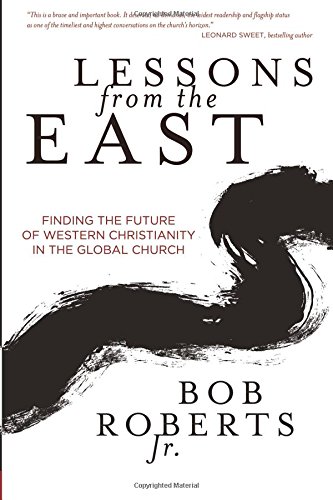
Book Review on Lessons from the East by Bob Roberts


Lessons from the East: Finding the Future of Western Christianity in the Global Church
by Bob Roberts
ISBN 978-0-7814-1376-3
David C. Cook
Reviewed by Clint Walker

Bob Roberts is a fascinating Christian leader.  A country boy from East Texas, he seems at home in the environs of suburban Dallas, where he leads a megachurch of fellow Texans, At the same time, his missionary heart, his love for Jesus, and his passion for gospel ministry have led him to become a sophisticated global leader, engaging leaders from around the globe. Eager to bring his faith into the public sphere, he has formed friendships with pastors and politicians, most notably of late religious leaders in the Muslim world. Yet, as he has engaged churches and non-believers in many different cultural environments, he has not simply went to offer something to them, but rather has sought to learn and grow from what his friends around the world had to teach him. Some of these lessons are encapsulated in Lessons from the East.

At the risk of oversimplifying this very thoughtful and engaging work, I would say that Lessons from the East is part "The World Is Flat" for the church, and part Leslie Newbigin's missional theology, with some down-to-earth practical hooks that anyone can grab on to and apply to their church. Roberts book challenges its readers from the beginning to focus their efforts on taking the church into the world. He says, "The primary benefit we can offer our communities is creative, selfless, tenacious service....we build credibility in our communities by serving people outside our walls with no strings attached. (p. 14)." This book is focused on helping churches do that not just around the world, but also in their own back yards.  If the church takes Roberts' challenge seriously, it means radical changes in how churches function and the roles people take in local congregations. He delineates a number of transitions for churches to make, with practices for leaders in congregations as well as persons in the pew.

This is a great book. Now to figure out how to share it with others in a way that connects with them the way it connects with me.


Thursday, June 30, 2016

Book Review of The Earliest Christologies by James L. Papandrea


The Earliest Christologies: Five Images of Christ in the Postapostolic Age
by James L. Papandrea
ISBN 978-0-8308-5127
IVP Academic
Reviewed by Clint Walker

The Earliest Christologies is a fascinating little book about the way different people at different times viewed Jesus in the early church. Four of the five Christologies came to be understood, for one reason or another, as heretical. What Papandrea calls "Logos Christianity" is what survived as the standard for Biblically-grounded, faithful Christian teaching.

What is unique about this book is that instead of simply explaining what gnostics and adoptionists believed, and why they went wrong, Papandrea uses the imagery in the language and life of the early church to paint a picture of who each group believed Christ to be, why the image may be attractive, and where heretical language and imagery for God falls short.

This is a book from IVPs academic line, and it would certainly be helpful in a church history class. Many of our more well-read lay people in the church may enjoy an in-depth theological discussion on this snippet of historical theology as well though. I certainly did.


Book Review of The Earliest Christologies by James L. Papandrea


The Earliest Christologies: Five Images of Christ in the Postapostolic Age
by James L. Papandrea
ISBN 978-0-8308-5127
IVP Academic
Reviewed by Clint Walker

The Earliest Christologies is a fascinating little book about the way different people at different times viewed Jesus in the early church. Four of the five Christologies came to be understood, for one reason or another, as heretical. What Papandrea calls "Logos Christianity" is what survived as the standard for Biblically-grounded, faithful Christian teaching.

What is unique about this book is that instead of simply explaining what gnostics and adoptionists believed, and why they went wrong, Papandrea uses the imagery in the language and life of the early church to paint a picture of who each group believed Christ to be, why the image may be attractive, and where heretical language and imagery for God falls short.

This is a book from IVPs academic line, and it would certainly be helpful in a church history class. Many of our more well-read lay people in the church may enjoy an in-depth theological discussion on this snippet of historical theology as well though. I certainly did.


Book Review of The Earliest Christologies by James L. Papandrea


The Earliest Christologies: Five Images of Christ in the Postapostolic Age
by James L. Papandrea
ISBN 978-0-8308-5127
IVP Academic
Reviewed by Clint Walker

The Earliest Christologies is a fascinating little book about the way different people at different times viewed Jesus in the early church. Four of the five Christologies came to be understood, for one reason or another, as heretical. What Papandrea calls "Logos Christianity" is what survived as the standard for Biblically-grounded, faithful Christian teaching.

What is unique about this book is that instead of simply explaining what gnostics and adoptionists believed, and why they went wrong, Papandrea uses the imagery in the language and life of the early church to paint a picture of who each group believed Christ to be, why the image may be attractive, and where heretical language and imagery for God falls short.

This is a book from IVPs academic line, and it would certainly be helpful in a church history class. Many of our more well-read lay people in the church may enjoy an in-depth theological discussion on this snippet of historical theology as well though. I certainly did.


Friday, June 17, 2016

Thoughts on Orlando

Thoughts on Orlando

I have a confession to make. While many other pastors may wake up at 4:30am and shout, “This is the day that the Lord has made!”. I wake up and say “Is it morning already?” Sunday is the only day I set my alarm. Usually the kids wake me up at around 6am. Last Sunday, as I turned the alarm off on my cell phone I was greeted with a number of notifications on my cell phone that there was a shooting, and that there was 50 dead. As the day went on, I learned that the victims were people congregating at a night club that catered primarily to homosexual men, and that the killer was inspired by the evil vitriol from a group that calls themselves ISIS.
I know quite a few gay folks, and there are probably more LGBT folks that I know for whom I am unaware of their sexual orientation because not everyone puts who they are attracted to up on a billboard for everyone to read. I know fewer Muslim folks. I have spent the last several years in the Rockies and the Black Hills, where the Islamic faith has made few inroads.

My belief system leans toward the more conservative side of the Christian faith, at least for the denominations I represent. As I read Scripture, it says that the most biblical pattern for marriage is one man and one woman joining together for a lifetime of committed love. Having said that, I also believe that Scripture has a lot of things to say about God’s standards, and picking out one particular issue or group of people, labeling them, and then grouping them with a label such as “good people” or “bad people” is never helpful. My Bible says that we have all fallen short of the glory of God, and so I realize each person I know comes with challenges, quirks, sins, and strengths that are peculiar to them. If we are choosing to love our neighbor, and love our enemies, we should not lump them into categories. We should know them as people,

When I was a young assistant pastor, I had a man come to me for counseling. He had beat down the senior pastor’s door, and I think my boss was glad I could offer him some relief. I listened to him speak about his marriage and the problems in it. Many of the problems he labeled as demonically influenced, when to me it was clear he was using this as a way of not taking responsibility for his own actions. He described some scenes from a popular fiction book on the topic at the time. After trying to help him, rather unsuccessfully, I went to my supervisor. I labeled his theology by the book he read, saying I had a hard time with it. My supervisor corrected me forthrightly, “His beliefs (he named the person) are his beliefs. They are not beliefs of the title of the book.” I tried to protest, but he was right. I have not forgotten this lesson.

The shootings in Orlando continue to be used for all sorts of political and social agendas, both on the left and the right of the political spectrum. Some of this cannot be helped, because we are dealing with communities of people facing deadly violence. Maybe political action does need to be taken at some point in the future. 

Right now, though, it also helps to remember that each person involved is a person that God made and God loves. It helps to remember that acts of hate give us opportunity to be reminded to love one another as human beings.

God loves people in the LGBT community. So do I. I have former students in my youth group, friends, children of friends, and people I am related to who either experience same sex attraction, are in sexual relationships with persons of the same gender or both. And many of them are good people that I would trust to watch my kids or teach in our schools. I don’t think of them first as “gay”, I think of them first as Jenny or Jake or Gina. I think if shooters knew people’s names and stories they might be less likely to go on killing sprees, shooting nameless faces that fit a label. And, as I process through what happened, I think about specific people that if they lived in Orlando could have been in that club, and it breaks my heart that someone would want to hurt them because they disagree with one part of their life.

God also loves terrorists and Muslims. I don’t know a terrorist per se, but I do know kids and adults, some with profound mental health concerns, that I fear may hurt groups of people in violent outbursts. They don’t have the label “nut-job” or “potential shooter” to me. They have personal names as well. I seek to love them. I pray for them, their families, safety, I hope for them to get well.

I do know people with different religious beliefs and different national and ethnic backgrounds than myself. And I believe it is important to know those people for who they are, appreciate their gifts, and love them.


Get involved politically with issues brought up by the Orlando shooting if you must. But also, begin to respond to this terrible tragedy by also seeking to know a stranger, getting to know a neighbor, and loving those who are like you and are completely different than you as well. Perhaps if we knew each other more, and love each other more devotedly, it would be harder for these mass shootings to keep happening.

Thursday, June 16, 2016

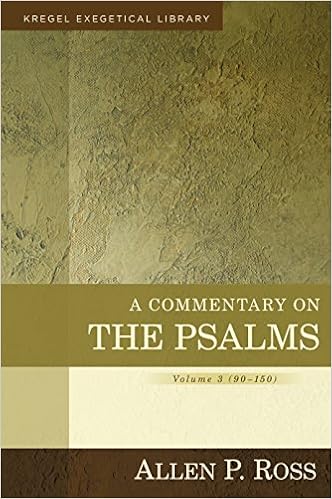
Book Review of A Commentary on the Psalms: Volune 3 (90-150


A Commentary on the Psalms: Volume 3 (90-150)
by Allen P. Ross
ISBN 978-0-8254-2666-7
Kregel Academic
Review by Clint Walker

I have just recently concluded a sermon series on the Book of the Psalms. It was rather surface level, but helpful for our congregation. Focusing on praying our emotions, we brought together the Psalms, emotional health, and the movie Inside Out. People enjoyed it quite a bit. I wished now that I had this commentary to further round out the depth of my knowledge of specific Psalms. Ross's commentary on the Psalms is nothing if not deep.

A Commentary on the Psalms begins each Psalm with a translation of the Psalm. The translation is rife with footnotes, often point out insights that are brought forward as the author compares the textual variants between the Hebrew translation (which are in the original language, but have later extant manuscripts), and the Greek translation of the Psalms (for which we have translations that are centuries closer to the time the text was written, but not in its original language). Ross's work here is thorough and well-done.

The next section in the study of each Psalm is explaining the literary, social, and historical context of each Psalm. There are times when this section can be especially enlightening.

After this, the Dr. Ross gathers an exegetical summary with an outline of how the specific Psalm is structured. This helps the reader get the big picture of the Psalm they are studying

Then, A Commentary on the Psalms moves forward with a traditional exposition of the text, taking each word seriously. This moves verse by verse, and sentence by sentence. Here Dr. Ross carefully teases out the essential details to know about what has been written.

Finally. the author includes some helpful hints for ministers and teachers seeking to both instruct about the Psalm, and teach people how to live the truth that each Psalm presents.

I recommend this book strongly for every pastor's library. It is really well done!


Thursday, April 14, 2016

Preaching as Book Report

My mom and I occasionally talk about her experiences of churches. She has bounced around a lot in finding a church home since she became an empty nest parent. These days she is living in Phoenix, and attending a nationally known non-denominational mega church. It seems to work well for her and her boyfriend, who recently made a commitment to Christ followed by being baptized in this church.

Mom and Hal go to church on Saturday nights most of the time. Then they go out and socialize after church. I giggle when they say they show up late on purpose so they don't have to listen to the "rock concert" style of musical worship.

They really enjoy the messages of this nationally renowned preacher and leader. When they first began attending this church, the church was working through "The Story", which is a large-scale campaign based out of what used to be Max Lucado's church in Texas and a mainstream publisher. My mom's boyfriend especially enjoyed becoming grounded in the basics of the Bible's narrative arc.

A couple of months ago, mom told me about another sermon series that they were concluding. They were excited because the author of the book that the pastor was preaching on was attending their worship service. I asked, "Mom, does this guy basically preach book reports?" She laughed.

"I suppose," she said, "well, not always," she went on, "I really enjoy the way he speaks and what he has to say, I think you would too."

I have mixed feelings about book report sermons. I have done sermons, generally one or two short series' a year, based upon the content of a book. This is most common with our stewardship campaign. This year I also borrowed from a book for Advent. However, mostly when I do this, I just borrow a few chapter titles, and maybe one or two good stories from the book in a two week span.

Good reading informs preaching, but should not be the foundation of it. That is my opinion anyway. What is yours?


Wednesday, April 06, 2016

Sympathy for the Pharisees


I lead two bible studies on Wednesday afternoon. The first place I lead Bible Study is at the Brookside Apartments. They are a part of the Hot Springs Housing Authority, and that organization receives funding to rent to tenants on a sliding scale based upon their income. The second place I teach at is at Pine Hills Retirement Community, which is a little less than two miles away, up on top of the hill overlooking the town. Pine Hills is privately owned, and provides independent living and assisted living apartments for seniors, as well as housing an Alzheimer's unit. They are both fun groups, although the Pine Hills group has been more exciting for me the last few months. Both groups are now in different stages of studying the gospel of John.

One of the unique characteristics I have noticed among my Pine Hills group is that as we have studied the gospel of John, they have developed a sympathy for the Pharisees. The Pharisees were the religious leaders of their day. They were at one time, leaders of the church and political leaders of the Ancient Israelites, who were at the time occupied by the Roman army. They were the Moral Majority leaders of their days, calling the people to a renewal of holiness in the private and public spheres.

This sympathy began to develop in John 6, where after feeding the 5000, when Jesus begins to engage in a series of confrontations with the Pharisees regarding Jesus' moral authority. Jesus says things like "I am the Bread from Heaven" (John 6:52) and later goes on to say, "before Abraham was, I am" (John 8:58). The ladies assure me that their faith is not in doubt, but also assert that if they had heard what the Pharisees had heard from some fellow claiming to be the Messiah, they would have had their reservations about believing in his claims as well.

This Wednesday we discussed John 9. In John 9, a man born blind is healed. The Pharisees are still threatened by Jesus, this time by his healing on the Sabbath, They are also concerned in making sense of what Jesus is doing. What are the implications of a healing of a man born blind? Does this demand our opposition of him, or our support of his ministry? It is a fascinating chapter in Scripture.

We discussed for a while why the Pharisees might be concerned about this fellow that was healed. I explained that the Pharisees had put a lot of time and effort in organizing and controlling the behavior of the Israelites, and that Jesus, both by his teaching and his miracles, was beginning to unravel that sense of forward direction and control of religious practices and authority.

Then it was time for me to confess my sympathy for the Pharisees.

I told them this story. "It is like this in a way, " I said, "there was this gentleman that visited our church on Easter...."

William was the name of our visitor. He had first visited our Bible Study that meets before church. Then, he made his way into the sanctuary. I was setting up on the platform before the service. William called to me. We spoke. It was about 20 minutes before the service started. He engaged me in an empassioned, franetic, and difficult to track conversation for about 10 minutes. He used to live here in town nearly 20 years ago he told me. He was up at the VA Hospital in Sturgis, and after running several tests on him, they sought to admit him to the psych ward. He refused to go. "I am just full of the Holy Spirit," he said jumping up and down, shaking, a bandage over his head, and wires attached to monitors on his body. "I am pastor of the Universal Church of (something), I am a shepherd of about 2 million souls."

I smiled and visited and attempted to disengage from the conversation several time. Eventually I got him comfortably seated, and then went to the back of the sanctuary. "Jerry, we have an adventure for you today," I said to our usher for the day, "there is a rather interesting fellow sitting up front that appears to mentally ill. I may need your help with him."

"What do you want me to do?," Jerry asked.

"I don't know. You guys will know how to handle the situation right if it comes to needing to ministering with him in other ways. Just wanted to give you a heads up."

"Ok."

My anxiety level was pretty high by the time the service started. We began with singing. No problem. We had a responsive call to worship. He began to shout out the "leader" portion after the leader, instead of reading the response in the responsive reading. All the while, I am at one time trying to lead with enthusiasm, but also saying to myself, "How am I going to manage this problem?"

I like to love people as unique people made by God, and brought into my life for a reason. This man was beginning to be a "problem to be managed." I don't like that attitude. But I wanted to have at least a few people return after their annual Easter visit. I had sympathy for the Pharisees.

Somehow, as he began to shout out his need for an apartment during announcements, I had to move along to the next song, and then sit down behind him, and tell him that I could introduce him to people in the rental business after the service. "Thank you. And ok, preacher, I will try and be quieter." I felt bad. But I was doing what I had to do.

Later in the service he threw bread at my object lesson with the children, among other things. I tried to be understand and tried to be open to how the Spirit was working among us with this curveball that had been sent our way. But I was not about to let go of control of the service. I had an event to manage, constituents to serve, a sermon to preach. Instead of leaving the 99 sheep for the one lost sheep, I had sympathy for the Pharisees. I did my religious duty, I managed the problem.

But that does not mean I don't wonder whether I did the wrong thing or the right one.....

New Beginnings: A little devotional YouTube I do for our church

Friday, April 01, 2016

Lost and Found: A Poem

It is in the confusion
of a lost moment
where your habits
are stripped
like threads from a screw
that you might find the new you
that went missing
in the chaos
of the human zoo

It is in the dark room
of fumbling confusion
where the beautiful
glimmers of light
begin to form a picture
that can shape
the rest of your life
reborn in the
everyday world
of light

Despise not the dark
or the lost times
that may
bring you home
or beyond home
to that place
you are determined
destined to go
a mystery made
for you to abide in


Sunday, March 27, 2016

Therefore, Run: An Easter Sermon

Therefore, Run
When Jennifer and I were dating, there would be moments, when she was wanting me to hurry up or stop being distracted in the office supply section in the store, where she would urge me to hurry up and move along. And, at some point, putting on my best Forrest Gump voice, I would yell at her from down the aisle, in an embarrassingly loud voice, “I am running Jenny” and then I would awkwardly run to catch up with her. I have made a habit of doing this kind of thing as we have went along in our marriage, even when I was training for my 5k last year and the year before. Why not? Making a fool of myself is one of my most endearing qualities.

The act of running has an interesting story in Biblical history. I did a word study on the concept this week. For the average Jewish person, running was not behavior that was engaged in for sport or to maintain or build physical health. Sometimes running was done to flee temptation (Joseph), and was often engaged in with military conflict. Running was often used metaphorically for something that was done in haste.
One of my favorite Scriptures says that young men will be able to “run and no be weary”. (Isaiah 40)

Yet, there was a sense, especially by the time of Jesus, that running was often considered undignified. You see, you would be wearing a robe, and in order to run and not trip you would have to pull up your robe and expose your legs, which was considered a little shameful, a little embarrassing. This is one of the things that makes the parable of the Prodigal Son so powerful. At that point in history, if a son was discovered to have squandered his inheritance among the Gentiles, he would be drug in front of the leaders of the community, they would grab a bowl, break it, and tell the young man that he was now cut off from his people for his shameful behavior. Public humiliation. Yet, with the Father’s running to the prodigal, the Father short circuits the shaming of the Son by taking the shame upon himself.

In Christ, God has come running to us. Stooping to us. Taking our shame upon himself, so that we can have a new life, a renewed hope, through placing our faith in him, trusting him with our lives by surrendering our lives to his authority.

Anyway, all of this is helpful to know when we get to resurrection accounts in the Gospel of John. Why? Because everyone is running with the accounts of the resurrection. John 20:2 says that Mary Madgalene runs from the empty tomb to find Peter and John. She tells the men about the empty tomb, and they run as well. John tells us that he got there first, but tells us that Simon Peter goes barreling into the tomb as soon as he gets to the scene. Then they leave. The grave clothes are there, but the body is not? What are they to make of this?

We are left to wonder that too. And part of what we are to make of this event has to do with the response of those first three witnesses of the resurrection: Mary, Peter, and John. When they hear of the open tomb, they cannot help but run. They run from the grave, and they run to it.

Are we to believe that this running would have been shameful? I don’t know. I think what we are to hear is that they simply did not care. This news that Jesus’s tomb was empty, that he may have been risen from the dead, that God has turned the world rightside-up through raising Christ from the dead, this was worth running to, even if they looked goofy, embarrassed or shamed themselves.

Two thousand years from that first Resurrection morning, to empty tomb, my friends, is still worth running to. It is the pivot point in history. The message of new life, of hope, of life after death, of the victory of our conquering King Jesus is still urgent for you, for me, for our friends and our family, and for our world. It still has the power to set prisoners free, to make the broken whole, to reconcile enemies and to bring joy from ashes, and hope from despair. The empty tomb still has the power to change lives. I know, as imperfect as I am, it has and is changing my life.

During Lent, we have been studying Hebrews to immerse ourselves in understand the greatness of Jesus Christ. We have learned over and over again, our need for the Jesus who loved us enough to come to us in human form, to live a perfect life, to die on a cross, to rise again in victory, and to ascend to sit at the right hand of God.
We have contemplated all of this, and now on Easter morning, we are confronted with Hebrews 12, and the “now what?” in light of the resurrection. Jesus has died and risen. He has suffered for us. He has offered us new life. Now what?

The author of Hebrews invites us to get running!

Now, Hebrews is written to Hellenistic Jews. Jews that were not native to all of the national history and customs of the Land of Israel, but folks who had tried to follow the Scriptures in exile spread out all around the ancient world. In the Greek world, athletic competition was common. And one of those competitions had to do with running. Running competitions has ties to military in ancient Greece and Rome.

Marathon, for example, was a messenger who ran from the battle field to announce the victory of the Athenians over the Persians. He came bringing good news. There were no phones or television then of course, so news of battle news was passed on through messengers that relayed the news, running from place to place. These messengers were called evangels when they had positive reports. Thus to be an evangelist is a person relaying good news about a victory that has been won. And evangelical is one who is a person who believes in the good news of victory in Christ, and lives in faith about that good news.

He compares the story of faith among God’s people to a relay race run in full view of all of the people of history. In Hebrews 11, as we looked at last week, the preacher who preached the content of the book of Hebrews gets on a roll. He begins to recount the history of the people of God. They have followed God in faith. Seth. Moses. Abraham. Noah. Isaiah. David. The prophets. The judges. Each ran the race. The lived by faith. Like relay racers, they passed the baton to the next generation. And each generation, one way or another, lived carried on that faith and passed it on to the next generation. Sometimes better. Sometimes worse.

And now, having the benefit of knowing about the death, burial, and resurrection of Jesus Christ, the baton is passed to us. And all of the saints that have come before us make up a cloud of witnesses. And that cloud of witnesses shouts to us, in light of the good news we have to live and to share about Jesus Christ, they shout RUN!
RUN!

How are we to run?
The author of Hebrews gives us some very helpful advice of how we are to live, of how we are to run the race, in light of the resurrection of Jesus Christ.

1.    Fix our eyes on Jesus
The resurrection reminds us that our faith is not in religion, or an organization, it is in the leadership of our Lord Jesus Christ. In light of the resurrection we run to him! We fix our eyes upon who Jesus is. We say, because Jesus died for me, I am going to live for him. Our life becomes about loving the way Jesus loved, being strong and bold for truth the way Jesus was, and remembering that Jesus is the standard that we hold everything against. His resurrection proves he is greater than anyone. His resurrection shows that he has power over sin, death, and the evil one. So our focus should be on what he wants us to do, and where he wants us to go. Get focused on Jesus and what is going on around him.

2.   Throw off sin
Jesus died so that you can be victorious. Not so that you could wallow around in sin, and have it tie you up and tie you down. If we have faith that Jesus is risen, that trust then spurs us on to living with a trust that God’s way is better than our way, and that the wisdom of the Word is greater than the wisdom of the world.
If you truly trust, believe in, and love Jesus, your life will be marked by eliminating the self-centered, destructive, sinful life you have left behind. You will begin to trust that God knows what is best for you better than you think you do, and you will begin to eliminate from your life those things that stand in opposition to Christ and your soul.
3.    Throw off anything that gets in the way

In the movie UP!, there is this endearing dog that is devoted to the main characters in the story. Unfortunately, what happens is that the dog is easily distracted. He is puttering along, doing good things, and then he sees a squirrel. And he goes chasing after that squirrel and gets distracted from the things he is meant to do.
In light of the resurrection of Christ, your life is about one thing. Sometimes sin gets in the way. Both other times we are just so easily distracted with a million different things that we are impeded from being the transforming, world-changing, neighbor-reaching, community building people Christ has called us to be. We can be like the dog, that lets the squirrels around us get in the way of truly living a victorious life in Christ.

We get stuck doing things in our lives that keep us from private devotion or worship, or public worship here. We get distracted from the needs of our neighbors with our own business and our cell phones. Sin is always gets in our way of running the race well. But there are good things that can steal our focus too.

4.   Persevere

A life lived trusting God means that we need to persevere. There are times when walking with Christ is just difficult. Maybe we experience a dark night of the soul. Or maybe circumstances steal our motivation to stay faithful to Christ. Remember, at this point, that we are running a race. There are moments that we may want to quit. It is imperitive we don’t. We have a great cloud of witnesses cheering for us. We know through the resurrection that victory is ours. Let us not abandon trusting the Way of Jesus because of temporary discomfort. Persevere!

5.    Endure opposition and hardship
Both from the evil one, and from others around us, running the race of faith is difficult. You will be attacked for doing what Jesus tells you to do. They attacked him too, the author of Hebrews says here, but stand strong. You will endure suffering for doing the right thing. Your kindness will not always be returned. You will be pushed aside. Keep pushing. Keep running. If you are doing anything important, there will be people who will oppose you, who will stand against you, who will seek to drag you down. RUN. KEEP RUNNING.

6.   Consider who you are running to
Run to Jesus. Consider what he went through to win you, and how little you endure in comparison. Consider what Christ did for you, and how much loved you. And then remain faithful, remain loyal to him by believing, trusting, and living for him, under his authority, in obedience to him

7.    Run!
Run to Jesus. Easter shows us the war is won. We still face battles, obstacles, and challenges. But Jesus is our champion. Run with him. Run to him. Run for him. Run to Jesus and live victoriously.
Amen.


Friday, March 25, 2016

Good Friday Message: At the Foot of the Cross

At the Foot of the Cross
What would you say at the foot of the cross, as Jesus breathed his last? The air having left his lungs. The spear having pierced his side. What would you say when this nearly naked man was being drug down from the cross, his blood still drip, drip, dripping from the wood into a puddle by your feet?

What would you say?

What would you say at the foot of the cross? What would you say there after you watched this man who you had heard of as a great teacher of his people was arrested, betrayed by one of his own disciples? This Jesus, having being grabbed from a graveyard as he prayed, the residue of blood on his brow from him having sweat blood in prayer? What would you say?

What would you say as you watched the faithful followers of Jesus move away from him after his arrest? After you saw them run away, some of them, if you trust in the truth of Mark’s gospel, as I do, without their clothes. These disciples, that he had poured his life into, when he asked them to pray for him, they kept falling asleep. What would you say?

What would you remembering that Jesus was brought before the Jewish authorities, them seeking to undermine his ministry? What would you say as you observed all the obviously false accusations about him? What would you think when they asked him if he was the Messiah, the Son of God and he said, ““You have said so,” Jesus replied. “But I say to all of you: From now on you will see the Son of Man sitting at the right hand of the Mighty One and coming on the clouds of heaven.” And then they said they were going to kill him. The gave him the death sentence? What would you do?? What would you say?

What would you say at the foot of the cross having watched all of this happen as the blood drip, drip, dripped down in a puddle by your feet.

What would you say? What would you say as you watched the Jewish leaders bring Jesus before Pilate? As Jesus stood before Pilate, Pilate asks Jesus if he is King of the Jews. And Jesus says, “you have said so”. Pilate has reservations and gives the people a choice on who to crucify, a criminal named Barabbas or Jesus? And the crowd, under the influence of the religious leaders among them cries for Jesus to be crucified, and for Jesus to set free.

What would you say?

Pilate’s wife comes to Pilate. She begs and pleads with him not to kill Jesus. Not to send him to the cross. She has had a dream. The dream told her he is an innocent man.
What would you say, knowing all this, if you were that soldier at the foot of the cross? What would you say as the blood came drip, drip, dripping down from the wood of the cross into a puddle by your feet as the people are taking Jesus’ lifeless body off of that cross.

What would you say as they whipped Jesus on that whipping block with that cat of nine tails, with pieces of bone, and rock and metal embedded in that whip, pulling out pieces of flesh each time they whipped him. Whipping him 39 nine times because if they whipped him 40 times it was supposed to be fatal? What would you say if you were a soldier there, watching all of that?

What would you say if you saw him attempting to carry his cross, not complaining, as he went through the streets walking toward Golgotha, the place of the dead. And then as Simon, the Cyrene, was pulled out of the crowd, began to carry the cross for Jesus as he stumbled up to the top of that city? What would you say?

What would you say as the placed his battered, beaten, and whipped body upon that rough hewn piece of lumber, slivers embedding themselves in the scars and the sores, blood spurting out as they nailed, nailed, nailed him to the cross. His hands and feet pierced. And then they lifted him up into the air.

While he hung there he breathed heavy. Most people on the cross die of suffocation. Their bodies slide down the cross and compress their lungs, making them incapable of breathing. In order to survive, they must push themselves up the cross, scraping themselves against the wood, in order to catch a breathe. This is why the other men at the cross had their legs broken. Once their legs were broken they can no longer push themselves up, and they suffocate. By the time they get to Jesus, he was already dead.
What would you say if you were at the foot of the cross, the blood of Jesus drip, drip, dripping on the ground next to you, forming a puddle at your feet?

What would you say as you listened to Jesus at the foot of the cross?

What would you think as you watched him suffer and he said, “Father forgive them, they know not what they do” As they mocked him, spat at him, gambled for his clothes, and sentenced him to death. Perhaps he was even speaking to that soldier at the foot of the cross, stoicly doing his job, and perhaps he was even speaking to all of us as we have sinned and fallen short of the glory of God? What would you say at the foot of the cross?

What would you think at the foot of the cross when you heard Jesus say to the thief crucified next to him that, “Today you will be with me in paradise?”

What would you say?

What would you say at the foot of the cross as Jesus told the disciple John and his mother Mary that they were now Mother and Son, seeking to take care of his mother and his friend as he hung up on the cross, hardly recognizable, barely able to sputter out the words he needed to say?

What would you say?

What would be going through your mind at the foot of the cross of Jesus when he cried out from Psalm 22, “My God, My God, why have you forsaken me?” Praying faithfully the prayer of the suffering he learned as a child.

What would you think when Jesus said that he was thirsty, there at the foot of the cross?

What would you say as Jesus proclaimed that he accomplished all that he wanted to do, as he looked up to heaven and said, “It is finished”?

What would you say as you heard Jesus say “Into your hand I commend my Spirit” as he was up there on the cross, and he had his last, wheezy death rattle and then froze stone cold dead on that cross?

And then, just when Jesus stopped breathing, the earth shook, the rocks began to split in two, the veil of the temple tore in two, and graves began to split open, and dead people began to start walking around, temporarily alive again. People that had been dead for a long time. Appearing to loved ones. Perhaps proclaiming Jesus as Lord.
What would you say if you were at the foot of the cross, with the dead body of Jesus hanging over you, and blood of Christ drip, drip, dripping down below you on the ground into a puddle by your feet.

Because, in a way, we are all today, at the foot of the cross. We are all observing Jesus’ death, even from several centuries distant from that moment. We all come to Christ through the cross, if we are to know him at all. We all must deal with what to say, what to do at the cross.

We all need to come to the cross, and take stock of our lives here, where Jesus died for our sins while we were still opposing him. And we need to ask ourselves, what really matters here.

Do our worldly accomplishments, how much money we have, how many trophies we have, how many titles we have really matter when we are standing at the cross? Is that really going to matter as Jesus is crying out, suffering to pay the price for our sins?

Take your petty arguments and grudges that you have had with your friends and family and neighbors. Take them to the foot of the cross. And as Jesus is wheezing and bleeding and a drop of his blood falls on your face, as he suffers and dies to give you new life and to teach you how to love God and your neighbor, take your arguments and grudges to the foot of the cross, and ask yourself, do they really matter there, as Jesus is dying for your sins and your transgressions, even as you turn away from him.
What would you say, as you stood at the foot of the cross, Jesus’s blood dripping down from the cross, forming a pool of blood at your feet?

I hope you would, and I hope I would, as I saw Jesus pay the price for the world’s sin, as he gave his life for a sacrifice for all of humanity who would believe, as he gave his blood to give you the free gift of salvation, I hope you would look up at this forgiving and suffering savior, who could have conquered the world but instead gave his life as a ransom for many, I hope you would say, I hope you will say with me and saints throughout the ages as we join our voices with the soldier at the cross, “Surely he was the Son of God”.


Saturday, March 19, 2016

Book Review of 40/40 Vision by Greer and Lafferty


40/40 Vision: Clarifying Your Vision at Midlife
by Peter Greer and Greg Lafferty
ISBN 978-0-8308-4434-0
IVP Books
Reviewed by Clint Walker

As evidenced by previous posts, I am in my forties. Although I have yet to buy a convertible, and I have no desire to trade in my forty-something wife in for two twenties, there is a sense in which I am beginning to think about where my life is going to be headed for the second half of my earthly existence.

In 40/40 Vision Peter Greer and Greg Lafferty speak of the 40 year mark and the midlife stage as a crossroads. How people like me navigate this stage, they argue, is imperative. Midlife, the authors argue, is a crossroads that defines the narrative of a person's life. For those who have struggled, it is a time to pull life together and move in a different direction. For all persons, it is a time to reevaluate the trajectory of one's life, and make the necessary adjustments for the future.

Each chapter in this book, after the introduction, focuses on a different issue in midlife. Each chapter encourages the reader to evaluate, adjust, and make the most of their lives in the present and future. Even more, as the title communicates, the authors want people to stop floating along, and move forward in the second half of life with vision, purpose, and passion.


Book Review of Changing World, Unchanging Mission by M. David Sills


Changing World, Unchanging Mission: Responding to Global Challenges
by M. David Sills
ISBN 978-0-8308-4430-2
IVP Books
Reviewed by Clint Walker

The world is not the same as it used to be. Although our call as Christians to "go into all the world" is unchanging, the world that we are going into is changing exponentially. Because our world is constantly changing, the craft of missionary outreach must adapt some of its methods to continue to communicate the ancient message of Jesus. M. David Sills addresses some of the challenges that missionaries are facing and will be facing, and offers insight on how to address the concerns those new issues in Changing World, Unchanging Mission. 

As a person that loves, supports, and advocates for missions, I find this book interesting and informative. If I were a international missionary dealing with the rapid changes on the global mission field, I would find this book indispensable. It is well written. Sills approaches concerns in different regions of the world (the southern hemisphere for example), in adapting for different educational levels (oral learners), as well as different methods of relating to supporters (churches as sending agencies).

I am so thankful that there are people out there thinking about such matters, about how to communicate about them to the Christian community, and I am thankful to IVP for publishing a book about this aspect of mission work as well.


Tuesday, March 15, 2016

Book Review of Great Commission, Great Compassion by Paul Borthwick


Great Commission, Great Compassion: Following Jesus and Loving the World
by Paul Borthwick
ISBN 978-0-8308-4437-1
IVP Books
Reviewed by Clint Walker

I have read several books on united God's command to be compassionate through acts of mercy and justice with the command to make disciples and evangelize. I applaud them all, although after reading many of these kinds of books, I have become overly familiar with the material they share. Great Commission, Great Compassion, however, is different.

One thing that I noticed about this book is that its target is more formational that informational. While sharing the biblical foundation for both the Great Commission and the Great Commandment, Paul Borthwick also give word pictures and numerically organized practices to form his readers heart to live out the call to share the gospel in word and deed.

Then, after communicating need and forming the hearts of its readers Great Commission, Great Compassion moves its readers toward an concrete action plan. This action plan, called "lifestyle imperatives" combines spiritual disciplines of folks that are truly mission minded with concrete lifestyle changes that allow persons to engage in mission. Starting with simply being teachable and looking at the world differently, Borthwick moves people toward hospitality, generosity, advocacy and action.

This would be a great resource to teach from. Points of the book can be easily committed to memory, and the processes here are helpful in developing a step by step plan of growth in a "whole gospel" Christian. Great Commission, Great Compassion deserves a wide readership.

Monday, March 14, 2016

Mid-Life Musings: Part 1


I pull up to the playground outside the school. My daughter sees the van arrive. She begins to run. She sprints all the way across the playground. She grabs her backpack. She starts telling me all about her day, the gift she was given by a friend. We exchange hugs and kisses. We sing children's worship songs as we head to daycare. Mattea likes "This Little Light of Mine" right now. We get out of the car at Teri's house for daycare. She wants me to give her a wild ride, so I pick her up and throw her over my shoulder. I bounce her and spin her. She cries out joyfully and giggles. I set her down with her feet on the ground. She gives me a  kiss as she lifts her back foot up. I let her run in and yell goodbye. She doesn't hear. She is on to the next thing. I walk back to my van, but not without stopping and savoring the moment briefly. I have to stop and savor moments every once in a while. I have to savor a few moments each day just to discipline myself to remember that life is beautiful.

I get home and I check the mail. There are a couple of review books in the mailbox. I wonder if I had ordered both of them for review, or if they just sent them to me to review anyway. One of the books is about Kierkegaard. I love Kierkegaard, but I have not studied him nearly enough. Then I look at the information on the back cover of the book. It says that Kierkegaard died at the age of 42. This catches my attention. I think about how Kierkegaard accomplished so much in 42 years, and how I have really not accomplished much of what I had hoped to accomplish by the time I was 42. I wanted to write a book. I have wanted to get a doctoral degree. Not sure I am smart enough to do either of these things anymore, if I am honest with myself. I wanted a life and ministry that was marked by more visible, measurable success. It is easy to look back. To scold myself for not being more. Or, for at least trying not to be more. 

I have taken measure of my life at different points by paying attention to what my heroes, and at what age they did it. Calvin wrote the Institutes at 26. Martin Luther King Jr. led the bus boycotts in Montgomery, Alabama when he was 26. He died when he was 39. Luther was almost 34 when he nailed the 99 Theses to the Wittenburg Door. I look at these accomplishments, and I ask myself, what have I done to make an impact like that? What should I have done to make my impact on the world?

I have a friend and ministerial colleague named Mike. We were born the same month. Ten years ago we were sitting in coffee shops planning a youth mission trip to Gulfport, MS. He was recently divorced, and serving as an Mission Coach for our denomination (think D.S. in Methodist life). He brought on another person onto our leadership team, and they began to fall in love and get married. His kids were just finishing up high school. Hard to believe that was 10 years ago. I think, by the time he was my age, he was an area minister, and I am still struggling to get people to show up on Sunday to a dying church in a dying town in the middle of the plains, and I have not made nearly enough progress in turning it around.

Then I think, if I was somewhere else, I would not be having my 3 year old running to me in the morning, giggling about her "wild rides", and chattering to me about nothing at all. If I was climbing and striving for something else, I might have missed these moments, even if I was present for them.

And so, in my heart and mind, a battle is waged. A battle between the husband and father that wants to be present for his wife children in way that leaves a meaningful legacy for them, and a driven man and pastor that feels like he is running behind in making his meaningful mark in the world. 

Thursday, March 03, 2016

Quotes from Called by Labberton


"What we believe matters, but it is evident by how we live." p. 70

"We are not saved by our actions, but  we are saved for our actions, to become those that make God's life in Jesus Christ visible." p. 71

"When seeking to hear God's call, we can't serpate the inner from the outer life" p. 74

Book Review of Called by Mark Labberton

Called: The Crisis and Promise of Following Christ Today
by Mark Labberton
ISBN 978-0-8308-3683-3
IVP Books
Reviewed by Clint Walker

A few years ago, I went to a conference on missional church development. While I was at that conference, Mark Labberton spoke. I had heard about a few of his books, bought one, but had not read any of them. As he kicked off the conference, I was impressed with his thoughtfulness and depth. I was also impressed that when I briefly approached him in order to get information about a citation he made during the presentation, he took interest in my life and ministry. He seemed to truly have a pastor's heart, even though he had been elevated to a minor Christian celebrity by taking the helm of one of the most influential seminaries in the world. And so, as I left the conference, wanting to learn more from Dr. Labberton, so I bought this book IVP was aggressively marketing entitled Called. I was not disappointed.

As I read through this book, I was impressed, moved, and challenged. Although I have lived out my sense of call to vocational ministry for a few decades now, I was challenged to revisit what it means to be called by Jesus as his servant. I was also encouraged to prayerfully reconsider how I was living out my call, and begin to refocus.

This book, however, is not just for helping pastors refine and understand a call to full-time church work. Called is a battle cry to each and every believer to realize that they are called by Jesus, and to begin to actively and uniquely live out their faith as their authentic selves in the place where God has planted them.

Labberton addresses the phenomenon of being called by Jesus from a number of different perspectives. First, he spends some time teaching about ways that all believers are called by Christ. We are called to follow and obey Jesus if we call ourselves Christians for example.

Next, we examine the contour of what being called to follow Jesus looks like. It requires, we are taught, a different way of looking at the world and looking at our lives. We are also taught that if we embrace the call of Christ we need to be prepared to identify with the marginalized and suffer ourselves, among other things.

In the final chapter, Labberton encourages his readers to use some helpful tools to put some more specificity on what God may be calling individual disciples to do, and who he may be calling them to become.

This is a book I am going to put on my "active reading" shelf, and come back to over and over again. Called is a book that has the potential to revitalize and refocus one's vision for ministry.


Monday, February 29, 2016

Quote from "Called"


A profound quote regarding the Lord's Supper: 

"We come to the table out of need, because our belovedness is slippery. It can fall through our fingers and leave our minds. But when we gather to eat and drink, we enact our identity and we practice remembering Jesus's love, and that regrounds us in the first things about today and everyday."--

Mark Labberton, Called, p.104

On Being Peculiar: Being the Old Parents Part 1

I am 42 years old. I have two girls that are three years old and five years old. One of them is in preschool, and the other is in kindergarten. I take them to school each day, and wait until the teachers take them into class before I leave. Sometimes I also stay afterward and chat with the parents. Each day I am reminded--we are the old parents. We are, in fact, capable of being parents to some of the kids that show up to drop off their kids for school. 

There are several differences between the way older parents and younger parents going about the task of raising their children. I am not sure I can put these observations into words right now, but I will make an effort.

First, I think parents who are older tend to take a much more serious view of the parenting endeavor as a whole. I was a youth pastor. My wife is a child protection supervisor. We have seen how people have profoundly messed up their children by what they have done and what they have left undone. We know that parenting decisions that younger parents might not even concern themselves with actually do have profound developmental and personal impact on the child. 

This week we received a note from the teacher about our child's tendency to whine. We discussed the concern in detail. I drafted a letter in response to the teachers emails, and after going through several drafts of the document I send it. The email was pleasantly written, but it was well-thought out. The note has numbered points to communicate most effectively. Seven to be exact.

Occasionally we discuss the possibility of moving to a different home. Sometimes a different home in the same town. Sometimes moving to a different city. When we do, we discuss how the transition might effect our child, their sense of confidence and security, and how we might alleviate these concerns if they were to ever come up. I don't believe many of our peers in their early twenties are nearly as concerned about such matters.

We realize we are mortal. Older parents are parents who have had their own parents deal with health scares, and in many cases we have also had health scares of our own. We understand that life is fragile and short. For this reason, at times we may be concerned about more things and different things that our younger peers. 

One the lighter side, I think as older parents we savor the opportunity to raise children a lot more. As Darius Rucker says, "It won't be like this for long". We make sure we push ourselves to create moments of laughter and good memories. We sit in the moments we have with them, and understand them as gifts because we have spent many of our adult years without the opportunity to be a parent. I try and create rituals in prayer time and morning time that the kids can take with them. 

Thursday, February 11, 2016

Book Review of What the Prayers of Jesus Tell Us About the Heart of God by Shane Stanford


What the Prayers of Jesus Tell Us About the Heart of God
by Shane Stanford
ISBN 9781426774256
Abingdon Press
Reviewed by Clint Walker

This book is designed as both a short, inspirational read and a five-week study that could be used any time, but would be especially meaningful during the season of Lent.

Stanford here focuses his attention on how Jesus prays for us as his disciples. Through doing this, he shows us both the heart of Jesus, as well as the vision of Christ for his disciples individually and as a Christian community.

I thought What the Prayers of Jesus Tell Us was intelligent, readable, and thought-provoking. It certainly helps to clarify what the call of Jesus is on believer's lives.

Having said that, I would like to see a broader engagement with this topic that does more than speak to the prayers of Jesus for believers, but also takes on the prayers of Jesus in a broader sense. Passages such as "if this cup can be taken from me" for instance.


Saturday, February 06, 2016

Book Review of Sent by Jorge Acevedo et. al

I picked up this book, and some of the curriculum pieces that went along with it for our Advent worship plan at our church. I have mixed feelings about the book as an Advent resource.

First, the good things. I thought that the idea of this book and its accompanying curriculum was awesome. As one who is wanting to encourage our church to be more missionally minded, this seemed to fit well. The chapter headings and themes for each week in Advent were helpful. As were some of the accompanying Scriptures.

Where I struggled with this book is that the chapters were less theological reflection, or even reflection on the Christ-story, and more personal reflection of the author's experiences of the themes shared. Sometimes this worked, but some of the chapters seemed that the author's stories were tangential at best. This made it hard to base a class or a worship on large chunks of the content of this book, which was my goal.

Monday, January 18, 2016

Book Review of Making Friends, Making Disciples by Lee Spitzer


Making Friends, Making Disciples: Growing Your Church through Authentic Relationships
by Lee B. Spitzer
ISBN 978-0-8170-1645-6
Judson Press
Reviewed by Clint Walker

Making Friends, Making Disciples is a book written as part of the Living Church series by my denomination (ABC/USA) designed to support and encourage effective congregational leadership. This book is the first book in the series, and after reading it, it sounds like the Living Church collection will be insightful and helpful for many pastors and lay leaders in churches.

Making Friends, Making Disciples draws on resources from philosophy, literature, as well as social science and scripture to make an argument for placing the formation and care for friendships as the foundation of powerful and effective ministry. In doing so he asses our need for friendships, especially in our current cultural context,

This book is full of great insight, It also has assessment tools in the back of the book to help individuals understand their history and circles of friendships.

This book is also challenging. As I read this book and considered the contents I asked myself, "Am I really that good at making friends? Am I capable of being the kind of minister this book describes? How do I as a pastor maintain healthy boundaries and still become close friends with people in the congregation I serve?"

In addition to these questions I was challenged to ask questions about our church, "When people enter worship, do they find a place where they can form friendships? Do our facilities make space for friendship?"

There is a lot to think about in this book. And a lot to grow with too.


Friday, January 08, 2016

The Big Offering


Most churches, in one way or another, incorporate a collection of financial contributions into their worship services. For more liturgical churches, this happens after the message. The logic being that giving is a response to God’s action through answering our prayers and giving us his word. In the churches I grew up in and was a part of until I came to Hot Springs, an offering took place somewhere in the middle of the service, because we wanted to leave time for responding to the Word through seeking prayer and making commitments of faith during an invitation, or what others term an “altar call”. In either tradition, the bringing of tithes and offerings is considered an important part of worship, not simply because what we do with our resources is part of our worship, but because the presentation of tithes and offerings is an act where we not only offer our money but a time where we offer our very selves in worship to God.
One of my favorite verses is this, “Therefore, I urge you, brothers and sisters, in view of God’s mercy, to offer your bodies as a living sacrifice, holy and pleasing to God—this is your true and proper worship,” (Romans 12:1) or as it is stated in the Message, “So here’s what I want you to do, God helping you: Take your everyday, ordinary life—your sleeping, eating, going-to-work, and walking-around life—and place it before God as an offering. Embracing what God does for you is the best thing you can do for him.”
One Christian music group in the 1980’s had a slogan, “He died for me, I’ll live for him”. That slogan has always rang true and sounded biblically sound to me. I think that sentence hits home because it summarizes Romans 12:1. We are to bring our lives before God as a “living sacrifice”. The term “living sacrifice” implies both a complete commitment, and a commitment that needs to continue to be renewed. It is not an offering, like you put in a plate at church, that is given and received at one point and then you are finished with. It is an offering that begins at a specific time, but continues through repeated resolve and commitment through God’s assistance and grace into the eternal future.

It also, as the Message reminds us, is an offering that takes place in the mundane and gritty details of everyday life, and not in the enclosed space of a sanctuary or the narrow window of time of a Sunday worship service. Worship services are important, not because we need to give an hour to God a week, but because that hour equips us to give our 24/7 to the service of our Lord Jesus Christ. It is important to give of your resources to others and to the church. It is even more important to make that giving a portion of giving your life in service of the Master.

Sunday, January 03, 2016

Overcoming the Puppy Dog Syndrome


I quote the movie "Up" more than I care to admit. And when I say "quote", I mean that I mostly quote the dog in the movie. When I put Jake's cone on his head I often say, "I do not want to wear the cone of shame". And when I notice either myself or someone else is being easily distracted I say, "Squirrel!" and turn my head.

It is easy to have the puppy dog syndrome. Puppy-dog syndrome is want to get going with some project or with life in a certain direction, and then to see something else that looks interesting that diverts your attention for a moment, that then leads to another diversion, and then another. You get the point. You have a plan to start a career in one direction, but then another job comes along that sounds really neat and you take it. Pretty soon you have worked for a church, been a social worker, managed a retail store, and taught a few community college classes in the last ten years with no forward movement vocationally. Or, you decide to clean the kitchen, but pretty soon you are doing dishes, doing laundry, while you are shredding documents and your desk is a mess, you kitchen is only slightly cleaner, and there is a wet load of laundry in the dryer that you forgot to put in the washer and you have to run to pick up the kids. This is puppy dog syndrome.

There are certain parts of my life where I suffer from puppy dog syndrome. I am hoping in the next year to recover from them.

Use of organizational tools--I have an unhealthy interest in planners. I work best with Microsoft Outlook. One problem with my Outlook is that I have not been able to link it to my phone, which is my dream.  Another challenge is that I really need to write things down and have them on my computer to remember them best. So I buy planners. I have several cheap 2016 calendars.

My plan with several calendars is to use them like journals of sorts. One that records what I have done at work. One that has blogging plans. One with reading plans. One that has a journal for exercise. You get the point.

In addition to this I want a Franklin-Covey insert set that is on a really good sale right now as well. I already have the leather folder for it. It has always worked well as a planner that covers everything in the past. It allows me to do a to list, to record what I have gotten done, and to put together a schedule all in one place. I love Franklin Covey.

See what I mean..."Squirrel!"

Reading Plans--I have several books. I think I am close to around 2000 books in my library. About this time of year, I try to set some learning goals, which include a number of books I want to read to get me on my way to really growing personally, theologically, and in some practical skills and insight. My challenge is, I am always overly ambitious on these things.

Here is the draft list of topics I want to delve into in my study time next year:

  • Preaching
  • Spiritual Formation
  • Leadership 
  • Pastoral Ministry
  • Theology (non-current)
    • Continue Institutes
    • Read Barth's Dogmatics
    • NT Wright
  • Pauline studies (especially NT Wright's stuff)
  • Psalms in depth study
  • Contemporary Issues and Trends in Ministry
    • Church organization
    • Church growth
    • Small group development
  • Theology of the Holy Spirit
Devotional Plans--I would like some mix of the following. I have most of them on my phone
  • Praying the daily office
    • PCUSA version, book of common prayer, The Divine Hours,Seeking God's Face, Common Prayer, or other? Or just do whatever feels right that day?
  • Daily Devotionals
    • Tim Keller's new devotional, Hearing God's voice by Tiegren, or something else, as well as seasonal devotions during Lent, Advent, etc
  • Read through the Bible in a Year
See what I mean? Do I really have time for all of this?

I would also like to train for a 5k, 10k, and a half marathon as I lose at least 50 more pounds.

And I would like to be completely devoted to the church, wholeheartedly invested in my kids and wife's life, be more involved in my community, make more friends, etc etc.

See what I mean....SQUIRREL


Reformation Commentary of the Bible: Old Testament Volume XIII--Psalms 73-150

Reformation Commentary of the Bible: Old Testament Volume XIII--Psalms 73-150  Edited by Herman J. Selderhuis IVP Academic ISBN 978-0-8308-2...