Friday, February 20, 2026

Reformation Commentary of the Bible: Old Testament Volume XIII--Psalms 73-150

Reformation Commentary of the Bible: Old Testament Volume XIII--Psalms 73-150 


Edited by Herman J. Selderhuis

IVP Academic

ISBN 978-0-8308-2958-3

This book is part of a larger study called the Reformation Commentary on Scripture. In each of these studies, the editors attempt to go back to the original source material of the Reformation, and then put different Reformation ministers and theologians side by side in their take on a specific passage of Scripture. 

The Reformation Commentary on Scripture has four goals:

  • Renewing contemporary Biblical interpretation by bringing to light Reformation era interpretation
  • Strengthening contemporary preaching through exposure to biblical insights of Reformation writers
  • Deepening understanding of the Reformation and the breadth of perspectives represented within it
  • Advancing Christian scholarship in the fields of historical, biblical, theological, and pastoral studies (xvi-xix)

This particular commentary is on the second half of Psalms (roughly), covering books three, four and five of the Psalms. There is another RCB commentary that covers Psalms 1-72. This particular collection is edited by Herman Selderhuis, a church history professor in the Netherlands with particular expertise in the Reformation. 

The Psalms offer a unique role in Scripture. They are primarily the songbook and prayer book of the Bible. Yet, they also are often quoted by Jesus and Paul, both as prophetic of the Christ, and as essential to the development of Christian theology. Editor Herman Selderhuis addresses both these issues wisely in his introduction, allowing for and identifying the diversity of approaches to the Psalms, and including all of them to speak through the excerpts in different ways and at different times. 

I have grown to love the Psalms, so for me, it was interesting to see how different interpreters read different individual psalms during the Reformation era. Here are a few of the things I enjoyed learning:

  • In their study of Psalm 100
    • Luther contends that Psalm 100 is a prophecy of Christ
    • Calvin uses the exhortation to joy to say that the joy is a result of spiritual regeneration
    • Other lesser known commentaries speak about the centrality of praise and adoration of God as we enter worship
  • In Psalm 119, commentary can, in part, lean toward the value of Scripture, and conversations about the doctrine of Scripture in the Reformation
  • In the Psalms of ascent, I was delighted to read words like 'beauty" and :"majesty", because they are both focusing on worship and engaging the aesthetic nature of biblical literature in poetry
  • In all of these commentaries, it is nice to see the ease of moving between theological and pastoral concerns
 All in all, I would recommend grabbing this and reading it at times, both for ministry, but even for devotional help as one prays through the Psalms and seeks pathways of deeper prayer as one does so.


Wednesday, February 18, 2026

Book Reviews of Reformation Commentary on Scripture: Old Testament IV--Joshua, Judges Ruth


Reformation Commentary on Scripture: Old Testament IV --Joshua, Judges, Ruth

Edited by N. Scott Amos

IVP Academic

ISBN 978-0-8308-2954-5


This book is part of a larger study called the Reformation Commentary on Scripture. In each of these studies, the editors attempt to go back to the original source material of the Reformation, and then put different Reformation ministers and theologians side by side in their take on a specific passage of Scripture. 

The Reformation Commentary on Scripture has four goals:

  • Renewing contemporary Biblical interpretation by bringing to light Reformation era interpretation
  • Strengthening contemporary preaching through exposure to biblical insights of Reformation writers
  • Deepening understanding of the Reformation and the breadth of perspectives represented within it
  • Advancing Christian scholarship in the fields of historical, biblical, theological, and pastoral studies (xvi-xix)

This particular commentary is on Joshua, Judges, and Ruth--all considered part of the historical canon of the Hebrew Scriptures. N. Scott Amos is well qualified to edit this compilation, as he written several books on the Reformation era's streams of biblical interpretation and theological development from a historical context.

These historical books uniquely offer insight into Scripture, but they also offer a clear light into the context of the interpreters. The Reformation Era and Ancient Israel in the time of the Judges and the entrance into the promised land were times of social and political upheaval. The truth of this connection was not lost on the Reformers, who applied the Scripture clearly to their context overtly and more subtly. 

In the introduction, the editor draws to the readers' attention that these three books, especially Judges and Ruth, speak about women, and their place in Scripture and in the world at this time. Some are heroes, such as Deborah and Ruth. Other stories are more cautionary and sad, such as the story of Jepthah's daughter (xlvii). I personally enjoyed the emphasis on Ruth being a key person in illuminating that the gospel and the work of God in the world is for Gentiles as well as Hebrew persons (p. 530-531).

I would not use this commentary exclusively for preparing a bible study or a sermon. I would, however, use it to add breadth to my studies for both of those tasks and much more. 

Book Review of the Reformation Commentary on Scripture: Old Testament IX --Proverbs, Ecclesiastes, Song of Songs


Reformation Commentary on Scripture: Old Testament IX --Proverbs, Ecclesiastes, Song of Songs

Edited by David C. Fink

IVP Academic

ISBN 978-0-8308-2959-0


This book is part of a larger study called the Reformation Commentary on Scripture. In each of these studies, the editors attempt to go back to the original source material of the Reformation, and then put different Reformation ministers and theologians side by side in their take on a specific passage of Scripture. 

The Reformation Commentary on Scripture has four goals:

  • Renewing contemporary Biblical interpretation by bringing to light Reformation era interpretation
  • Strengthening contemporary preaching through exposure to biblical insights of Reformation writers
  • Deepening understanding of the Reformation and the breadth of perspectives represented within it
  • Advancing Christian scholarship in the fields of historical, biblical, theological, and pastoral studies (xvi-xix)

This particular commentary is on Proverbs, Ecclesiastes, and Song of Songs. This is the part of Old Testament wisdom literature most closely tied with King Solomon, the man reputed in Scripture to be the wisest man in the world.

While much of Reformation commentary on Scripture is full of fierce debate on important areas of theology, much of this wisdom literature is not central to that debate. That does not mean, however, that innovations in biblical interpretation were not influential in how the Reformers read these books (xli). The introduction provides a brief, insightful summary of "Christian Hebraism" in the Renaissance and early Enlightenment eras, as well as placing biblical interpretation within its wider context rediscovery of ancient texts as Europe emerged from the Middle Ages. 

Most of the Song of Songs is understood as an allegory. There is no known Reformation commentary that understood this text as primarily literal in interpretation (xlv). This raises questions about why the Reformers would interpret this text allegorically when they avoided allegorical interpretation elsewhere.

The editor, at the end of his introduction, helpfully identifies which Reformers he leans on most heavily in selecting primary sources for this historical commentary. He says, "...the reader will no doubt notice I have played favorites from time to time: Cardinal Cajetan, Phillip Melanchthon, and Michel Cop on Proverbs; Martin Luther and Jean de Serras on Ecclesiastes; Theodore Beza, Melchior Hoffmann, and the English Puritans on the Song of Songs (lv)."

As I made my way through this commentary, here is what I enjoyed:

  • The efforts in Song of Songs to explain and stretch metaphors as far as they could go to illuminate spiritual truths
  • Michael Cop's take on Proverbs 20:1, which the editor summarized in a subtitle as "drunkards give wine a bad name" was simply delightful.
  • Jean De Serres excerpt entitled "True Happiness Contrasted with Its Imitation" was a great summary of the message of Ecclesiastes, and his bringing in the idea of providence puts him squarely in the Reformation era with its concern for God's sovereignty.
All in all, the Reformers show that they are people of their era, but in their comments on these books, they also show that much of the human experience of temptation, wisdom, love, seeking God, and struggling with meaning is shared by people no matter when they lived.

Thursday, October 23, 2025

Book Review of the Reformation Commentary on Scripture: New Testament --John 13-21


Reformation Commentary on Scripture: New Testament --John 13-21

Edited by Christopher Boyd Brown

IVP Academic

ISBN 978-0-8308-2968-2


This book is part of a larger study called the Reformation Commentary on Scripture. In each of these studies, the editors attempt to go back to the original source material of the Reformation, and then put different Reformation ministers and theologians side by side in their take on a specific passage of Scripture. 

The Reformation Commentary on Scripture has four goals:

  • Renewing contemporary Biblical interpretation by bringing to light Reformation era interpretation
  • Strengthening contemporary preaching through exposure to biblical insights of Reformation writers
  • Deepening understanding of the Reformation and the breadth of perspectives represented within it
  • Advancing Christian scholarship in the fields of historical, biblical, theological, and pastoral studies (xvi-xix)

This particular commentary is on the second half of the book of John. This part of the gospel focuses in on the last few days of Jesus' life, as well as details about his resurrection appearances. The author quotes Luther as admiring the Gospel of John as the "one, fine, true, and chief Gospel" (xli).

 Reformers quoted in this book include Lutheran, Reformed, Anabaptist, and Roman Catholic commenters. Most of the Anabaptist commenters did not write commentaries, but they left behind extensive teaching and preaching materials (xlvii). The author identifies key topics as Christology and the Lord's Supper (even though the Lord's Supper is not mentioned in these Scriptural texts), The Trinity, Knowing Christ, Election and Free Will, Pilate and Christ's kingdom, as well as the Spirit and the church (xlvii-li).

Each section of Scripture, before sharing the commentaries of the Reformers, gives an overview by the editor, Christopher Boyd Brown. Most of these overviews are that, overviewing information, although some of the overviews come close to Brown sharing a little bit of his own commentary. Nothing wrong with that, but as a reader, I think it is helpful to know.

Parts I thought were interesting:

  • The Reformers discussion on the love of Christ in its exposition on the foot washing narrative. John always pushes people to understand and talk about love.
  • The commenters wrestling through "the greater things" text, which is often highly debated
  • The theology of the Holy Spirit among the Reformers, especially in light of how we deal with the work of the Holy Spirit in contemporary times.
  • The empathy that the commenters have for Peter in his failure, even though they often did not have as much patience toward Christian religious groups that differed from them.
  • The Anabaptist emphasis on the difference between Pilate's kingdom and God's kingdom, and the strong commitment not to get the kingdom of God interlinked in identity or function with God's kingdom. 
All in all, this is a great commentary, and it is enjoyable to hear voices that are close to Scripture, but removed from our context.


Friday, February 21, 2025

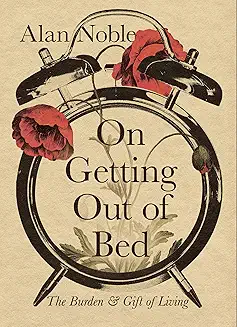
Book Review of On Getting Out of Bed by Alan Noble


On Getting Out of Bed
By Alan Noble
IVP 
ISBN 978-1-5140-0443-2
Reviewed by Clint Walker


Have you ever gotten a good night’s sleep, and still struggled to get out of the bed in the morning? Have you ever wondered if you are alone in not feeling most of your life is not rainbows or sunshine, and wondered what defect you had? Most of us have endured something like this, says Alan Noble. He says, “Get to know someone really well, and almost without fail you will discover a person who routinely struggles to get out of the bed in the morning” (p.8). 

Reading this book is less of a research project, and more of a book to be experienced, especially for melancholy souls like my own. This text goes to great pains to support and recommend mental health counseling, reasonable medicating, and care. However, at the same time, Dr. Noble challenges the approach that human beings in their mental, emotional, and spiritual complexity should be treated as problems that a medical or self-help industry can fix. This book has several short phrases that serve as hooks to challenge its reader to persevere and persevere faithfully during mental suffering.

You have heard the phrase, “just get out of bed”. Other phrases Noble uses is “do the next thing” as a witness to God’s grace and goodness to others, and as a “spiritual act of worship”. He encourages others not to sin in their suffering, and blame their melancholy for their sin. 

There is much to commend in this encouraging, challenging and thoughtful book of just over 100 easy to read pages. As I read it I felt less alone in some of my down times, and encouraged that pushing through my struggles does matter. I came to understand that sometimes, putting one foot in front of the other is truly an act of faith. And these truths and others touched my heart, and left me both affirmed and changed.

Friday, February 07, 2025

Book Review of The Dictionary of Paul and His Letters edited by Gupta, Cohick, and McKnight


Dictionary of Paul and His Letters: A Compendium of Contemporary Biblical Scholarship: Second Edition

Edited by Scot McKnight, Lynn Cohick, and Nijay Gupta

ISBN 978-0-8308-1785-6

Intervarsity Press

Reviewed by Clint Walker


Many folks, like me, enjoyed the first edition of the Dictionary of Paul and His Letters, published in 1993. At that point, I was a twenty-year-old student at Sterling College in Sterling, KS. In 2023, the year that I turned 50, the second edition of the Dictionary of Paul and His Letters was released. I have been excited to dig into this fine new work and highly recommend it to students of the New Testament everywhere.

Part of the reason I am excited about this book is personal. At the time of this book's release, all three of the editors of this new volume were at Northern Seminary. During COVID, I audited a class with Nijay Gupta on Philippians. Lynn Cohick taught a class in my doctoral coursework in 2021. So, my connection has made me root for this fine work.

This is a large text, and I will admit I have not read it cover to cover. (Honestly, it is not meant to be read that way) I have read this text, and several things are helpful to know about the scholarship in this text. They are:

  • This is almost entirely new in its content. Only 15 of the original articles were used, and several of them were updated (p. ix). I will probably use both the original and this update for research.
  • My perception is that this volume has longer articles than the previous text and perhaps fewer topics covered. 
  • The bibliographies that follow the articles are up to date, and worth paying attention to!
  • I think the "Interpretation" articles in this edition are an excellent addition.
  • It is really worth one's time as a reader to not only explore articles based on the table of contents but go through the contributors list. For instance, I looked up Michael Gorman, and am going to read his three articles. In some cases, you can get a "readers digest" version of influential books and ideas. Good stuff.
  • Finally, this may be marketed as a more academic book, but it is a great book for anyone who loves understanding Paul and His Letters in a deeper way, no matter their background. 

If you have the money, I recommend adding this book to your library!

Saturday, January 18, 2025

Book Review of Flyover Church: How Jesus' Ministry in Rural Places is Good News Everywhere


Flyover Church: How Jesus' Ministry in Rural Places is Good News Everywhere

By Brad Roth

Herald Press

ISBN 978-1-5138-1372-1

Reviewed by Clint Walker


Since 2016, there has been both a public and ecclesial interest in small towns and rural life. Whether it is the flood of sociological interest seeking to investigate why rural people have such great affection for Donald Trump, or the renewed interest in small churches and rural ministry in ministry circles, understanding rural America, especially in flyover country, is getting some deserved attention.

Into this time, comes a wonderful book by Brad Roth entitled Flyover Church. Brad is a seasoned pastor and leader in out of the way places, and takes his readers on a journey to discover the importance of small town ministry, and some helpful attitudes and practices in that context.

The book, which I read good portions of in the Flyover Brewery in Scottsbluff NE while listening to Chris Stapleton, is a guidebook for ministry in rural places, especially those in small towns in the Midwestern and Western United States. Brad takes us on a journey in Flyover Church, in which chapter titles are patterned after movement of Jesus as God's incarnational presence in the world, with a call to his readers to follow Jesus' pattern as well. As Roth says in this text, "ministry is about making ourselves available to his people and his world. Ministry is not a task based job, but a presence based one..." (p. 27). As Roth serves as a tour guide to rural ministry, he points to things to notice, attitudes that work, and practices that are necessary to be faithful in rural and small town ministry. There are no step by step instructions on "how to", but there is lots of practical insight on how to live rural ministry as a way of life. 

I would recommend this book to anyone exploring or practicing ministry in out of the way places. Flyover ministry is not always easy, but Brad Roth shows how it can be a true and beautiful way of serving the call of Jesus.


Friday, January 10, 2025

Book Review of Zion Learns to See by Terrance Lester and Zion Lester


Zion Learns to See

by Terence Lester and Zion Lester

Illustrated by Subi Bosa

IVP Kids

978-1-5140-0669-0

Reviewed by Clint Walker


Terence and Zion Lester have written a children's book entitled Zion Learns to See, which is a wonderful story about discovering a vibrant, living faith committed to loving others, and standing in solidarity with those who are under resourced.

In a book that appears to be autobiographical, Zion goes to work with her dad one Saturday morning. Her dad works at a community center in a neighborhood that has people who are homeless and hungry. Terance introduces her to his friends, and Zion helps meet some of the needs of hungry and unhoused. She begins to understand in her heart a lesson that her father was teaching her, namely that "Every person matters to God. And that means every person should matter to us"

This is a great book for teaching Christian values and social responsibility to children and adults alike. The illustrations are well done. The narrative tells a story of personal transformation by a young girl, which will encourage others to be transformed as well.

This book belongs in any home that is trying to disciple their children to be thoughtful, compassionate, and committed to loving others. It also belongs in church libraries, city libraries, and Christian schools. 


Review of Not Finished Yet by Sharon Garlow Brown


Not Finished Yet: Trusting God with All My Feelings

Sharon Garlow Brown

ISBN 978-1-5140-0795-2

IVP Kids

Reviewed By Clint Walker

Sharon Garlough Brown has written a wonderful series of novels designed to explore women's spiritual formation in a fictional narrative. Now, she is writing a children's book, describing a grandmother and a grandchild who deal with big feelings through art and a deepening faith in the presence of a gracious God who is still at work in the world and in each of us.

Probably the best compliment I have as a "girl dad" after reading Not Finished Yet is that I wish it had been written when my daughters were little enough to hear it and read it as little girls. It deals with real issues without being platitudinous. 

The story in this short book flows well. Jessica Lynn Evans illustrates it well. The metaphor of God painting the universe and that he is not finished with his creation is thought-provoking and compelling for me, as I am sure it will be for others. 

This is a great children's book on the shelf at a church, in a home with children, or in a library in the middle of town. 


Reformation Commentary of the Bible: Old Testament Volume XIII--Psalms 73-150

Reformation Commentary of the Bible: Old Testament Volume XIII--Psalms 73-150  Edited by Herman J. Selderhuis IVP Academic ISBN 978-0-8308-2...