Friday, December 02, 2016

Pastoral Transition: The New House

Some of my friends have asked what the home is like that we will be moving to.

We are moving into another parsonage. Parsonages always have their ups and downs. This one has been recently updated, so as you will see it looks pretty classy. It is a brick ranch and sits on the other side of the parking lot from the church. Having not done any significant updates in several years, the people of the church decided to update several of the features of their 50s era parsonage. Here are a few images.

The front of the parsonage:


The front living room


The kitchen


The back sitting room


The hallway


Three bedrooms all look similar--hardwood and about 10x12


The main bathroom


The house also has a two car garage, another 3/4 bath, and a fenced back yard.


So, there you have it. The home we are moving into in a couple of months.

On Being a Good Break-Up or a Bad Break-Up Pastor

Image result for pastor leaving
Some more thoughts on pastoral transition away from a congregation. There will also be others about moving to a church as well....don't worry!

There is a danger in comparing the pastor/parish relationship to a romantic relationship. There are in fact, many disturbing ways that a pastoral relationship can go off the rails with this metaphor. However, at times, this metaphor can be helpful in describing how people behave in churches and as pastors. Two of those times are during pastoral recruitment (courting, proposing, the honeymoon period as you begin a church) and during pastoral departure (dissolving of relationship). Today I want to talk about the dissolution of pastoral relationships, and how persons and churches can be "good break-up" churches and "bad break-up" churches, "good break-up" pastors and bad break-up" pastors.

I think we all know people who are good folks, but bad break-up people. You know how it is. They get into a relationship with a significant other. The relationship goes well. But then, it is time to end the relationship. And, when it is the time to end the relationship, they cannot help but going nuclear. They can't just leave the person, they must destroy them in the process. They can't come to the point after three weeks of dating where they decide they are not right for each other, they also have to get angry or rude in the process.

I have friends who are good pastors, but they are bad break-up pastors. They love people. They grow churches. They make a difference. Then they decide to leave. When they leave, they decide to let everything hang out. Those conversations where they might have held back before, they now just let loose in. They make a point to make the church feel bad for their part in the dissolution of the relationship. They tell people they have tolerated during their tenure how they "really feel". Their departure causes divisions. This is often true when the dissolution is exclusively the pastor's decision, because many pastors, one way or another, believe that they were pushed into making a transition due to circumstances in the present congregation which made it difficult to live in, or be effective in ministry.

Another type of bad break-up pastor is the one that is not willing to walk through the transition phase with the church in a way that equips them for what is ahead. They focus on the relationships, but they don't do the necessary behind the scenes work or challenge the church to ask the necessary questions to effectively face the change that is ahead. They want to leave popular and happy, and they do not want to equip the congregation for life without them. They leave, and they take stuff with them. The church sputters in their absence because of this bad break-up.

Then there is the type of bad break-up where the pastor who leaves, but never really lets go. They don't want to pastor the church anymore, but they want all the attention and accolades that come from being a beloved pastor. These pastors want to do funerals of prominent members, but not board meetings. They run to beat their successor to the hospital for hospital visits. They talk freely with former members about how things were when they attended, and how they did things, and they question the policies and preaching of their successor. They want to be seen as the current pastor without doing any of the pastoral work.

This is very hard for the pastors that follow. I remember a pastor that constantly had to fend off a pastor from funerals and hospital visits within her congregation. He had connections with the hospital and the funeral home. For the first 3-4 years, he was always the first to know anything, and the former pastor used his history with the church as a bludgeon to punish my friend with for being pastor instead of him.

This kind of bad break-up pastor is like the boyfriend that breaks up with a gal, but then keeps stalking her and harassing anyone she dates next. They don't want to be committed as pastor, but they can't handle seeing anyone else in their place either.

I don't want to be a bad break-up pastor, but there are moments where it is a temptation. And, nobody is perfect in this regard. This is because both a pastor and a congregation are grieving during a pastoral transition, and it is easy as hurt people to lash out and hurt people.

I think most of my career I have done a good job during pastoral transition as being a good break-up pastor. This is how I do it, and am striving to continue to do so:
  •  I share stories and encourage others to share stories that celebrate what we have accomplished together--trying to articulate a beginning, middle, and healthy end to the ministry narrative. I seek to not use the attention I get during the transition to grind axes about things that I was not listened to about while I was committed to being the church's pastor. I try to not wear my hurt on my sleeve--and even in the best transitions in the best pastor/parish relationships, there is hurt.
  • I try to establish healthy boundaries for the future in my relationship with the church that will allow for healthy positive regard and a few meaningful friendships, while severing professional and pastoral ties. I don't always do that right, but overall I think the churches I serve and I have done things well.
  • I use my transitional time to equip the congregation for change. I help them know who to contact, how to find stuff. I give them permission to take leadership. I advise them on some of the challenges they are going to face. I help them to find people to fill important roles after my transition. This was particularly effective leaving Montana, where I was able to continue to equip my youth ministry team to carry on in my absence.
What kinds of things have you noticed about this process. What do you find most and least helpful?


Wednesday, November 30, 2016

Everyone has their reasons...

Image result for pastoral transitions
I just resigned from the congregation I serve, in view of a call to another congregation. People's attitudes and responses about our announcement, as you may gather, have run the gamut. Many are sad, but understanding of our sense of call to another church. Some are hurt, while trying to be happy for us.  Others are rather ambivalent. A few are quietly looking forward to having a new pastor that will "fit" them better. Most, however, are just in the process of "processing". They are trying to figure everything out.

Out of all the churches I have served, I think this church is probably the most surprised that we are leaving. Part of this has to do with their pattern of pastoral leadership. United Churches has had a history of long pastorates (although the Baptist pastors have had shorter run here generally). My pastoral tenure was more average in length. This "surprise factor" has left people more active in their conversations with me trying to make sense of our departure from their perspective.

I have had several conversations where people have asked me pointed questions, some to confirm their theories, and others to simply to get a deeper understanding. Some of our old folks are concerned that other church have been attacking us, and quietly running us out of the church.  Others say that the church's willingness to not move forward and grow is what is causing us to leave. Some believe that we just want to go "home" to our own denomination, and feel the sense of connection and family that we have in denominational life that we might not experience in a federated church. Some people assume we are simply "leveling-up" to a church with better pay, prestige, and influence. I generally have vague responses about sensing God's leading, and needing to follow that sense as the reason we went. This satisfies some, but many continue to probe and question. This makes sense. People are grieving.

What intrigues me is that each person dealing with this issue has to come to their own rationalization about why this is happening. Some ask for more answers. But many, and I don't mean this harshly, choose to put the words in our mouth whether we accept them or not. They, in their processing, have to make their own meaning out of the pastoral transition. They have a hard time just accepting the change. Or grieving the change with sadness or anger. They have to begin by rationalizing why I have resigned. Everyone has their reasons. A lot of times, one persons rationalization is a lot different from another person's ideas.

I think part of the rationalization phase of dealing with pastoral transition is necessary. When something changes, people want to make sense of that change.

I think the Baptist transition structure forces this kind of thinking more as well. In a Methodist system, a congregation and a pastor (ideally) begin to communicate about when they think a transition is appropriate, and nobody is taken by surprise. In Baptist life, because of the tenuousness of a pastoral call being extended or accepted, conversations are rarely had with leadership within the church.

And, part of the challenge of with our sense of call in moving somewhere else is that I don't really have all the answers that I can put into words for people either. For me, it is sensing where God is leading me, where the kingdom can use my gifts and abilities best, and what is good for my family. And while many of the "rationales" that people come up contain some truth, there are also other issues that are involved, and some reasons for leaving have nothing to do with a failing here or a asset there but other ways in which we have sensed God speaking to us.

So then, readers and friends, what are your experiences in pastoral transitions? How have you made sense of a person leaving to a new ministry? How have you navigated this transition as a pastor or leader yourself. I would love to hear your comments.


Thursday, November 17, 2016

Book Review of Biblical Theology: The God of the Christian Scriptures by John Goldingay


Front Cover

Biblical Theology: The God of the Christian Scriptures
by John Goldingay
ISBN 978-0-8308-515-9
IVP Academic
Reviewed by Clint Walker

As a pastor who strives to be, at some level, an armchair pastor-theologian, I love this book. Biblical Theology has both scholarly rigor and accessibility to thinking Christian persons who are not necessarily theologically trained.

With many books that I read, I skip over the introduction. With this book, reading the introduction is a must. It carefully explains the author's intent and goals with the whole book, and in doing so is essential in understanding why Goldingay does what he does. He is not seeking to do a systematic theology, through which we draw out specific Scriptures to fit theological categories. Instead, he is seeking to draw out the main themes about God and humanity from the Scriptures themselves, allowing different strands with different emphasis to stand next to one another instead of conflating them into a systematic belief system. Thoroughly grounded in Scripture as story, Goldingay shows how different strands of thought weave together to describe God's story in relationship to us.

As you read through the chapters in this theology, you will see that the focus is on the personhood and action of God. This is not a theological anthropology. It is a book designed to paint a lengthy, thoughtful, and beautiful word picture of the God of the Scripture, a God that Goldingay clearly knows and loves himself.

I recommend this book for folks that like to think, to read deeply, and to know God more intimately. It may be challenging reading for some, but it will be rewarding reading for all.

Tuesday, November 15, 2016

From the The Manhood of the Master by Henry Emerson Fosdick


Our own experience suggests that power is always accompanied by the power to misuse it, and that the greater the power, the more self-restraint it requires to use it aright. Great temptations keep company with great powers. The little man fighting his little battles fighting little battles wishes he were the great man so that the more easily he might overcome them.....

Thursday, November 10, 2016

Kids and breakfast


The other day when I was in Martin, SD for a memorial, a small group of old man had gathered around the graveside. While the rest of the family was elsewhere, the old locals were gathered under the tent beside the body. They were locals. They talked about many things. They speculated on who was going to die next. They spoke about which nursing homes in Western South Dakota was the best. And then they got in an intense conversation about cereal. 

Apparently the cereal industry is struggling. People have been told by cereal companies not to grow cereal related products. Why? Because less and less kids are fed cereal for breakfast. Then I thought, you know that makes sense. We never do cereal for breakfast. I'm sure a it if people still do cereal, but I bet there are also lots of folks like us that go for other breakfast foods. We almost always do sausage. Then some sort of bread and grain.

What about you? How do you do breakfast for your kids? Does it include breakfast cereal?

Tuesday, November 01, 2016

What should a Baptist preacher wear on Sundays.....(even one in a ecumenical church)

So, every once in a while I give some thought to what is appropriate for a pastor to wear on Sunday mornings for worship. Each choice has their drawbacks, and each choice has something to offer. I have used most of these wardrobe options at one point or another. Let us examine the options:

The suit/tie (and for females perhaps the pantsuit or classy dress)--
Wearing a suit and a tie shows that you, as a pastor, are a serious professional. It is the wardrobe of commerce, business, and politics. The wearing of a suit communicates that you, the pastor, care about your appearance, and thus care about enough about your congregation and the Lord to come to worship looking like you could sell stocks, or at least be a good car salesman.


The tie and no suit (for females the skirt/blouse combo)--
This is for the person who wants to dress like they are going to a semi-formal dance in high school instead of going to a job interview. This is also the choice for you if you want to look classy, but perhaps think the shiny suits should be left for televangelists. With this wardrobe you look at best like a school teacher, or at worst a new employee at Enterprise car rental. Variations on this look include the khaki/white shirt/tie combo, the sweatervest/slacks/tie combo, or the dress shirt/sportcoat/jeans combo.


The robe
I spent my first several years in ministry without owning a robe. Then I moved to a high rent downtown congregation who generously bought a robe for me the first week. For the leadership of the congregation, it was a way of placing a giant curtain over the gargantuan human that was behind the robe. The thought went, "Our associate pastor is fat, but if we just throw a big robe on him people wont see his fat nearly as much when he is in the pulpit."

 And, it was a less expensive alternative than buying a suit that costs a months wages than more upwardly mobile persons in the congregation insisted I wear on Sundays (I now regret not spending the church's money on those high rent suits they insisted I have in order to effectively minister to our community).

Depending on the robe, a robe either communicates academic accomplishment, ascetic discipline, or legal authority (judges wear black robes). I have a reformation robe, which probably communicates the latter.

There are several advantages of wearing a robe. It does have a certain "leveling" effect, at least in less high rent circles, for the pastor. It allows a certain ease in wardrobe. There is a certain uniformity to it. That is until one decides to "level up" with fancier stoles and such.

I like that the robe communicates a more ministerial uniform--that it is not just borrowing from contemporary professional standards. But, I do think that if you put a pastor on a platform, behind a pulpit, with a robe you erect a number of barriers between the pastor and the congregation that can make intimate, meaningful connection more difficult.

Image result for pastor collar

The "collar" (can be accessorized with a large cross)
At first the black shirt with the white collar poking through in the middle, share and stiff like a Hitler mustache around one's neck, I thought was primarily for Episcopalians, Catholics, and a few Lutherans. More and more though, I see this outfit worn by folks of all stripes.

The advantages for you in wearing such a shirt are numerous. The first advantage is that you don't have to think about it or plan your wardrobe too much. It can also easily identify you by your role, much like a doctor wearing a white coat. Black can be a slimming color. The history of the outfit is also inspiring, as the collar was supposed to represent your belonging to Christ as his slave or bondservant.

I have never tried this outfit, though I have to say it is primarily for practical reasons. I don't tuck in my shirts unless I am wearing a suit. I don't like any collar too close to my neck, even turtleneck sweatshirts.
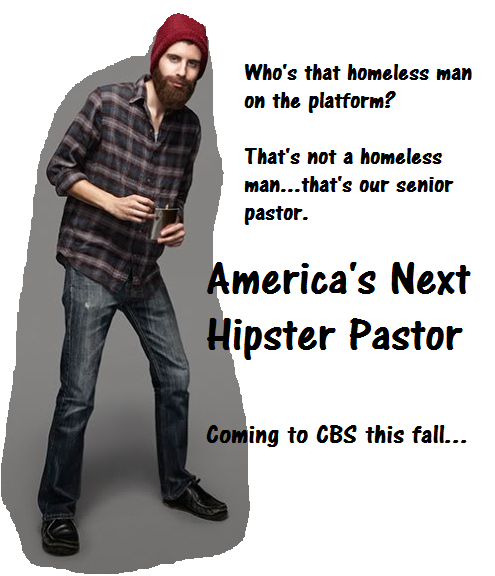
Image result for hipster pastor

The hipster

This outfit has variations across generations, cultures, and settings. For instance, for the more youthful crowd, this may include skinny jeans and a flannel shirt. For Rick Warren, it meant wearing Hawaiian shirts for years (I have done this one). Often it is purposefully dressed down, but it dressed down with a purpose; namely to identify with a certain group of people.

When you dress as the "hipster", you are communicating that you want to identify with a generation or crowd you are trying to reach (other young hipsters, or other people who would rather be at the beach). You are often, by "dressing down", trying to connect with folks.

Image result for what should a preacher wear

So, those are the primary options I see among pastors I know. I am sure there is more, but they are not coming to mind immediately. So, my question to you is, what do you think is most appropriate for a pastor on worship days, and why?


Thursday, October 13, 2016

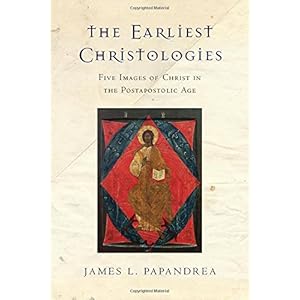
Book Review of The Earliest Christologies by James L. Papandrea


The Earliest Christologies: Five Images of Christ in the Postapostolic Age


The Earliest Christologies: Five Images of God in the Postapostolic Age
James L. Papandrea
ISBN 978-0-8308-5127-0
IVP Academic
Reviewed by Clint Walker

The Earliest Christologies is a fascinating little book about the way different people at different times viewed Jesus in the early church. Four of the five Christologies came to be understood, for one reason or another, as heretical. What Papandrea calls "Logos Christianity" is what survived as the standard for Biblically-grounded, faithful Christian teaching.

What is unique about this book is that instead of simply explaining what gnostics and adoptionists believed, and why they went wrong, Papandrea uses the imagery in the language and life of the early church to paint a picture of who each group believed Christ to be, why the image may be attractive, and where heretical language and imagery for God falls short.

This is a book from IVPs academic line, and it would certainly be helpful in a church history class. Many of our more well-read lay people in the church may enjoy an in-depth theological discussion on this snippet of historical theology as well though. I certainly did.

Book Review of Slow Church Study Guide by C. Christopher Smith and John Pattison


Image result for slow church study guide

Slow Church Study Guide: Cultivating Community in the Patient Way of Jesus
by C. Christopher Smith and John Pattison
ISBN 978-0-8308-4130-1
IVP Praxis
Reviewed by Clint Walker

I recently reviewed Slow Church. The book is a tour de force on how the pace of our culture and the consumer-orientation of American society have been uncritically adopted by the church, and how churches can free themselves from that cultural captivity. Slow Church Study Guide is a helpful guide for small groups to go deeper into the message that C. Christopher Smith and John Pattison call for in their book.

I love the way this study guide is organized. The author's spend the introduction explaining the purpose of each section, and the designed pace of the study of the book. Then each chapter has a reading or poem to introduce the topic. This is followed by a meditation on Scripture, designed to be read through the practice of "Lectio Divina", then there are several conversation starters, which are questions and quotes designed to provoke Christ-centered dialogue. Each section ends with a closing thought. For an extra, as well as a leader prep, video references are included.

Grab this study guide and its accompanying book if you want to grow in your understanding of what church is, and how you can be faithful in Christian community.

Friday, October 07, 2016

Book Review of Slow Church by C. Christopher Smith and John Pattison


Slow Church: Cultivating Community in the Patient Way of Jesus
by C. Christopher Smith and John Pattison
ISBN 978-0-8308-4114-1
IVP Praxis
Reviewed by Clint Walker

A few years back, a documentary named Super-Size Me, created by Morgan Spurlock, took the nation by storm. In the show, he ate at McDonald's for a month straight. Most people did not think it would have that drastic of an effect, but in the end McDonald's food had adverse effects on his physical and psychological health, and led to difficulties with sexual functioning as well. Fast-food values of immediate gratification, ease of use, low-cost caused all sorts of problems--many of which were unanticipated.

C. Christopher Smith and John Pattison argue that in many ways, the contemporary church has embraced fast-food values to their detriment. As a result, many churches offer a spiritual fare that satiates and sells to many, but in the end does little to fortify participants' souls or to build a healthy body of Christ. They argue for slow church instead of fast-food faith, offering a non-anxious, patient way of being the people of God.

Slow church is grounded in its local community. It does not chase after every trend in church development. It sees church community as a mission station not a fortress. Slow church calls us to savor the gospel instead of simply consuming it. It calls for a unique, organic connection of the church family to the community around them, as well as the same kind of connection between participants in local church communities. It calls people to a healthy rhythm of work and rest, instead of using people up to meet objectives, goals, and institutional needs. It recognize the unique assets around the community of faith, instead of grasping for a one-size-all quick fix from an organization outside of the local community. The idea of "slow church" has, I believe, always been around. The metaphor of "slow church" calls us into a counter-cultural, non-anxious way of being the people of God.

As I read this, I am reminded that God's call is not always easily measured by human standards. And I am challenged to renew my faith that the narrow, faithful road is the right one.

Tuesday, August 30, 2016

Random Thought on Youth Ministry learned from unsuccess

I spent from 1995-2008 in some form of youth ministry, and in the last 8 years I have worked hard to at least keep a little bit involved in youth ministry.

Our church here, by all ways of measuring, is really struggling to establish a ministry to teens. We grew our group from about 5ish kids to between 15-25 (not bad for a small church), but now we are back to struggling again. There is a lot I could say to explain how all of this happened, but that would be a long, rambling post. But I have been thinking about something related to this  lately. Our desire to have safe and reputable ministries in churches have often hindered us in developing deep and abiding youth ministries.

In our church, we have safe sanctuary guidelines. As you might expect from a multi-denominational church, we pull a few resources from this insurance company and that denominational program, and put it together into one boundary training that we do at least once a year.

As one reads a lot of the literature on how churches should police relationships to keep kids safe from predators and churches safe from litigation, I am afraid that some of the caution we approach teens and relationships with has left us less able to offer what they really need.

The literature says to be cautious about spending time with one or two kids. I understand this. We don't want youth leaders grooming kids in order to abuse them and train them to be abusers. The challenge is that many teens are in need of deep relationships with adults that are not their parents.

The common standard for spending time with kids is a two-adult rule. This is a wise rule in youth programming. It allows a church's youth ministry to function with greater integrity. Yet, in my experience, some of my most profound experiences of being discipled by Christian leaders were when I was riding shotgun with the pastor on one of his speaking ventures asking questions I was afraid to ask my mom, or going fishing with a deacon of our church and his teenage son. And, more and more, even in same gender mentoring, this life on life ministry is becoming a thing of the past. Our desire for propriety and safety has created a wall between us and our youth that limits our effectiveness in reaching them.

Last summer I was at a pastor's meeting with my Methodist colleagues. They introduced guidelines for social networking that I believe they will probably adopt as policy in the near future. These rules include never chatting or private messaging young people, but always having another adult included in the online conversation. The same with text messaging.

Again, I understand the need for this kind of safety. Our world is a scary place. I just wonder if we have taken things a little too far.

Friday, August 05, 2016

Book Review of Reformation Readings of Paul: Explorations in History and Exegesis edited by Michael Allen and Jonathan A. Linebaugh


Reformation Readings of Paul: Explorations in History and Exegesis
edited by Michael Allen and Jonathan A. Linebaugh
ISBN 978-0-8308-4091-5
IVP Academic
Reviewed by Clint Walker

Much of the Reformation can be traced back to the rediscovery of the ancient writings, including the Scriptures, during the Renaissance. When the Reformers were able to get back to the original texts of Scripture, they quickly discovered that Catholic dogma did not always align with what they saw as the clear teaching of God's Word. And, so, in different ways and with different portions of Scripture Luther and Calvin began to develop a theology that was at odds with the establishment of the Roman Church.

Reformation Readings of Paul tells the story about how different Scriptures impacted the theology and faith practice of the Reformers and those they taught. In particular, contributors to this monograph focus on Luther and Galatians, Melanchthon and Romans, Bucer and Ephesians, Calvin and the Corinthian Correspondence, and the entire Pauline corpus in relation to Cramner.

This is a book that could be read step by step. There is a lot to learn from a lot of people in this fine book combining the disciplines of church history, theology, and biblical studies. Reformation Readings of Paul is a great book for any theological library.

Book Review of Wesley and the Anglicans by Ryan Nicholas Danker


Wesley and the Anglicans: Political Division in Early Evangelicalism
by Ryan Nicholas Danker
ISBN 978-0-8308-5122-5
IVP Academic
Reviewed by Clint Walker

Since I have become a pastor of a federated church, I have tried to develop more knowledge about the function of denominations and their history. By far, my biggest learning curve has been trying to understand the "people called Methodist", even though I am told I was baptized as a Methodist as an infant, and my earliest memories of a church experience is Vacation Bible School at the First United Methodist Church in Roseburg, Oregon.

In particular, I have tried to understand John Wesley, Methodism's founder, from an impartial perspective. I am fascinated by Wesley's evangelistic fervor, and his ability to combine compassionate ministry with a deep heart for evangelism. On the other hand, Wesley's writings were so extensive that quoting him becomes a kind of spiritual Rorschach test, with people plucking a quote from Wesley here and there to validate and at times enforce their own point of view. Danker adds a lot to understanding Wesley in a more meaningful way, by understanding his ministry in the context of larger ministry movements taking place in England and the colonies at the time.

In Wesley and the Anglicans Dr. Ryan Danker attempts to prove that Wesleyan Methodism's incompatibilities with Anglican Evangelicalism had to do with political ideology as well as  theological differences. Wesley's Aldersgate experience puts him in the context of the revivalism of the evangelical moment of his time. His creating a separate structure of organizing believers from the Church of England makes him unique. He was more Anglican than separatists, but by creating a separate structure to disciple persons that worked outside of Anglican control, he was also seen as dangerous by both ecclesiastical and political powers. Throughout his book, Danker develops a new understanding of Wesley from the political currents of the times, and how they were related to religious concerns.

Sometimes it is easy to forget that the church of England was the church of the established government, and that most uprisings against that government, either from the Scots with Presbyterianism, or the Cromwellian forces with Puritan Separatism melded political rebellion with religious reform. Danker chronicles the unique story of Wesley, who did not lead a political uprising, but who suffered the suspicion of many because they believed his movement had that potential. Following his conscience and his theology, his teachings and methods had far reaching consequences as it helped to form the Christian movement as we know it today around the world, and also the political sensibilities of the western world as well.


Tuesday, July 19, 2016

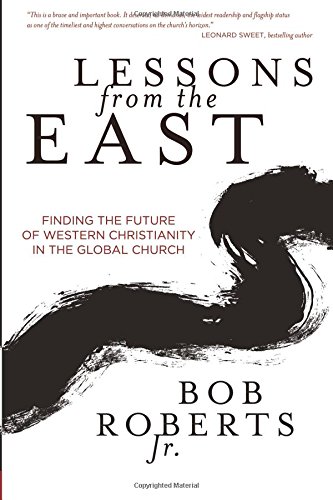
Book Review on Lessons from the East by Bob Roberts


Lessons from the East: Finding the Future of Western Christianity in the Global Church
by Bob Roberts
ISBN 978-0-7814-1376-3
David C. Cook
Reviewed by Clint Walker

Bob Roberts is a fascinating Christian leader.  A country boy from East Texas, he seems at home in the environs of suburban Dallas, where he leads a megachurch of fellow Texans, At the same time, his missionary heart, his love for Jesus, and his passion for gospel ministry have led him to become a sophisticated global leader, engaging leaders from around the globe. Eager to bring his faith into the public sphere, he has formed friendships with pastors and politicians, most notably of late religious leaders in the Muslim world. Yet, as he has engaged churches and non-believers in many different cultural environments, he has not simply went to offer something to them, but rather has sought to learn and grow from what his friends around the world had to teach him. Some of these lessons are encapsulated in Lessons from the East.

At the risk of oversimplifying this very thoughtful and engaging work, I would say that Lessons from the East is part "The World Is Flat" for the church, and part Leslie Newbigin's missional theology, with some down-to-earth practical hooks that anyone can grab on to and apply to their church. Roberts book challenges its readers from the beginning to focus their efforts on taking the church into the world. He says, "The primary benefit we can offer our communities is creative, selfless, tenacious service....we build credibility in our communities by serving people outside our walls with no strings attached. (p. 14)." This book is focused on helping churches do that not just around the world, but also in their own back yards.  If the church takes Roberts' challenge seriously, it means radical changes in how churches function and the roles people take in local congregations. He delineates a number of transitions for churches to make, with practices for leaders in congregations as well as persons in the pew.

This is a great book. Now to figure out how to share it with others in a way that connects with them the way it connects with me.


Thursday, June 30, 2016

Book Review of The Earliest Christologies by James L. Papandrea


The Earliest Christologies: Five Images of Christ in the Postapostolic Age
by James L. Papandrea
ISBN 978-0-8308-5127
IVP Academic
Reviewed by Clint Walker

The Earliest Christologies is a fascinating little book about the way different people at different times viewed Jesus in the early church. Four of the five Christologies came to be understood, for one reason or another, as heretical. What Papandrea calls "Logos Christianity" is what survived as the standard for Biblically-grounded, faithful Christian teaching.

What is unique about this book is that instead of simply explaining what gnostics and adoptionists believed, and why they went wrong, Papandrea uses the imagery in the language and life of the early church to paint a picture of who each group believed Christ to be, why the image may be attractive, and where heretical language and imagery for God falls short.

This is a book from IVPs academic line, and it would certainly be helpful in a church history class. Many of our more well-read lay people in the church may enjoy an in-depth theological discussion on this snippet of historical theology as well though. I certainly did.


Book Review of The Earliest Christologies by James L. Papandrea


The Earliest Christologies: Five Images of Christ in the Postapostolic Age
by James L. Papandrea
ISBN 978-0-8308-5127
IVP Academic
Reviewed by Clint Walker

The Earliest Christologies is a fascinating little book about the way different people at different times viewed Jesus in the early church. Four of the five Christologies came to be understood, for one reason or another, as heretical. What Papandrea calls "Logos Christianity" is what survived as the standard for Biblically-grounded, faithful Christian teaching.

What is unique about this book is that instead of simply explaining what gnostics and adoptionists believed, and why they went wrong, Papandrea uses the imagery in the language and life of the early church to paint a picture of who each group believed Christ to be, why the image may be attractive, and where heretical language and imagery for God falls short.

This is a book from IVPs academic line, and it would certainly be helpful in a church history class. Many of our more well-read lay people in the church may enjoy an in-depth theological discussion on this snippet of historical theology as well though. I certainly did.


Book Review of The Earliest Christologies by James L. Papandrea


The Earliest Christologies: Five Images of Christ in the Postapostolic Age
by James L. Papandrea
ISBN 978-0-8308-5127
IVP Academic
Reviewed by Clint Walker

The Earliest Christologies is a fascinating little book about the way different people at different times viewed Jesus in the early church. Four of the five Christologies came to be understood, for one reason or another, as heretical. What Papandrea calls "Logos Christianity" is what survived as the standard for Biblically-grounded, faithful Christian teaching.

What is unique about this book is that instead of simply explaining what gnostics and adoptionists believed, and why they went wrong, Papandrea uses the imagery in the language and life of the early church to paint a picture of who each group believed Christ to be, why the image may be attractive, and where heretical language and imagery for God falls short.

This is a book from IVPs academic line, and it would certainly be helpful in a church history class. Many of our more well-read lay people in the church may enjoy an in-depth theological discussion on this snippet of historical theology as well though. I certainly did.


Friday, June 17, 2016

Thoughts on Orlando

Thoughts on Orlando

I have a confession to make. While many other pastors may wake up at 4:30am and shout, “This is the day that the Lord has made!”. I wake up and say “Is it morning already?” Sunday is the only day I set my alarm. Usually the kids wake me up at around 6am. Last Sunday, as I turned the alarm off on my cell phone I was greeted with a number of notifications on my cell phone that there was a shooting, and that there was 50 dead. As the day went on, I learned that the victims were people congregating at a night club that catered primarily to homosexual men, and that the killer was inspired by the evil vitriol from a group that calls themselves ISIS.
I know quite a few gay folks, and there are probably more LGBT folks that I know for whom I am unaware of their sexual orientation because not everyone puts who they are attracted to up on a billboard for everyone to read. I know fewer Muslim folks. I have spent the last several years in the Rockies and the Black Hills, where the Islamic faith has made few inroads.

My belief system leans toward the more conservative side of the Christian faith, at least for the denominations I represent. As I read Scripture, it says that the most biblical pattern for marriage is one man and one woman joining together for a lifetime of committed love. Having said that, I also believe that Scripture has a lot of things to say about God’s standards, and picking out one particular issue or group of people, labeling them, and then grouping them with a label such as “good people” or “bad people” is never helpful. My Bible says that we have all fallen short of the glory of God, and so I realize each person I know comes with challenges, quirks, sins, and strengths that are peculiar to them. If we are choosing to love our neighbor, and love our enemies, we should not lump them into categories. We should know them as people,

When I was a young assistant pastor, I had a man come to me for counseling. He had beat down the senior pastor’s door, and I think my boss was glad I could offer him some relief. I listened to him speak about his marriage and the problems in it. Many of the problems he labeled as demonically influenced, when to me it was clear he was using this as a way of not taking responsibility for his own actions. He described some scenes from a popular fiction book on the topic at the time. After trying to help him, rather unsuccessfully, I went to my supervisor. I labeled his theology by the book he read, saying I had a hard time with it. My supervisor corrected me forthrightly, “His beliefs (he named the person) are his beliefs. They are not beliefs of the title of the book.” I tried to protest, but he was right. I have not forgotten this lesson.

The shootings in Orlando continue to be used for all sorts of political and social agendas, both on the left and the right of the political spectrum. Some of this cannot be helped, because we are dealing with communities of people facing deadly violence. Maybe political action does need to be taken at some point in the future. 

Right now, though, it also helps to remember that each person involved is a person that God made and God loves. It helps to remember that acts of hate give us opportunity to be reminded to love one another as human beings.

God loves people in the LGBT community. So do I. I have former students in my youth group, friends, children of friends, and people I am related to who either experience same sex attraction, are in sexual relationships with persons of the same gender or both. And many of them are good people that I would trust to watch my kids or teach in our schools. I don’t think of them first as “gay”, I think of them first as Jenny or Jake or Gina. I think if shooters knew people’s names and stories they might be less likely to go on killing sprees, shooting nameless faces that fit a label. And, as I process through what happened, I think about specific people that if they lived in Orlando could have been in that club, and it breaks my heart that someone would want to hurt them because they disagree with one part of their life.

God also loves terrorists and Muslims. I don’t know a terrorist per se, but I do know kids and adults, some with profound mental health concerns, that I fear may hurt groups of people in violent outbursts. They don’t have the label “nut-job” or “potential shooter” to me. They have personal names as well. I seek to love them. I pray for them, their families, safety, I hope for them to get well.

I do know people with different religious beliefs and different national and ethnic backgrounds than myself. And I believe it is important to know those people for who they are, appreciate their gifts, and love them.


Get involved politically with issues brought up by the Orlando shooting if you must. But also, begin to respond to this terrible tragedy by also seeking to know a stranger, getting to know a neighbor, and loving those who are like you and are completely different than you as well. Perhaps if we knew each other more, and love each other more devotedly, it would be harder for these mass shootings to keep happening.

Thursday, June 16, 2016

Book Review of A Commentary on the Psalms: Volune 3 (90-150


A Commentary on the Psalms: Volume 3 (90-150)
by Allen P. Ross
ISBN 978-0-8254-2666-7
Kregel Academic
Review by Clint Walker

I have just recently concluded a sermon series on the Book of the Psalms. It was rather surface level, but helpful for our congregation. Focusing on praying our emotions, we brought together the Psalms, emotional health, and the movie Inside Out. People enjoyed it quite a bit. I wished now that I had this commentary to further round out the depth of my knowledge of specific Psalms. Ross's commentary on the Psalms is nothing if not deep.

A Commentary on the Psalms begins each Psalm with a translation of the Psalm. The translation is rife with footnotes, often point out insights that are brought forward as the author compares the textual variants between the Hebrew translation (which are in the original language, but have later extant manuscripts), and the Greek translation of the Psalms (for which we have translations that are centuries closer to the time the text was written, but not in its original language). Ross's work here is thorough and well-done.

The next section in the study of each Psalm is explaining the literary, social, and historical context of each Psalm. There are times when this section can be especially enlightening.

After this, the Dr. Ross gathers an exegetical summary with an outline of how the specific Psalm is structured. This helps the reader get the big picture of the Psalm they are studying

Then, A Commentary on the Psalms moves forward with a traditional exposition of the text, taking each word seriously. This moves verse by verse, and sentence by sentence. Here Dr. Ross carefully teases out the essential details to know about what has been written.

Finally. the author includes some helpful hints for ministers and teachers seeking to both instruct about the Psalm, and teach people how to live the truth that each Psalm presents.

I recommend this book strongly for every pastor's library. It is really well done!


Reformation Commentary of the Bible: Old Testament Volume XIII--Psalms 73-150

Reformation Commentary of the Bible: Old Testament Volume XIII--Psalms 73-150  Edited by Herman J. Selderhuis IVP Academic ISBN 978-0-8308-2...