Sunday, January 05, 2014

Book Review of The Fire that Consumes (Third Edition) by Edward William Fudge


The Fire that Consumes
by Edward William Fudge
ISBN 978-1-60899-930-9
Cascade Books (Imprint of Wipf and Stock)
Reviewed by Clint Walker

In the last few years, there has been a lot of discussion trying to sort out Biblical truth from medieval myth and historic church dogma when it comes to the afterlife. Books like Rob Bell's Love Wins and Sprinkle and Chan's Erasing Hell have hit the bookshelves, both discussing how the preaching of the kingdom of God and eternity with Jesus has to do with the eternal torment in hell for unrepentant unbelievers.

Long before these men were debating the issue, Edward Fudge was quietly making the case for conditionalism, or annihilationism, depending on what you would like to label it. In either case, Fudge first entered the debate on the nature of hell in 1982 with The Fire that Consumes. Now, more than thirty years later, the book is as relevant as ever, revised and expanded in many places in order to speak to contemporary thought and scholarship on the issue.

Fudge's professional training, primarily, is as an attorney, although he has some theological education as well. As an attorney, he makes his argument for the ultimate death of unbelievers, instead of their eternal conscious punishment. He does so by making a careful exposition of pertinent Scriptures, a detailed study of extra-biblical sources that informed New Testament thinking, as well as a clear discussion of the church fathers, and how the doctrine of hell evolved.

Fudge's arguments against a traditional view of hell are quite compelling. I am still considering them myself. Especially since the weight of his arguments come not from tradition or sentiment, as some of the arguments for even some of the best theologians do, but clearly they come directly from Scripture.

Whether or not you agree with Fudge, his arguments are worth listening to. And I am not the only one who says so. With scholars writing forwards for the book like Richard Bauckham and F.F. Bruce, as well as kind words from Max Lucado on his web page, a lot of people, even if they do not agree with Fudge, are sympathetic to his compassionate heart, his argumentation, and his ability to pay attention to the details of what the Scripture is saying.

Saturday, January 04, 2014

Book Review of Love to Stay by Adam Hamilton


Love to Stay: Sex, Grace, and Commitment
by Adam Hamilton
ISBN 978-1-4267-5951-2
Abingdon Press
Reviewed by Clint Walker

Adam Hamilton is the lead pastor of Church of the Resurrection in suburban Kansas City. He is a gifted teacher. Much of the resources that I have used from him have to do with studies of the Holy Land, although I have looked at other things he has put together as well.

In this book, Hamilton puts together a book (which has an accompanying video series) on marriage called Love to Stay. It is based both upon some basic Scriptural principles, and a study that Hamilton's church commissioned on love, sex and marriage.

There are several things to love about this book. Hamilton has a writing style that is clear, straight-forward, and thoughtful. The book is a quick read. It is a great "tune-up" book on some basic principles on having a growing, healthy marriage. The reader will find nothing earth changing with Hamilton, but they will find good, solid, biblical teaching with a contemporary tone.

Another thing I appreciate about what Hamilton does is that throughout the book, he shares parts of his own personal story. He does not do so to the point to where he makes the book about him and his experiences, but he shares enough that the reader can know that the guy that wrote the book on marriage is someone they can relate to.

I plan to use this book and curriculum, at some point, as a curriculum piece for a couples ministry. Perhaps even for premarital counseling. It would also be a good basic check-up on marital health for couples ministry.


Friday, January 03, 2014

Book Review of God is Able by Priscilla Shirer


God is Able
by Priscilla Shirer
ISBN 978-1-4336-8191-2
B & H Publishing Group
Reviewed by Clint Walker

Priscilla Shirer is a well-known speaker to women, and women's groups. She is also the daughter of well-known evangelical Tony Evans. Shirer has written several books, of which this is her newest release. Like most of her books, this book speaks to the power and potential that believers have in Christ.

God is Able is challenges believers, and especially women, to believe that God is bigger than their problems and difficulties, and challenges and inspires the women she addresses to place their difficulties in God's hands. Each chapter starts with a "T" (Shirer must like alliteration), and each chapter progresses in helping readers trust God with the desires of their heart, while at the same time letting go of wanting to control things that they cannot.

This is an excellent book for Christians needing a little encouragement and inspiration. And if this book strikes your fancy, there is a lot more out there in terms of video curriculum and books to read, as well as opportunities to hear Priscilla speak.

Her website is goingbeyond.com.

Wednesday, January 01, 2014

Book Review of Breast Cancer Husband: How to Help Your Wife (And Yourself) Through Diagnosis, Treatment, and Beyond by Marc Silver


Breast Cancer Husband: How to Help Your Wife (And Yourself) Through Diagnosis, Treatment, and Beyond
by Marc Silver
ISBN 1-57994-833-4
Rodale
Reviewed by Clint Walker

I picked up this book as a part of the larger group of literature they were giving to breast cancer patients and their families via our cancer treatment center in Rapid City. (BTW people give out a cray cray amount of literature and books when you have a cancer diagnosis, or are related to someone who has a cancer diagnosis).

I found this book pretty interesting, and wished I had received it before we were as far along as we were in our cancer journey. It is pretty friendly to the male reader, offering brief chapters on clear subjects with clever titles. In these chapters subjects as diverse as sex, hair loss, parenting, and death are discussed.

The way the chapters were laid out, I was able to pick and choose what I wanted to read when. Some of the subjects were more applicable to me than others. The witty writing kept my attention, as well as the liberal use of personal stories from people who have been on the journey of having a wife with breast cancer.

Some things in the book applied more to people in big cities, such as shopping hospitals and treatment centers. Most of it, though, I could relate to.

Tuesday, December 31, 2013

Book Review of Essential Eschatology by John E. Phelan Jr.


Essential Eschatology: Our Present and Future Hope
by John E. Phelan Jr.
ISBN 978-0-8308-4025-0
IVP Academic
Reviewed by Clint Walker

This book came just in time. I am doing some in depth study on end things and eschatology while I have some time away from the office. Right when I decided that this was my focus of study, IVP sent me this book to review.

Essential Eschatology is a great resource to begin my study with. It is written by a professor at North Park Theological Seminary named John Phelan, who used to be the institution's president. Although it is grouped with IVP Academic, I think it is definitely a college level text on the matter, or perhaps a seminary text with a number of other books to come along and support it. The book is a quick and easy read, and well organized. It makes matters of end times accessible to every day readers.

This book is more descriptive of eschatological issues than prescriptive. This is in part because so much of what we study is eschatology is shrouded in mystery. It is also because I believe Phelan wants to challenge his readers to do a little thinking for themselves. Borrowing heavily from the theologies of N.T. Wright and Jurgen Moltmann, Phelan uses the metaphor of hope to guide all of his book. He comes to the conclusion of being in some way postmillennial by the end of the book.

There were several sections of Essential Eschatology I found helpful. For instance, by centering God's judgment is "setting things right" and bringing about "justice" in the world, he made God's judgment not only easier to explain but also easier to understand and feel good about. Phelan also does a wonderful job of explaining how one's eschatology effects one's faith and how one lives one's life. And I thought the final chapter did a better job of explaining what Phelan's millennial theology was and why.

All in all, an excellent read and a primer on the topic.

Monday, December 30, 2013

Book Review of Compassionate Eschatology ed. by Ted Grimsrud and Michael Hardin


Compassionate Eschatology: The Future as Friend
by Ted Grimsrud and Michael Hardin
ISBN 978-1-60899-488-5
Cascade Books (Wipf and Stock)
Reviewed by Clint Walker

Most readings of Christ's second coming for his church are similar how Mark Driscoll describes his return when he says when Jesus returns he will be like "a prize fighter with a tattoo down his leg, a sword in his hand, and a commitment to make someone bleed."

What if, however, you are a pacifist? What if you expect Christ's return to reflect the Fruit of the Spirit instead of the vengeful, angry caricature of the God of the Old Testament? How do you view the return of Jesus then?

These are the questions that a number of scholars tried to answer this in a conference sponsored by Preaching Peace entitled Compassionate Eschatology, which is also the title of this book. The scholarly work of that conference is included in this fine monograph full of different ways to approach this difficult concern for Christian pacifists. Most of the articles in one way or another reflect on the themes of philosopher Rene Girard's writing, who was a brilliant Christian philosopher of the 20th century.

For people who want to broaden their understanding of this difficult issue, I would recommend reading this book. As pacifism becomes a growing movement within post-Christendom Christian thought, more of us will need to struggle with the questions brought about by this issue.

Some of the articles I read in this book I agreed with more than others. This is to be expected. The monograph does not express a monolithic point of view. And, a violent return of Jesus is not a problem for some pacifists, who believe that vengeance is not theirs to take, but also that "vengeance belongs to the Lord." Whatever one's belief about end things, this book will help you grow and expand your understanding. A good read.

Monday, December 02, 2013

The Power of Looking Forward

Last August, we were shocked by the news that came our way: Jennifer had breast cancer. The last four months have been spent running back and forth to doctor's appointments, helping Jennifer recover from surgery, and then helping her deal with chemotherapy. Previous to that, we had two surgeries to deal with. Although the surgeries have provided blessings, they also added stress and chaos to our lives.

One of the things that happens when one faces a crisis in one's life and one's family is that you place your whole effort toward dealing with and conquering the issue that is at hand. When one lives in a crisis, one deals with the moment as it comes, and attempts to either ride the wave of that crisis, or simply to survive it. Thinking about the future seems less important than facing down the moment right in front of you. 

The last week has been no different. Jennifer has struggled with this treatment, and has succumbed to a cold or some sort of viral illness, leaving her congested, wheezing at times, struggling to sleep and to get a deep breathe. Due to an error at the chamber of commerce, I am left to complete a mailing for the ministerial association that I thought we had contracted someone else out to get done. I have to confront a ministry that has lost a little bit of its focus, at least in who it has put in its leadership. The dog had an infected leg, which put us back about 200-300 dollars. 

I see this all of the time in dealing with people in need. They end up overwhelmed, always dealing with the issue that is in front of them, trying to hustle to get out of one crisis, only to find themselves in the next. I don't want my life to be like that. I don't want to live like that.

So I took an unconventional step. I started moving toward my goals in the future. I had to put continuing education on hold over the last year. This next year I am taking a big step, and putting in some applications for a D.Min. program. Can I afford it? Who the heck knows. But I won't find out unless I take the gamble of checking out some programs and applying to them. 

This also means I need to take some steps to push forward in my weight loss. Most of these programs are going to require I fly somewhere. And in order to do so affordably, I am going to have to lose some more weight. Can I lose as much as I want to lose in that time frame? I don't know, but I am not going to sit around and wait for life to happen to me, for another crisis to spin into my life, and then be stuck living my whole life reactively. Instead, I am going to be proactive toward some of my hopes and dreams. I am going to risk doing a half-assed job, I am going to risk failure and public humiliation, and I am going to look forward and walk forward.

Just some things I am thinking about today....

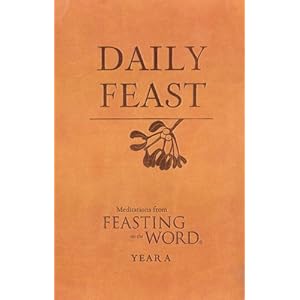
Book Review of Daily Feast: Meditations from Feasting on the Word, Year A by Bostrom, Caldwell, and Riess

Daily Feast: Meditations from Feasting on the Word, Year A

Daily Feast: Meditations from Feasting on the Word, Year A
by Kathleen Bostrom, Elizabeth Caldwell, and Jana Riess
ISBN 978-0-664-23796-7
WJK Books
Reviewed by Clint Walker

As many of the readers of this blog know, I review several items that come out of the Feasting on the Word line of resources for Bible teachers, bible students and pastors. At the forefront of this series are the lectionary based commentaries on Scripture that provide a four-fold interpretation of Scripture, guiding the pastor or teacher through understanding what the text meant then, how we can interpret it for today, as well as how we can teach and preach the texts included in the Revised Common Lectionary (RCL).

The Daily Feast devotional takes excerpts from the commentaries on the RCL for a daily devotion. Again designed especially for those who want to go deeper in their understanding of the Scriptural texts in the lectionary, each week begins with an excerpt of the Scriptures for the week. Then, throughout the week, different quotes are drawn from the commentaries regarding each text, with a brief guide to responding to the text and the teaching, as well as a brief prayer. At the end of the week, the Daily Feast adds in quotes from each of the texts, again preparing the reader for worship on Sunday, where the passages will be read, and possibly preached upon.

I have used this resource off and on as a daily devotional since I moved to Hot Springs, and began to pastor a church that was more attuned to the lectionary. It has been helpful in keeping me grounded to the texts for the week, and in establishing a strong rhythm between my Sunday mornings, and my spiritual formation the rest of the week.

I would also recommend reading the introduction to this devotional, which gives several helpful hints on how to fruitfully engage the text. Approaches include...


  • Use as an opening devotion for committee or church staff meetings
  • Use when appropriate for community endeavors when a devotion and/or prayer is called for 
  • Use to prepare the preachers heart to preach the word
  • Journal in partnership with these readings
  • Personal meditation on Scripture
Whatever your approach, I recommend picking up this devotional. You won't always agree with everyone's perspective. I doubt all the contributors agree with one another! However, reading through this devotional willl help you engage the RCL texts more personally as a pastor or lay person, and ad depth to your preaching, your teaching, and your spiritual journey.


Wednesday, November 27, 2013

Book Review of the Journey of Modern Theology by Roger Olson


The Journey of Modern Theology
by Roger Olson
ISBN 978-0-8308-4021-2
IVP Academic
Reviewed by Clint Walker

Roger Olson is a prolific writer and a passionate theologian. I have followed his work from his days at Bethel College and Seminary in St. Paul, MN, and have followed it with even more interest since he moved to Waco to teach at Truett Seminary at Baylor University.

I also long ago read 20th Century Theology. I had read it not in a seminary classroom, but as a pastor trying to make sense of where I was theologically, especially in relationship to some of the issues raised through postmodern philosophy and the emergent church movement (before it was called that). I loved the book, and its thesis of the development of modern theologies as a dialogue and dialectic between emphases on theology's understanding of the transcendence of God and the immanence of God made sense to me. It helped me become more grounded and able to articulate where I was in the context of modern theology and postmodern philosophy. 20th Century Theology was a game changer for me.

Now, in an update on the book's 20th anniversary, Olson has, in attempting to revise the old text, written a new text with the old text as the foundation. Instead of using a theological construct to tell what has happened in 19th, 20th and 21st century theologies, he has used a historical one in The Journey of Modern Theology . Since what is happening in both books is a historical theology of sorts, both organizational systems are appropriate. Olson's new construct makes the development of theology come across as a more relational and personal story of people and ideas in a historical context. Which is all well and good. But I think it misses the sense of wrestling with God that the text it has meant to revise had. However, I freely admit that I miss Grenz' voice in theological writing, and part of my struggle with the book at this point may be that I hear more of Olson and less of Grenz in the new text, and I grieve the loss of Grenz and his contribution.

Having said that, it only takes holding the books next to one another to show that Olson has expanded on his previous work in The Journey of Modern Theology. More is discussed regarding theological contributions of the 19th century, as it is also in conversation with the rise of modernity. And more of what is happening in theology today is shared as well. Those contributions are well-written, well thought out, and welcome.

The Journey of Modern Theology deserves a place on the pastor's and the theologian's bookshelf. It is a great book. On mine it will sit right next to 20th Century Theology. My hope is that IVP continues to publish both.

Book Review of One Year to Better Preaching by Daniel Overdorf


One Year to Better Preaching: 52 Exercises to Hone Your Skills
By Daniel Overdorf
ISBN 978-0-8254-3910-0
Kregel (Ministry Imprint)
Reviewed by Clint Walker

What a neat little idea. This book has 52 2-5 page articles describing how to become a better preacher. Most of the advice focuses on the practice of preaching, so it is accessible across the theological spectrum. The idea is that the preacher can put one of these practices into action each week, and then add another skill the next week, and by the end of a year, step by step, can be a much more competent preacher. A great concept, and a thoughtful addition to any preacher or bible teacher's bookshelf.

I have begun to use this book in last month or two. I am working though it more slowly than others might, but the book has still given me something to think about. For instance, one chapter challenged me to ask myself: In my preaching planning, am I offering a balance of Scriptural content? If not, why not?

Even more than the content piece, which I think I am doing alright with, the author gives some clear instruction for forming relationships in the congregation that will improve sermons. With chapters that tell you to encourage texting in the sermon, or that challenge you to teach preaching to teenagers, Overdorf is always keeping the preacher growing and on her or his toes.

Even for the most skilled of my pastor friends, I would recommend the purchase of this book. It is full of helpful reminders of how to become the kind of preacher we had hoped to be, but at times had lost focus of.


Book Review of A Guidebook to Prayer by MaryKate Morse


A Guidebook to Prayer: Twenty-Four Ways to walk with God
by MaryKate Morse
ISBN 978-0-8308-3578-2
IVP Formatio
Reviewed by Clint Walker

There are several books around about prayer and spiritual formation. There are very few books that have been put out on prayer from a broader, spiritual-formation model that are both as well-written and grounded, as well as easy to use in a group or mentoring study as A Guidebook to Prayer.

MaryKate Morse has thoughtfully grounded her discussion of practices of prayer in the Trinity. Balancing discussion of prayer in community and prayer that is more commonly practiced individually, the breadth of this rather simple guide and/or curriculum is wonderful. It will have a great impact on teaching people to pray, and to think about prayer so they can pray more intentionally. And much like my reading of books by Richard Foster on prayer and spiritual formation, it will teach its readers many of the ways that they may be praying already without knowing that they are doing it.

Each chapter has a short article describing the prayer practice that will be implemented. Then there is a rather lengthy section on how to practice this kind of prayer within a community gathering. Then, there are guidelines for partners or individuals to practice this form of prayer as well.

Nearly every page of the book has quotes integrated as side notes within the book. These notes are comments of real people who have made the effort to practice the kind of prayer that Morse describes. Their comments and insights make the material more down to earth and attainable. Further testimonies end each chapter, as well as suggestions for further reading.

My goal is to get either my Sunday School class or a small group in my church to embrace this study. It would be exciting to see what God would do.

Wednesday, November 20, 2013

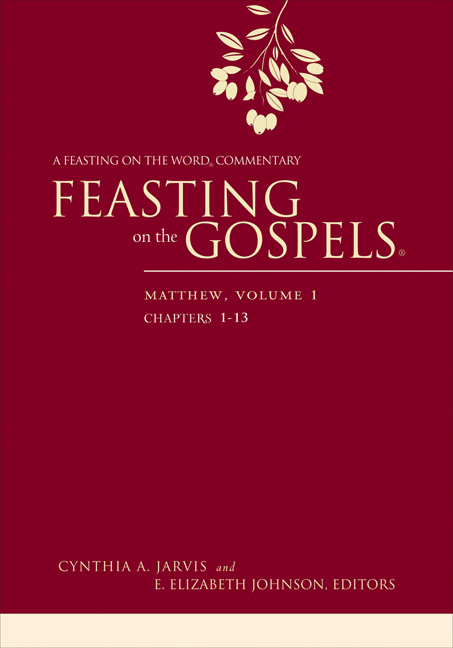
Book Review of Feasting on the Gospels: Matthew, Volume 1: Chapters 1-13 edited by Cynthia A. Jarvis and E. Elizabeth Johnson


Feasting on the Gospels: Matthew, Volume 1: Chapters 1-13
edited by Cynthia A. Jarvis and E. Elizabeth Johnson
ISBN 978-0-664-2540-6
WJK Press
Reviewed by Clint Walker

I have reviewed several resources from Westminster John Knox press, and their Feasting on the Word Series. I have found both the devotionals and worship guides very helpful for me in keeping my personal and corporate worship grounded in good thinking, solid scholarship, and spiritual depth.

The latest release in the Feasting on the Word series is this commentary on Matthew. For those of you familiar with the "Feasting" series, you will know that the commentary series began as guides for teachers and preachers exploring lectionary texts. Returning to the core of their material here with the commentary on Matthew, the people at Feasting on the Word and WJK Press are organizing some old and some new material in a manner that is organized more like a traditional commentary, in that this commentary is based on a book of the Bible.

Each text unit within the commentary is analyzed with four different interpretive lenses. First, it is looked at theologically. This asks how this passage fits into the bigger message of God in Scripture, and how this passage might inform right thought and believe. Then, there is a pastoral perspective, with an emphasis in how this passage might work its way into either ministry of pastors or everyday spiritual lives of congregants. Next, there is the exegetical perspective, which focuses in on the text and draws out the details of what this small individual text is saying to its individual readers. Finally, there is a homiletical perspective, which attempts to guide the reader in how the specific passage might preach to one's congregation. Each entry is written by a different person, so there are people writing from different perspectives and backgrounds as they attempt to accomplish interpreting the text with different goals in mind. The result is a multi-layered in depth commentary that allows you to see the passage from a number of different angles.

I look forward to this next step by the Feasting on the Word folks. I will use this commentary alongside others in my sermon preparation in the next year. I think it would be helpful for initiating both good thinking and good preaching that is based upon wise interaction and submission to God's Word.

Tuesday, November 19, 2013

Blessings in the Storm


Blessings in the storm


The other day Jen and I were making our way to the airport to pick up my mother for a Thanksgiving visit. We were talking about the journey behind us and the journey ahead with Jennifer’s cancer treatment. I shared with her something that has been on my heart lately. I said, “If I had my choice, I would never wish cancer on anyone. I would definitely not wish cancer on you. But, I can definitely see how God has blessed us through all of this. I really can. It has brought us closer as a family. We have learned who are friends are. We have been shown a lot of love by the church. We have different priorities now. God has really blessed us.”

Jennifer didn’t say anything. She just nodded her head up and down as tears streamed down her face.

St. Benedict said it this way, “Keep death always before your eyes”. When you face serious life-threatening illness, when you preside over the funeral of one who has passed away, when what you value most comes under threat, it changes you. If you are open to the Spirit’s loving and gentle work, you find that your life is being recreated in unique ways by God’s gentle and firm hand.

For me, that means that I savor everyday moments a little bit more. When my youngest, Mattea, sees me walk in the door and yells “Daddy!” and runs up to me for a hug, I hold her a little closer. When our oldest Karis wants to dance in the middle of the sanctuary, I don’t stop her. I just delight in her love for music and her love for the Lord, and know that the Spirit is at work in her heart. When gets my attention to tell me about what happened, and she has to tell me about every detail of everything that happened, I try to listen better. And I try to never let a day go by where I don’t tell Jennifer I love her and how beautiful I think she is. I find myself laughing more. Playing more. Living in each moment. Trying not to run ahead of myself and miss everything.

Another blessing in the middle of this trying time in our life has been seeing how God has blessed us and provided for us. God provides for our financial needs daily. Jennifer received a small inheritance that has helped with medical bills. Anonymous letters come from halfway across the country and across town with money in them. We are not wealthy, but our fridge is full, our bills are getting paid, and we have a wonderful parsonage to rest our heads in.

You, our church, have been a part of God’s provision as well. You have sent cards, made casseroles, helped with housework, and watched our kids. You have allowed us flexibility with our schedule, and you have stood with us through this difficult time every step of the way. You did not expect to get into all of this mess with us when we started here, but you have not complained at all. For that, we give thanks.

Over and over again, people ask how we are doing, both in this community, United Churches, and people around the country that we have shared our lives with. And we say we are doing fine. That is an understatement. Even though we have our good days and our bad days, we are truly blessed. We may have a few more tears streaming down our faces, but as many of them are tears of joy and gratitude than they are tears of heartache and frustration.

Many days, “Team Walker”, before heading our separate ways, will hear Daddy yell at some point a cheer that he learned from a football coach whose kids both ended up being NFL coaches as well. I say, “Who has it better than us!” And the response is “nobody”. I truly believe this. We have a Lord who lavishes love on us that we do not deserve, and his presence seems more evident every day. We have each other as a family. We have some good friends. And we have a church family that loves and supports each other. Who could ask for more?


Saturday, November 09, 2013

Book Review of Consider the Birds by Debbie Blue


Consider the Birds: A Provocative Guide to Birds of the Bible
by Debbie Blue
ISBN 978-1-4267-4950-6
Abingdon Press
214 pages

This is a thoughtful, interesting little book by someone who loves the power of symbolism, the word of God, and has a good understanding of birds both in nature and in how people have perceived different kinds of birds throughout human history.

Blue's reflection, as the subtitle suggests, is neither traditional or polite. Instead, it is forthright, at times irreverent, and always thought provoking. Blue specializes in earthy writing that is never vulgar, and yet always conversational and down to earth.

A person approaching this book as a bird lover might be disappointed. This book is much more about human spirituality and human experience than it is about winged creatures' part of God's redemptive plan. My favorite chapter is about the cock. In this chapter is a discussion about masculinity, confidence, and combat, and how that relates to the call of Christ and the kind of people Jesus asks his followers to be. Each page seems to have an eye-raising thought that either brings out laughter or a raised eyebrow.

I love this book! Would be great to study in a small group some time!

Book Review of Finding God in a Bag of Groceries by Laura Lapins Willis


Finding God in A Bag of Groceries
by Laura Lapins Willis
ISBN 978-1-4267-5324-4
Abingdon Press
227 pages

Nothing warms the heart more than the story of an average person who makes a big impact on their world. That is unless the story also tells of a person who is transformed throughout their journey to significance. Such is the story we read in the autobiography of Laura Lapins Willis in Finding God in a Bag of Groceries.

This book is a spiritual autobiography of a woman who considered pastoral ministry through the institution of the local church, and found that she could have a more powerful impact through ministering to her community through her local food pantry.

The story alternates between the compelling stories of the people who are being ministered to, and the change that is happening in Willis' heart. Her story goes to show that ministries of generosity can change people's hearts and lives in profound ways, and that the power of the Holy Spirit can be encountered and experienced in simple, humble acts of kindness.

A great book.

Friday, November 08, 2013

Book Review of Feasting on the Word Worship Companion Year A Vol. 1 ed. by Kimberly Bracken Long


Feasting on the Word Worship Companion:
Liturgies for Year A, Volume 1
ed. by Kimberly Bracken Long
ISBN 978-0-664-23803-2
Westminster John Knox Press
204 pages

The Feasting on the Word Worship Companion has recently released their newest edition of worship readings for the liturgical, lectionary driven church. As usual, it is a great resource for mainline churches seeking classy, well-written, theologically sound litanies and responsive readings.

This volume in this fine series covers Advent to Pentecost in Year A. It includes the following resources for each week:
  • Listing of lectionary texts
  • Call to Worship
  • Prayers and readings for the confession/assurance cycle
  • Prayer of Day
  • Prayer for Illumination
  • Prayers of Intercession
  • Prayers and readings for the offering
  • Charge
  • Blessing
  • Questions for reflections on the texts
  • Household prayers for the morning and the evening
Each Sunday is thoroughly resourced. The readings are smart and thoughtful without being flowery or overly wordy. The wording has theological depth without being over people's head. My only complaint is that this resource does not include an invocation for each Sunday.

In addition to the weekly resources there are several other resources. They are:
  • Two baptismal liturgies
  • A thorough index of Scriptures used
  • Great Thanksgiving services with the following themes
    • General use
    • Advent
    • Christmas
    • Epiphany
    • Lent
    • Holy Thursday
    • Easter
    • Pentecost
The book is also on a CD-ROM that is attached with the book. This makes it helpful when cutting and pasting these resources into a PowerPoint or a church bulletin.

I love this series of resources. I have the devotionals for all three years. I also have all of the worship companion resources as well. In addition to this, I have some of the commentaries they offer for preaching. Although some of the writing comes from a more liberal background than my own, it is all solid stuff worth considering for use in worship and personal study of the Word of God.

Book Review of Dem Dry Bones by Luke Powery


Dem Dry Bones: Preaching, Death and Hope
by Luke Powery
ISBN 978-0-8006-9822-5
Fortress Press
157 pages
Reviewed by Clint Walker

Wow! This is a wonderful book on preaching that needs to find its way to the bookshelves of preachers and teachers in the church all over. Dem Dry Bones is wise, well-researched, and well-written book that takes on prosperity gospel as the heresy that it is, and rightly roots Christian preaching in a theology of the cross.

Luke Powery grounds Christian preaching in the experience of death, pain, and suffering. He uses the imagery of Ezekiel 37 as its grounding text. Then, Powery draws from the African-American church tradition of singing spirituals as "musical sermons" and lived theology. In doing so, he clearly demonstrates that the redemption and hope spoken of through the spirituals is central to the gospel message, or as he says, "suffering is a part of the gospel truth" (p.10).

What I find fascinating about this book is how it commends the wisdom and spiritual resources of the African-American church experience to the Christian church in its entirety through the tradition of African-American singing and preaching. Dem Dry Bones shows that suffering transformed, and both acknowledgment of the dark powers of suffering and death, as well the hope that comes from confronting them through the resurrection power of Christ, is standard of Christian preaching and the Christian experience as a whole. And no group of Christians does a better job at communicating the redemptive power of suffering than the traditional Black Church.

Christian preachers, buy this book! You will not regret it!

Saturday, November 02, 2013

Book Review of Unstuck by Arnie Cole and Michael Ross


Unstuck: Your Life. God’s Design. Real Change.

By Arnie Cole and Michael Ross

ISBN 978-0-7842-0954-3

Bethany House

Reviewed by Clint Walker


Ever feel like you are stuck in your spiritual life? Ever feel like you have faith in Christ, but have somehow missed out on the kind of abundant life that God has promised through Jesus? According to Arnie Cole and Michael Ross, studies show that you are not alone.


As researchers, Christian leaders, and teachers of God’s Word not only discovered this truth in their studies, they also have done extensive study and had personal experience on how to break through this sense of being stuck on one’s spiritual journey. The end of each chapter has spiritual stepping stones to help folks move forward in their Christian faith.


The first section of the book focuses on the problems that people encounter in growing. Then, there is helpful teaching about how to get unstuck. Finally, there is a section on accelerating one’s spiritual growth.


I would recommend this book to anyone looking for a new direction in doing discipleship with folks, or people who are looking for a different perspective on how to grow themselves.

Monday, October 14, 2013

Book Review of Shaping the Journey of Emerging Adults by Richard R. Dunn and Jana Sundene

Shaping the Journey of Emerging Adults Sundene, Jana L./ Dunn, Richard R. 1 of 1
Shaping the Journey of Emerging Adults: Life Giving Rhythms of Spiritual Transformation
by Richard R. Dunn and Jana Sundene
ISBN 978-0-8308-3469-3
Intervarsity Press
Reviewed by Clint Walker


Before I go much further, I have to say that when it comes to speaking about the work of Rick Dunn and Jana Sundene I am a little prejudiced. I spent my first year in college at Trinity College, where they were both youth ministry professors.

It was in those youth ministry classes where I first sensed God working on my heart to go into full-time Christian service, and it is in those classes my freshman year where I surrendered to God's call to ministry. I left Trinity after my freshman year for a number of reasons, but I will always be grateful for Rick and Jana's Spirit-led ministry, and their willingness to model what is taught here with me as a young adult as well.

Shaping the Journey of Emerging Adults begins by setting the scene for where we are in our culture with young adult ministry. Included in this section are topics such as a discussion of extended adolescence, as well as unique cultural challenges to emerging adults in the twenty-first century.

True to their philosophy of ministry that is written about in other books, and that they have taught in their classrooms, their model of helping emerging adults grow spiritually is completely and utterly relational, and life-on-life. Eschewing gimmicks and flashy programs, Rick and Jana encourage people to be grounded in a deep faith, and then as they grow to walk with others (especially young adults) through the highs and lows of their spiritual journeys.

Through this book you will hear the authors discuss opportunities to seize and pitfalls to avoid in the discipleship journey. It will be helpful for ministers of any generation to not just read this information once, but to spend time with this text over and over again.

Most importantly, however, as you read this book you will sense the passion and love of Dunn and Sundene leaping off of the pages of this book. Grab this book, read it, highlight it, and ponder it over and over again. It is good stuff.


Saturday, October 12, 2013

Book Review of Corporal Punishment in the Bible by William Webb


By William J. Webb

ISBN 978-0-8308-2761-9

Intervarsity Press

Reviewed by Clint Walker


I grew up in a fundamentalist Christian home. Every so often there would be classes, discussions, or seminars about child care. In these services, for instance the Sunday evening service, there would be discussions about discipline, usually from Proverbs. These discussions would always initiate a dialogue about how parents needed to beat their children more if they truly loved them. I knew within the next week that I was going to get a vigorous spanking. I hated those sermons.


William Webb, in his well-written book CorporalPunishment in the Bible, argues via a Redemptive-Movement Hermeneutic that God in Scripture meets people where they are at, and moves them by his grace toward a new place as his will is progressively communicated. In his previous book, William Webb tests this method of interpretation out in a book called Slaves, Women, and Homosexuals. In that book, he argued that the trajectory of the Bible leans in favor of equality for women, against slavery, and that the method applies less to homosexuality. In this book, Webb argues that the trajectory of Scripture may begin in a violent place, but moves toward non-violence. This is especially true, argues Webb, when it comes to using physical violence as a form of discipline with children.


Being a person that leans toward non-violent living as a part of my witness and discipleship as a Christian, I have sympathy with Webb’s arguments. However, I do not think his arguments hold enough weight to cancel out both my experience and the experience of many others regarding the importance and efficacy of corporal punishment. I think very strict boundaries need to be used with the use of physical force as a form of discipline with children, however, I don’t have a problem with this form of discipline being a rarely used form of discipline in a parent’s toolbox. A parent should not use it often, should not leave bruises or marks, but occasionally a good swat on the hind end is just what a child needs. I agree with the Proverbs on this I guess, and there is scant discussion of parenting as a whole in the New Testament.


Nevertheless, Webb makes a fine argument. It is an argument I will consider and respect, even if, at this point, I do not agree with and follow. A great read for anyone who is interested either in the topic of corporal punishment, or the method of a Redemptive-Movement Hermeneutic.


Friday, October 11, 2013

If I were visiting the Black Hills...


I was looking at friends travelling around the country, and began to think. If I had a family vacation to plan for someone else for a week, what would I recommend they do. Here is my effort at doing that.

I have often said that there is more to do in the Black Hills than one could get to in one trip. Certainly this effort to draw up a potential family vacation for visitors furthers this point.  This has camping, hiking, half of the caves, any visits to the reservation, and many other tourist traps left out.

Day One--Hot Springs
Breakfast--Dale's Restaurant   
Morning--Mammoth Site
Lunch--Wooly's
Afternoon--Evans Plunge
Evening--Drive through Wind Cave National Park
Dinner--Buglin Bull in Custer, SD

Day 2--The Parks and Monuments
Breakfast--The Wrangler
Morning--drive the pigtail highway to Mt. Rushmore. Stop at park on top of the hill on the way.
Lunch--along the boardwalk in Keystone
Afternoon--Crazy Horse National Monument
                   Sylvan Lake

Day Three--The Caves
Morning--Jewel Cave National Monument
Afternoon--Wind Cave National Park Cave Tours
                    Drive through Custer State Park to Hermosa
Dinner--Linsky's Pizza in Hermosa

Day Four--The Tourist Traps
Breakfast--Chuckwagon?--Cheap Pancakes
Morning--Bear Country USA
Afternoon--Reptile Gardens
Lunch--Pizza Ranch
Afternoon--Black Hills Caverns
Evening--Walk around Downtown Rapid

Day Five--
Morning--Get Breakfast in Rapid
Visit Wall Drug
Lunch at Wall Drug
Badlands National Park
Missle Silo National Monument
Return to Rapid

Day Six--Devil's Tower (all day)
Leave Rapid
Stay Belle Fouche

Day Seven--Spearfish, Lead, Deadwood Sturgis Loop
Morning--Drive to Spearfish, begin loop, take in a hike or two
Afternoon--Look around Deadwood/Lead. Learn history of area.
Evening--Stay in a casino, eat well, and swim


Book Review of The Land Is Mine by Norman C. Habel


By Norman C. Habel

ISBN 0-8006-2664-8

Fortress Press


Summary:

Building off of the fine work that Walter Bruggemann did in The Land, Norman Habel goes in depth in his study of the Israelite people’s relationship to the land, and discovers six ideologies of land and its meaning to the Israelite people in the Hebrew Testament.


The ideologies are as follows:

·         The Land as the Source of Wealth (for the nation)

o   Views land as trust of the king (as representative of the nation)

o   Land is given to build nation as empire

o   Wealth trickles down to people

o   Scriptures: I Kings 3-10

·         The Land as Conditional Grant

o   God has conquered the land for Israel

o   He gives it to the Israelites on an indefinite loan

o   Israel needs to obey God and do his will in order to keep the land and be blessed by it

o   Scripture: Book of Deuteronomy

·         Land as Family Lots

o   Land assigned by God

o   Up to each tribe to subdue the land and claim it for God’s people

o   The tribe is central then, to Israelite land claims and loyalty

o   Scripture: Book of Joshua (especially the end)

·         The Land as God’s inheritance

o   God, Israel and Land are bound together

o   The land suffers because of Israel’s sin

o   The land, ultimately, is God’s

o   The healing of the land is coming

o   Scriptures: prophets, especially Jeremiah

·         The Land as Sabbath Bound

o   God is owner of the land

o   Israelites are tenant farmers

o   Land is promised Sabbath, including Sabbath years and jubilee

o   The health of the people and land is tied to this Sabbath practice

o   Priests are accountable to keep this land ethic before the people

o   Scriptures: Leviticus 25-27

·         The Land as Host Country

o   People of God came from another place

o   The land existed before the people

o   The people of God are responsible for remembering that they were immigrants and wanderers

o   Scriptures: Exodus, Abraham narratives

Response:

                This is such a fun, thoughtful book. It is academic and deep as well. It carefully scours to discover the multiple threads of people’s understanding their land in relationship to the God of the Bible. As one reads this fine book, it is not long before one realizes that the Israelite understanding of land formed their identity, changed and evolved over time, and at the same time was a layered, multivalent ideology filled with power and conflict. For me, and my interests in land and spirituality, this is a must have on my desk. For others, it would be an interesting way to understand Hebrew througt from a new and enlightening perspective.

 
Star Rating (out of 5 stars):

Five stars
 

Best Audience:

Pastors who like to think, academics, and those interested in Middle-Eastern politics.


Thursday, October 03, 2013

Book Review of Dakota: A Spiritual Geography by Kathleen Norris


Dakota: A Spiritual Geography
by Kathleen Norris
ISBN 0-395-71091-X
Houghton-Mifflin
Reviewed by Clint Walker

I have been doing a study on the theology and spirituality of place with some time I have been given by the church to study. Although, as you may see with some of the reviews on my blog, a little bit of the study is related to Biblical and historical matters, I have also included a number of reflections on how landscape and location influences spiritual development.

About 20 years ago, in Lemmon, SD, a woman named Kathleen Norris wrote a book about her spiritual journey and how it was influenced by her return home to the rural plains in the West River region on South Dakota (Lemmon also borders North Dakota, and her writing reflects this fact).

As a person who recently moved to South Dakota, I found her book rather interesting. I live in the Black Hills, which is in many ways a different landscape and culture than the rural northern plains, however, some of the folks I know come from places similar to Lemmon. And there is a lot that she shares about Dakota culture that might apply here too.

What is even more interesting than the specifics about Dakota is the process that she is using to understand how the land influenced her spiritual awakening and development. At risk of overusing a pun, she speaks highly of the "grounding" power of the Plains and the earthy nature of the people that inhabit these lands. At times, I felt like she was overly critical of small town culture. Overall, the book had a certain ring of truth and beauty.

One of the things that Norris does in this book is to draw lines between the power and beauty of plains spirituality, and in many ways compare it to the desert spirituality of the ancients, as well as comparing it to Benedictine spirituality. What these locations share in common is the ability to challenge folks to strip away all of the window dressing of faith, and challenges us to get back to the basics of the spiritual life. In all of these places, there is a simplicity required, ample space for solitude, and the challenge of working through difficulties with those you share in community instead of hiding from or running away from people.

This is a quick, nice and fun read, and I hope it will find its way into my study of the spirituality of place.


Book Overview (or Review) of Jesus and the Land


Jesus and the Land: The New Testament Challenge to "Holy Land" Theology
by Gary M. Burge
ISBN 978-0-8010-3898-3
Baker Academic
Reviewed by Clint Walker

What does it mean to call the geography that includes both Palestine and Israel "The Holy Land"? What did it mean to the people in Bible times? Did Jesus look at the Holy Land differently than the traditionalists of his time and ours? How did New Testament believers understand the land of Judea and Galilee in relation to their faith in Gentile regions? These are some of the questions Gary Burge attempts to help explain in his excellent book Jesus and the Land.

Burge a little time summarizing the commitments of the Hebrew people both of ancient times, and even today to the what is called the Holy Land. He agrees with many Old Testament scholars as they summarize God's unique purposes and lessons to be taught through the Jewish people and their relationship to the land. Whether understanding land as promise, as gift (received promise), or as a blessing squandered and gift lost, the land of Israel was central to its identity as a people (as was true for almost every ancient culture).

Although the prophets, especially in the exile, were able to teach people that the God of Israel was the God of the whole world, and his potency not just limited and tied with the Holy Land, after the Israelites returned from exile, most of Hebrew theology and thought held a strong "land theology". This relationship between land and faith, however modified for Diaspora Jews in ancient times as well as modern ones, has always remained a strong one. There has always been a Jewish presence, however small, in the land of promise, and beginning in the late 1800s, the migration of Jews to the holy land was seen as an act of faith and a sign of renewed blessing by the Jewish people.

Even in the intertestamental period, however, their was also a large Diaspora Jewish population that was less tied to the land. At the time before Jesus and at the time of Jesus, there were more Jews living outside of Judea and Galilee than there were in this region. Burge reports that some estimates put Jews as making up 10 percent of the entire Roman Empire at the time of Jesus and the early church (p.18)

In the New Testament Jesus' ministry is grounded almost entirely within the land claimed by the twelve tribes of Israel. He expresses love for the natives of Israel, and ministers completely within that context. He does not, however, embrace the zealot movement (contra the claims of Reza Aslan), and says that it is not revolutionaries, warriors, or statesmen that will inherit the holy land, but the "meek". Yes, the work for the "earth" in the beatitudes can refer to all the planet, but many scholars believes it instead refers to the holy land. They come to this conclusion by understanding of common word usage as well as context. Jesus studiously avoids debates over Jewish claim to the land, implying that Biblical faith in God is not uniquely tied to the land.

Furthermore, while the gospel writers clearly communicate Jesus' ties with a historic place and people, they also wisely avoid a tie of faithfulness to Christ with the land. Over and over again, in different ways, the gospel writers ground the hopes and promises placed in land in the person of Jesus Christ.

One of the most interesting ways that John does this is in his famous discourse of the vine and the branches in John 15. Throughout the Old Testament the land of Israel is referred to as a vineyard, and the people of God (the Hebrews) as fruit of that vineyard. In John 15, Jesus refers to himself as the vine, and states that life and vitality as persons of faith is born out of being connected with him, not the land.(p.55)

In Acts, what Burge shares about Stephen and his sermon in Acts 7 is particularly interesting. He is accused of speaking against "this holy place" and against the law. As a Hellenistic Diaspora Jew converted to Jesus as Savior, his understanding of Israel is different that a Judean patriot or zealot. He "challenges the nature of provincial faith in Jerusalem" (p. 65). So he was killed. And the land of promise, in the book of Acts, begins in Jerusalem, but extends to the uttermost parts of the earth (1:8).

Paul has some deference and love for Jerusalem, but he never refers to Israel as a place, but exclusively as a people, a person, or a nation (p. 74). For Paul, the church and the believer is the Temple of God, not a building in Jerusalem. While Paul holds that the people of Israel have a special place in God's redemptive plan through history (Romans 9-11), he does not place any value in a theology of Jewish territorialism.

All of this and more leads one to a profound conclusion. While Israel may indeed be Holy Ground in the sense that we as people are historically tied to it through the stories of God's people that we claim as our own, Christian teaching in the New Testament in no way merits a commitment to a 'Christian Zionism' espoused by groups such as Christians United for Israel, Pat Robertson, John Hagee and the like. Instead, as Burge says, "This is a divinely appointed task to bring that which the Temple and the land once held--the presence of God--into the nations of the world" (p. 131).

Christians are to love Jews, but to stand on the side of justice for all people, including the Palestinians that currently inhabit the land as well. As Burge goes on to say, "When Christian theology serves at the behest of political or historical forces of any generation--be it ancient crusades, religiously fueled nationalism, or the call of Christian Zionists--it loses its supreme mission in the world." (p. 131)

Full of helpful teaching, good research, and wise insight, I recommend this book to anyone wanting to understand the importance of the Holy Land, and the Christian's place in such discussions and conflicts.


Interesting articles for today


Alternatives to national parks with the government shutdown in South Dakota

On writing more full story

Is a change in the Canadian National Anthem coming?

Do evangelicals have an abuse scandal too?


Reformation Commentary of the Bible: Old Testament Volume XIII--Psalms 73-150

Reformation Commentary of the Bible: Old Testament Volume XIII--Psalms 73-150  Edited by Herman J. Selderhuis IVP Academic ISBN 978-0-8308-2...