Wednesday, April 11, 2018

Book Review of Political Church: The Local Assembly as Embassy of Christ's Rule


Image result for political church

Political Church: The Local Assembly as Embassy of Christ's Rule
by Jonathan Leeman
IVP Academic
978-0-8308-4880-5
Reviewed by Clint Walker

As soon as I received Political Church, I knew two things. First, with endorsements as diverse as Hauerwas and Albert Moeller, I knew that this was a book full of powerful ideas worthy of thinking deeply about.
Second, after beginning to read through this book, I realized that it was rightly classified in the academic line of IVP. This book is dense, thought-provoking, and intellectually weighty.

Many people want to separate the church from the public sphere of life, or to define it "organically", and in doing so, they seek redefine the church as apolitical. Jonathan Leeman confronts this view of the church. As much as the church tries to get away from being an "institution", it is by nature institutional. And, because it has a role in the public life of society and communities, it is by definition political.

Leeman puts it this way: The church is to "represent the king's name before the nations and their governors as an ambassador" (p. 24) of Christ and his kingdom. This may call the church to be separate from the political concerns of the day in that it is not beholden to a national political party. However, because we are an outpost of the kingdom of God, our actions, positions, and beliefs should have a political impact in whatever nation or culture we are a part of.

There is much more to read, be debated, and discuss with Leeman's wonderfully well-considered work. Today, it is sufficed to say that I am challenged as a person that waivers between Anabaptist and Reformed sentiments and convictions.

Monday, February 26, 2018

The Blame Game

UPDATE: After I wrote this, the person in the office with Kids Klub did go back to work, call the school, and the food company, and tracked down how the mistake happened. She then offered to work with them to transfer the money from the lunch account, but that would leave us owing nearly as much to the school to pay for kids lunches. I am keeping this up because I think it something good to think about in human relations and business practices, as well as just the way our world is going.  I also want to say that the Kids Klub gal really proved herself to be top notch.

I just got off the phone with a gal working for Kids Klub with the school district. She insisted we were owing them nearly two hundred dollars. In the end she was right. We do owe her two hundred dollars. We owe the money because our payment of the bill was applied to the wrong account.

Each month we are given a little copied and printed 1/4 page voucher with our kids' names and how much we owe Kids Klub, and after school program of our school district. We are told to bring payment into the office at the school, or hand it in to the staff person when we pick the kids up. Last year they provided us with a yellow envelope to insert our payment into. This year, we have had no envelope. This fact will be important to understand later.

So we have brought our money into the office, stated it was for Kids Klub. It has Kids Klub on the check. However, some of the checks, having cleared the bank, did not show up in the accounting for the Kids Klub with their Quick Books. What happened to the money we gave them? Was it embezzled by the twentysomethings that lead the group. Was it lost in space?

Finally, an idea came to me. Our kids have been getting a lot of hot lunches lately. (The wife is a hot lunch fan. I prefer the kids eat cold lunches. So the kids choose what they want instead). Perhaps, when the secretary got the money, even with kids klub on the front of the check, it got applied into the wrong account. The accountant for Kids Club suggested I look at the stamps on the back of the envelopes placed there by school district accounting when they deposited the checks. Sure enough, the money was applied to the "cafeteria fund" by the school district instead. I had to spend $4 chasing down old checks to figure this out, and looking six lines down the endorsement stamp for which fund it went to. 

What was frustrating was at the end the woman in the office told us that we needed to go into the office and tell them to give us the yellow payment envelopes for their fund. It became very obvious that they were working to shift blame to us for the problem. I said we would be glad to use the envelopes, as we had done last year, but they were not provided. (I was countering that they need to accept the blame and correct their accounting system.) I was told two more times that the yellow envelopes should solve our problem. The conversation ended amicably enough.

Now, I have been in the shoes of the woman on the phone, and I am not upset with her. She is doing her job. But perhaps she could have said something like, "We want to do things better for you, and it would really help us out if you went to the office and requested the yellow envelopes." instead of putting all of the responsibility and blame on me for their misallocation of funds.

I think in our overly contentious and litigious society we scared to take responsibility and shoulder some of the blame when problems come up. We are afraid we are going to be taken advantage of. So, instead of saying that the district accounting made an error, that they can't correct the error at this point, and we are going to have to pay what we owe their particular fund, they try and shift all the blame for finding the fund, and forcing their staff into procedural compliance to me. Again, not uncommon. But, perhaps in a lot of different areas of life we need to do better.

Friday, February 23, 2018

Returning to what strengthens me

It has been a while since I really invested myself in the discipline of blogging. Too long.

There were several reasons that I began this blog over 13 years ago. One was that I had a bunch of thoughts and ideas that would creep in my head, and then make their way out from my conscious memory. I needed a place to journal insights, thoughts, and such.

Another was that I wanted to write. Ever since I was little I have wanted to write. I have dreamed of publishing something for decades. Although I had some minor forays into published writing, this blog has been the venue where I have done the most work in this regard. As I wrote before, I saw that my communication skills and my writing skills both improved. Now, after not writing for a while, I feel they have atrophied a bit.

So, I am going to start this blogging journey again. It is a different world that in was back in 2004, but I think I still have a lot to say.

Please join me, visit with me, and help refine me as a writer, communicator, pastor and leader.


Saturday, February 17, 2018

Book Review of the Radical Pursuit of Rest by John Koessler


See the source image


The Radical Pursuit of Rest: Escaping the Productivity Trap
by John Koessler
ISBN 978-0-8308-4444-9
IVP Books
Reviewed by Clint Walker

Often, among circles of recovering workaholics you hear the phrase, "I am not a human doing, I am a human being". While most of time when I hear quips like this I think the person has spent too much time in therapy or reading self-help books, this particular phrase has a ring of truth to it.

There is a certain percentage of our congregations and our society who are literally working themselves to death, trying to do everything they can, and not taking time to rest, to have Sabbath, and to remember that our lives are about relationships and not what we produce.

It is to this group of people that John Koessler brings his book The Radical Pursuit of Rest. He argues that the church has uncritically adopted a culture of productivity, anxiety, and activity that runs counter to God's message of grace, peace and rest. He addresses some of the roadblocks to the healthy rhythm of rest and work head on. If you read this book you will discover how you often deceive yourself, thinking you are resting when you are really continuing to hurry and hustle. You will also see that Koessler addresses some of the impediments to rest head on, and with sage wisdom. He will show you how the theme of rest runs through Scripture, and how it is part of God's promise for his people. Radical Pursuit of Rest speaks directly to our hurried, frazzled souls, and seeks to show us another way.

I recommend reading this book highly, both on your own, and perhaps in a book club you are a part of .


Saturday, December 23, 2017

Book Review of Godspeed by David Teems


Godspeed: Voices of the Reformation
David Teems
Abingdon Press
ISBN 978-1-5018-4715-8
Reviewed by Clint Walker

In many ways, Godspeed is a typical devotional. There is a quote, a bible passage, a devotional thought expanding on the Bible passage, a prayer after the teaching, and then usually a quote (or another quote) from a reformer from church history. This devotional leans heavily on Luther and Tyndale, but also includes other reformers such as Cramner, Wycliffe, and Calvin.

My experience with this study is that it was great to be connected to the historical church as I read the quotes and the teachings. A lot of times, when reading modern devotionals, it is easy to get caught in our present location in time and setting. This little devotional gets me out of my world with a different way of thinking, but yet expounding on the same word that I and the reformers both love.

Highly recommended!

Book Review of The Voices of the New Testament: Invitation to A Biblical Roundtable by Derek Tidball


The Voices of the New Testament: Invitation to A Biblical Roundtable
by Derek Tidball
978-0-8308-5148-5
IVP Academic
Reviewed by Clint Walker

I absolutely loved this book. The Voices of the New Testament attempts to bring biblical writers into dialogue with one another in order to highlight different perspectives on biblical texts, as well as biblical and theological issues. It does not attempt, like some more liberal scholars might try, to have different writers of different texts represent competing views of the message of Christ. Instead, Tidball illustrates how the Biblical witness brings differing voices with differing viewpoints that help us understand the truth about God in a fuller, more unified way.

One example is how the Scripture treats the Sonship of Christ. Some gospels use the term Son of God, while others use the term Son of Man. Hebrews takes the concept in one direction, while the gospel of John takes the understanding of the "Son" in a different direction. Together, when you read the dialogue between these fictional writers, you get a fuller picture of all of Biblical revelation.

This study is also a lot more readable than more pedantic academic works. The dialogical method and narrative structure of the conversations make the theology more readable, and more thought provoking.

This would be a great book for a class looking at themes in biblical history, whether in the church or in a college Bible class.

Thursday, December 07, 2017

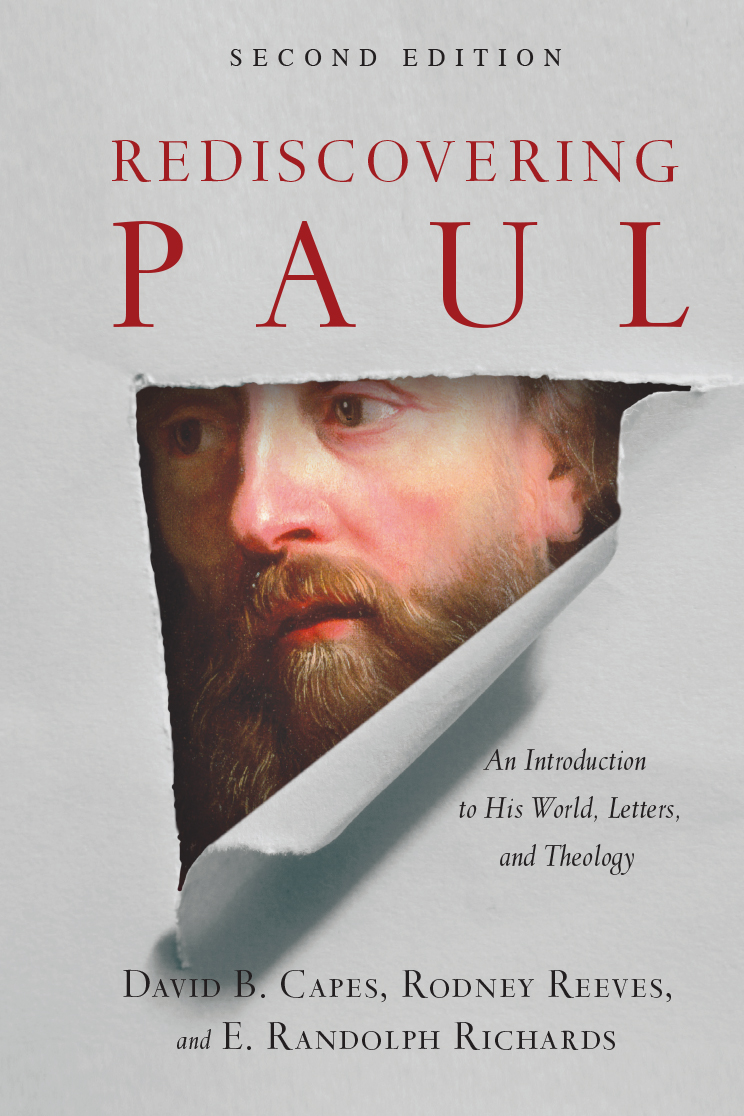
Book Review of Rediscovering Paul: An Introduction to his World, Letters, and Theology


Image result for rediscovering Paul

Rediscovering Paul: An Introduction to His World, Letters, and Theology
By David B. Capes, Rodney Reeves, and E. Randolph Richards
ISBN 978-0-8308-5191-1
IVP Academic
Reviewed by Clint Walker

This is a second edition of Rediscovering Paul, a book that is most often used as a textbook. Well loved by thinking evangelicals across the country, it is also a great read for a pastor or lay person who wants an introduction to a systematic treatment of Paul.

This second edition of this book is quite timely, as several people have been following N.T. Wright and James Dunn's lead with their rather deep and lengthy studies released in recent years, and so there has been a brighter light placed on Pauline Studies int he last few years.

As the subtitle indicates, this book seeks to put the leadership of the Apostle Paul in the Christian Church in context with his times and culture. Capes, Reeves and Richards do this by dedicating some portion of their book to addressing these concerns directly, but even as they begin to discuss Paul's letters, beliefs, spiritual life, and legacy they continue to contextualize the life and teachings of the Apostle Paul. You really, at certain points, get a glimpse into what it would be like to be a shopkeeper in Asia Minor, and the implications of being a new believer in Christ. It really is quite fascinating.

It approaches the biblical writings in the context of the places Paul ministered and the people he ministered with. So, we look at his letters as the letters he wrote before prison, and in prison. And we get to deal with the pastoral epistles in a little different way, as those are also addressed directly.

What I like about the book is the last chapter, which is the "so what does this mean to churches today?" chapter. I think in a lot of works that are more academic some of these things are discussed and implied indirectly, but I think that the author's willingness to engage how Paul may speak to the church today is enlightening.

This book is very easy to read. It would be a fun book to teach out of even in a local church.


Wednesday, October 25, 2017

Thinking about my generation...

Image may contain: 8 people, people smiling, people standing
Young Pastors at Fall Nebraska Pastor Camp

Last week, as the Fall Pastor Camp Experience was winding down, our Associate Executive Greg Mamula gathered the "Young Pastors" for a picture. Previously, there was a picture of the millennial pastors at a gathering. I had left already, and was not included in that picture. So, I was honored to be included in this one. I had to make clear though, "You know, I am not one of you millenials. I am an old man. I am a Gen Xer."

Indeed, I did do a little survey regarding the ministers in this picture. Most of them graduated high school after 2000. I graduated high school in 1991. I am in a small group with a few of these folks. I am the old man in the group. 

Here is the deal though. There are not a lot of us Gen Xer pastors in my circles. A decade earlier, say born before 1964 or earlier, there are a number of Baby Boomers. Some of them are nearing retirement. For the first say 18 years of my ministry, I was almost always one of the two or three youngest in the room by at least 10 years. Now, in the last 5 years, the younger crowd has arrived in force. 

And so, I have been thinking lately. What happened to my generation. Here are a couple of possibilities:

  • By definition, there are fewer of us
  • My Generation must be less churched and more suspicious of religion even than the Millennials
  • Mainline denominations are resurgent with younger folks, but perhaps more Gen Xers went non-denominational.
What do you think?

Saturday, September 23, 2017

Book Review of The Unreformed Martin Luther by Andreas Malessa


Image result for unreformed martin luther


The Unreformed Martin Luther: A Serious (and Not So Serious) Look at the Man Behind the Myths
by Andreas Malessa
Kregel Publications
ISBN 978-0-8254-4456-2
Reviewed by Clint Walker

Martin Luther was a consequential historical leader. Not only did he begin the Protestant Reformation 500 years ago on Halloween, he was also as a result a "founding father" of modern Germany. As such, several stories have been circulated about Luther. Some are true, some are false, and some are exaggerated.

Andrea Malessa takes on each myth about Luther and examines the story for historical veracity. What did Luther really say about the use of alcohol? Did people really watch Luther and his wife have sex? If so, why? Is that story about Luther and planting a tree accurate? Did Luther's most important theological insights come to him while he was using the restroom? These questions and many others are examined in this fine book that helps the reader come to understand Luther better through playing "mythbusters" with a myriad of quotes and stories that are attributed to him.

This book was a fun read. Sometimes I found myself disappointed that certain quotes cannot be verified and certain stories are not true. At other times, I found myself intrigued with the differences in culture and perspective between Luther's Germany and modern day America. By the end of the book, I felt like I not only knew Luther's theology better, but I knew Luther as a person more intimately.

I recommend this book highly, and will re-read it on occasion and share it with others.


Monday, September 04, 2017

From the Mattea Channel: Bigfoot in the Redwoods

I am going to share videos the kids make on the blog every now and again. This from the Redwood National Forest this summer.


Tuesday, August 01, 2017

On Being Patient

When I was a kid, I fished a lot. I would get home from school, grab my fishing pole, and head down to the river to fish until dinner time (The world was a lot safer place forty years ago). Fishing was always a challenge for me. I was and am not the most patient person. In addition to this, I was very eager to catch fish. I was always wondering if I had a fish on. Every current and every snag felt like it could be a potential nibble on my pole. I would set my hook and start reeling my line in. And there would just be a poor, traumatized little worm on the end of my line. After a while, I added a bobber to my line and learned to trust it. Even more though, I learned that when a fish bit my line, I knew it. I may have thought I felt a bite before, but when the fish hit my bait, my pole would show the evidence and my hands would feel it.

Right now it is hard to patient as I seek to lead and grow this church. I know we need to take steps forward. We have even taken a few. Yet, as Jesus said, reaching out and living on mission for him is a lot like fishing. I keep hoping that I will be successful in growing our church. On the other hand, I know I need to be patient to respond to his timing and not my own. I will keep seeking the right holes to fish in, and I will pray that when God's timing is leading us in a specific direction, I will know it.


Monday, July 31, 2017

The Day After #1--Reflections on Sunday

A fellow blogger used to do this Monday Morning Quarterback kind of thing where he would blog about how worship went the weekend before. I think this might be helpful. Only I am calling mine "The Day After", reminding myself of the apocalyptic movie of my youth. I think I will review with less of a tick-tock and more of a general summary.

The Night Before
I am preaching in a different way than I ever have before while here at FBC North Platte. I am not sure that it is working, although my wife says it is.

Until about 2 years ago, I was generally a manuscript preacher. This means that I wrote out my entire sermon. I was trained to use sermon manuscripts in seminary, and Jene Bridgewater was one of my preaching mentors, and she always used a manuscript (usually finished an hour before worship).

Over time, I began to experiment with an outline that was shaped like a bulletin, and was only one page long. The first column visible was a cover, and the next three columns were the outline for the sermon. This allowed for a more conversational style, and more eye contact with persons in the congregation. I have continued this practice in North Platte.

When I came to North Platte, I prayed about what to preach, and I repurposed some sermons that had outlines with them. Now, after 6 months, the congregation likes to have a note-taking outline each Sunday. Sigh.

With this outline, a Powerpoint is also expected for the message. This had been the case for some of my sermons in Hot Springs, but when there were Powerpoint notes, they often were my sermon notes as well.

When I started this three part routine, I began by trying to put together the preaching outline first, and then derive my bulletin outline and Powerpoint from the prepared message. Lately this has turned around. I develop the Powerpoint and the bulletin outline first, and then draft the preaching outline the evening before, having it derived from how I put together the other two versions of the sermon. I think this works well.

This last week, knowing that people occasionally have a hard time knowing where we are in the bulletin outline, I took the bulletin outline of the message, and expanded on that with other material to flesh out the sermon. This seems to be a better process than vise versa, and the three-fold approach helps me to be more familiar with the material

Sunday School
I am sitting in with the children's class. I want to make kids ministry a priority here, even if we don't have a lot of kids yet. And, it avoids have to choose one adult class over another, or having to bounce around from class to class. It also allows us to use the two-adult rule.

We use an "internet" curriculum. It is not bad, but I think, as far as curriculum goes, we can do better. Especially if we want to grow the program.


Worship
I am still figuring out worship here at First Baptist. Historically, the service has been rather formal and somewhat traditional. Recently, there has been some movement toward contemporary worship and a more informal organization of the service. This more contemporary part of the service has been well done for the most part, but it is hard to sustain the momentum and depend on this every Sunday.

This last Sunday was a perfect example. We had nobody available for praise team. We attempted to have a mix between a more formal, scripted service and a less formal service with limited information. As we make changes, people still struggle to adapt. And I struggle to adapt to their "structure", and make it something comfortable for me.

There were hiccups, and not everything we tried worked (especially the children's song on video). Eventually we will get to a place ( I hope) where I don't feel like I am trying to implement other folks' vision for worship while also trying to do something that fits what I feel comfortable with.

The Sermon
People here in North Platte are Midwestern reserved. So I never really know how it is going. There are lots of times I feel like going to a manuscript would help me to craft my words better. And keep in better step with people's note-taking efforts.

I tend to move around a lot with my messages these days. I am not sure how that is working either. In the last three weeks, in part out of a recommendation from my Executive Minister, I try and make my way from the platform, down the stairs, to the floor, and then back up to the pulpit before I finish.

Even as I preach with notes, I tend to look at my notes less. This means that there are times the sermon does not flow the way it was planned, but it makes for a more heart-felt conversation between myself and the church.

I had a senior-pastor that discouraged the conversational tenor of my messages, telling me I could do conversational preaching if I wanted, but it would not work and it would not last very long. I always have that in the back of my head.

The sermon was on the armor of God. I finished the message with the refrain "Are you ready for the battle? Are you ready?"

After Worship
We had folks over for lunch. We are trying to be hospitable, and to teach the church to be the same way by setting a good example.

It was a good time, although toward the end of the dinner I got to speaking to much and listening to little. Which meant some of the other folks were eager to leave sooner than they might have been otherwise. Not a bad thing. I just need to reign myself in and facilitate a broader dinner conversation.

I like having people over for meals. And, practicing hospitality is something Scripture tells us to do.
Sunday, July 30, 2017

Beginning to Blog Again

I started blogging for three reasons. First and foremost, I needed the practice in writing, and having the discipline of developing an online journal would help in that process. Secondly, I wanted a way of recording my thoughts and opinions in an articulate way before they escaped me. Third, before Facebook was open to the public, blogging offered a unique way to network socially.

Since December 2004, I have slowly dropped off in my writing production on Friar Tuck's. Part of this is due, I am sure, to the rise of social networking. I am also confident that part of this lack of blogging discipline is due to different priorities in my life from when I started the practice. However, another reason is that I have not done as well at time-management and reflection to have this as a priority.

Also, the nature of blogging has changed. In the early days of this blog, it was highly confessional. That was a good thing and led to some raw, honest, powerful conversations. As my ministry profile has increased, and my personal life has expanded, it has been harder to share more openly about what is going on in my life. Moderation is good. Just like our President doesn't need to tweet his every thought, I don't need to blog all of mine.

However, I do feel convinced that my personal journey and my ministry journey will be benefitted if I choose to blog more often. So I am going to try and make at least one post a day for the next month or so, and see if I can make blogging into the powerful tool for intellectual growth and professional development that it once was.


Tuesday, July 25, 2017

Book Review of Teach Us To Want by Jen Pollock Michel


Image result for teach us to want
Teach Us to Pray: Longing. Ambition, and the Life of Faith
by Jen Pollock Michel
ISBN 978-0-8308-4312-1
IVP Crescendo
Reviewed by Clint Walker

I actually finished this book about a year ago. I then had the distinct privilege in going to a presentation about the book by the author. I have been very impressed. even though I am just getting around to writing the review.

Teach Us to Pray is a wonderful, readable, and also intellectually powerful study of the Lord's Prayer as a prayer that trains our desires. Deeply conversational and confessional in nature, Michel takes the Lord's Prayer step by step, at times leading her readers toward conviction of their sinful and unhealthy desires, and at times positively encouraging the readers, reminding them that God made human beings to be desiring creatures.

Throughout Teach Us to Pray Michel reflects and tells stories well. The book is very quotable, and so at the bottom of this post, I will have some quotes I have harvested from the book. Although written by a woman for a line of books directed at women, the book is easy to connect to for people of both genders.

This book deserves to be read for years to come.

"We pray best when we need God most" (p. 197)

"Holiness is formed in us more unspectacularly and more incrementally than we expect--wherever the practice of small everyday faithfulness is required of us" (p. 198)

"Storytelling and story keeping: these are acts of faith. They preserve faithfulness." (p. 189).

"We easily dismiss desire, arguing that the goal of Christian life is obedience" (p. 23).

"The Bible is not just information about God: It is the living voice of God" (p. 47).

"Holy trust believes that whatever God chooses to give is enough" (p. 84)

"To say that God is good is not the same thing as saying that life is good." (p. 101)

"Clarity and certainty are not the soil in which faith grows." (p. 112).

"Desire expressed in prayer risks on grace" (p. 118).

"In asking for God's provision we're admitting our inability to self-sustain" (p. 127).


Monday, June 19, 2017

Book Review of Faithful Presence by David E. Fitch


Image may contain: one or more people

Faithful Presence: Seven Disciplines That Shape the Church for Mission
by David E. Fitch
IVP Praxis
ISBN 978-0-8308-4127-1
Reviewed by Clint Walker

Right before I moved, I received the book Faithful Presence from IVP Press. After I moved here to North Platte, I also received a copy of this book from our Executive Minister Robin Stoops. It has taken me a while to carefully read through this book, but I have finally finished the text.

The central idea of Faithful Presence is that there are seven spiritual practices that simultaneously promise God's presence and lead us into a missional presence in our world. Each one of the practices promises that God will "show up" as we live out and share these disciplines. The practices are:


  • The Discipline of the Lord's table
  • The Discipline of Reconciliation
  • The Discipline of Proclaiming the Gospel
  • The Discipline of Being with the Least of These
  • The Discipline of Being with Children
  • The Discipline of Fivefold Gifting
  • The Discipline of Kingdom Prayer
Fitch then goes on to share a model for living the disciplines as the church in three realms:

  • Close circles: Believers in Christian community (the church) submitted to Christ and one another
  • Dotted circles: Believers in the neighborhood submitted to Christ and one another as they live their faith outside of church buildings or the safety of a "holy huddle".
  • The half circle: Where the Christian and christian community goes out into the world as a guest, seeking to live and share the presence of God in that space
I found this book powerful, intellectually stimulating, and believe it will be a significant text in how the church seeks to live on purpose in the world to reach the world for years to come. Eschewing quick fix programs at every opportunity, this book shares values and attitudes believers should embrace in their life together, and as they seek to live on mission in their community and world. Biblically grounded, culturally wise, and pragmatically astute, Fitch lays a foundation for church's in the future that is based on historical models of Christian community and outreach, without embracing traditions and structures that have hamstrung Western Christian mission in recent years.

This is a must read for pastors, church leaders, and followers of Jesus seeking to live their lives in a way that grounds them deeply in their faith, and empowers them to multiply their faith as well.

Our deacon board is studying this book together right now, and seeking to move forward in ministry and mission with the guidance it provides.


Friday, June 09, 2017

Shoptalk: Funerals are different wherever you go....

I am preparing my first memorial service for a member of our church here at First Baptist Church of North Platte, NE. As I do so, I am reminded that different places do things radically different based on the region of the country, the size of the congregation, the size of the community, and the culture of the people that make up the church and the community.

Here are some of the differences:

Reading of the Obituary
Some people think this is necessary in a service, and some people do not. They like or dislike this tradition for the same reason. I think the history of it stems from a melding of the secular and sacred, with the reading of the obituary being an official secular announcement of death. Much like when ministers would say, "by the power vested in me by the state of _____________"

Procession with the Body
This sometimes was dependent on the nature of the facility. In certain churches, this has to be done immediately following the service. Then people can be greeted and visit. Other churches process the body to the back of the sanctuary, often in an overflow area. Others have released the crowds of folks, and brought the body to hearse well after the service. One church I served in, for example, processing with the body was difficult because stairs had to be navigated.

The Funeral Home
These folks all have a different way of operating from one another in relation to pastors and churches. Some places are low on capital funds, and so they insist in having the family of the deceased write personal checks to musicians, pastors, and church ladies for the church service. Others make that kind of thing a part of their package deal. Some funeral homes like having pastors present with the family as they meet with them. Several do not.

Funeral Meal
In some places, a church plans to prepare a meal for nearly everyone in town. Another congregation only allows folks who are family and who are serving with the funeral staff. Some prepare elaborate meals for everyone. Others buy Subway sandwiches and provide side dishes and deserts that are homemade. One church I served prepared "open-faced sandwiches" prepared by church ladies. Still others simply offer a cookie and beverage reception.

There are several other differences I can't think of. What variations have you noticed?

Monday, May 15, 2017

When is Stubbornness a Virtue


 The difference between stubbornness and perseverance is discernment. I had a friend who was stubborn. He kept working jobs that net little to know income. He wouldn't listen to anyone. He argued with his wife, yelled at his kids, and constantly strove to get ahead. But, he put blinders on. He thought that if he kept doing the same thing the same way eventually it would work, even though it never worked. I feel bad for him.

 I know another person. He had a dream. People mocked him. Progress was slow at first. People worried about him. He had his failures. However, he learned from his failures and pressed on. He was tenacious. Eventually, despite everyone's doubts, he experienced success. He persevered. Sometimes you need to know when to quit. Sometimes you need to have the grit to press on.


When is stubbornness a virtue (of perseverance) and when is it just unwise? How do you tell the difference

More Hemmingway, less Dickens

One of the things that I have enjoyed about being at First Baptist Church of North Platte is the increased level of participation of lay people in worship leadership. Lay people choose and lead praise songs. They lead the hymn singing and make the announcements. Members of the church do the offering, take greater responsibility for the Lord's Supper, and do missions presentations during worship.
Our order of worship is generally less formal than the church I arrived here from. However, one of the few portions of our service that is "scripted" is the offering and the offering prayer. During each service, there is an introduction to the offering that serves as a "mini-devotion" exhorting folks to give. One of my predecessors has years of these things typed up. Sometimes I borrow his work. Other times I borrow from my liturgical resources, drawing out the invitation to the offering and the offering prayer. I find in both cases, I edit the texts I am given. This is because, I believe in worship resources, we need more Hemmingway and less Dickens.
A lot of worship resources use large words and long sentences. They write in an intelligent fashion, but not in a way that connects as clearly with the everyday person in the pew. So, when I transcribe many of these resources in the last few months, I am changing high rent words into language that is more common. I am chopping up longer sentences into shorter more succinct ones. I am exchanging flowery language for more earthy words. We need less Dickens, and more Hemmingway.

Wednesday, May 10, 2017

When Things Don't Go the Way You Had Hoped

Image result for change

I left worship a little frustrated last week. I tried to lead folks toward doing something new in worship. It did not work as I had planned, desired, or expected.  We thought we had our bases covered, but people behaved in a way I did not anticipate. Folks I had hoped to earn the support of were mildly disappointed. I spent the last few days feeling bad. I think I am over it now. 

How do you respond when you do something different, and it doesn't "flow"? Do you abandon the project, deciding that we have tried this once, it did not work, and we will never try anything like that again? Do you consider that new routines are more difficult, and try again with some adaptations again the next opportunity you have? Do you beat yourself up for days, or realize that bumps in the road are part of the journey? 

God has given me a more tenacious and stubborn temperament. So, I would generally opt to try again, making improvements in communication and design that are necessary. Often changes like changing a golf grip, establishing a new health routine, or trying communion a different way require going through the awkward phase of trying something new before things feel like they work and fit. There is a part of me that says to myself in moments like these--moments when things don't go as planned and people complain--that I should abandon new experiences and the possibility of failure and stick to what has always been done. 

 How do you respond to moments like these in your life? Do you try again, or chose to abandon your effort to try something new?

Reformation Commentary of the Bible: Old Testament Volume XIII--Psalms 73-150

Reformation Commentary of the Bible: Old Testament Volume XIII--Psalms 73-150  Edited by Herman J. Selderhuis IVP Academic ISBN 978-0-8308-2...