Friday, February 21, 2025

Book Review of On Getting Out of Bed by Alan Noble


On Getting Out of Bed
By Alan Noble
IVP 
ISBN 978-1-5140-0443-2
Reviewed by Clint Walker


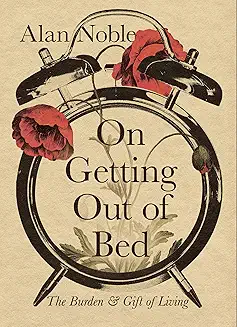
Have you ever gotten a good night’s sleep, and still struggled to get out of the bed in the morning? Have you ever wondered if you are alone in not feeling most of your life is not rainbows or sunshine, and wondered what defect you had? Most of us have endured something like this, says Alan Noble. He says, “Get to know someone really well, and almost without fail you will discover a person who routinely struggles to get out of the bed in the morning” (p.8). 

Reading this book is less of a research project, and more of a book to be experienced, especially for melancholy souls like my own. This text goes to great pains to support and recommend mental health counseling, reasonable medicating, and care. However, at the same time, Dr. Noble challenges the approach that human beings in their mental, emotional, and spiritual complexity should be treated as problems that a medical or self-help industry can fix. This book has several short phrases that serve as hooks to challenge its reader to persevere and persevere faithfully during mental suffering.

You have heard the phrase, “just get out of bed”. Other phrases Noble uses is “do the next thing” as a witness to God’s grace and goodness to others, and as a “spiritual act of worship”. He encourages others not to sin in their suffering, and blame their melancholy for their sin. 

There is much to commend in this encouraging, challenging and thoughtful book of just over 100 easy to read pages. As I read it I felt less alone in some of my down times, and encouraged that pushing through my struggles does matter. I came to understand that sometimes, putting one foot in front of the other is truly an act of faith. And these truths and others touched my heart, and left me both affirmed and changed.

Friday, February 07, 2025

Book Review of The Dictionary of Paul and His Letters edited by Gupta, Cohick, and McKnight


Dictionary of Paul and His Letters: A Compendium of Contemporary Biblical Scholarship: Second Edition

Edited by Scot McKnight, Lynn Cohick, and Nijay Gupta

ISBN 978-0-8308-1785-6

Intervarsity Press

Reviewed by Clint Walker


Many folks, like me, enjoyed the first edition of the Dictionary of Paul and His Letters, published in 1993. At that point, I was a twenty-year-old student at Sterling College in Sterling, KS. In 2023, the year that I turned 50, the second edition of the Dictionary of Paul and His Letters was released. I have been excited to dig into this fine new work and highly recommend it to students of the New Testament everywhere.

Part of the reason I am excited about this book is personal. At the time of this book's release, all three of the editors of this new volume were at Northern Seminary. During COVID, I audited a class with Nijay Gupta on Philippians. Lynn Cohick taught a class in my doctoral coursework in 2021. So, my connection has made me root for this fine work.

This is a large text, and I will admit I have not read it cover to cover. (Honestly, it is not meant to be read that way) I have read this text, and several things are helpful to know about the scholarship in this text. They are:

  • This is almost entirely new in its content. Only 15 of the original articles were used, and several of them were updated (p. ix). I will probably use both the original and this update for research.
  • My perception is that this volume has longer articles than the previous text and perhaps fewer topics covered. 
  • The bibliographies that follow the articles are up to date, and worth paying attention to!
  • I think the "Interpretation" articles in this edition are an excellent addition.
  • It is really worth one's time as a reader to not only explore articles based on the table of contents but go through the contributors list. For instance, I looked up Michael Gorman, and am going to read his three articles. In some cases, you can get a "readers digest" version of influential books and ideas. Good stuff.
  • Finally, this may be marketed as a more academic book, but it is a great book for anyone who loves understanding Paul and His Letters in a deeper way, no matter their background. 

If you have the money, I recommend adding this book to your library!

Saturday, January 18, 2025

Book Review of Flyover Church: How Jesus' Ministry in Rural Places is Good News Everywhere


Flyover Church: How Jesus' Ministry in Rural Places is Good News Everywhere

By Brad Roth

Herald Press

ISBN 978-1-5138-1372-1

Reviewed by Clint Walker


Since 2016, there has been both a public and ecclesial interest in small towns and rural life. Whether it is the flood of sociological interest seeking to investigate why rural people have such great affection for Donald Trump, or the renewed interest in small churches and rural ministry in ministry circles, understanding rural America, especially in flyover country, is getting some deserved attention.

Into this time, comes a wonderful book by Brad Roth entitled Flyover Church. Brad is a seasoned pastor and leader in out of the way places, and takes his readers on a journey to discover the importance of small town ministry, and some helpful attitudes and practices in that context.

The book, which I read good portions of in the Flyover Brewery in Scottsbluff NE while listening to Chris Stapleton, is a guidebook for ministry in rural places, especially those in small towns in the Midwestern and Western United States. Brad takes us on a journey in Flyover Church, in which chapter titles are patterned after movement of Jesus as God's incarnational presence in the world, with a call to his readers to follow Jesus' pattern as well. As Roth says in this text, "ministry is about making ourselves available to his people and his world. Ministry is not a task based job, but a presence based one..." (p. 27). As Roth serves as a tour guide to rural ministry, he points to things to notice, attitudes that work, and practices that are necessary to be faithful in rural and small town ministry. There are no step by step instructions on "how to", but there is lots of practical insight on how to live rural ministry as a way of life. 

I would recommend this book to anyone exploring or practicing ministry in out of the way places. Flyover ministry is not always easy, but Brad Roth shows how it can be a true and beautiful way of serving the call of Jesus.


Friday, January 10, 2025

Book Review of Zion Learns to See by Terrance Lester and Zion Lester


Zion Learns to See

by Terence Lester and Zion Lester

Illustrated by Subi Bosa

IVP Kids

978-1-5140-0669-0

Reviewed by Clint Walker


Terence and Zion Lester have written a children's book entitled Zion Learns to See, which is a wonderful story about discovering a vibrant, living faith committed to loving others, and standing in solidarity with those who are under resourced.

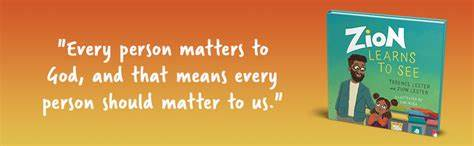
In a book that appears to be autobiographical, Zion goes to work with her dad one Saturday morning. Her dad works at a community center in a neighborhood that has people who are homeless and hungry. Terance introduces her to his friends, and Zion helps meet some of the needs of hungry and unhoused. She begins to understand in her heart a lesson that her father was teaching her, namely that "Every person matters to God. And that means every person should matter to us"

This is a great book for teaching Christian values and social responsibility to children and adults alike. The illustrations are well done. The narrative tells a story of personal transformation by a young girl, which will encourage others to be transformed as well.

This book belongs in any home that is trying to disciple their children to be thoughtful, compassionate, and committed to loving others. It also belongs in church libraries, city libraries, and Christian schools. 


Review of Not Finished Yet by Sharon Garlow Brown


Not Finished Yet: Trusting God with All My Feelings

Sharon Garlow Brown

ISBN 978-1-5140-0795-2

IVP Kids

Reviewed By Clint Walker

Sharon Garlough Brown has written a wonderful series of novels designed to explore women's spiritual formation in a fictional narrative. Now, she is writing a children's book, describing a grandmother and a grandchild who deal with big feelings through art and a deepening faith in the presence of a gracious God who is still at work in the world and in each of us.

Probably the best compliment I have as a "girl dad" after reading Not Finished Yet is that I wish it had been written when my daughters were little enough to hear it and read it as little girls. It deals with real issues without being platitudinous. 

The story in this short book flows well. Jessica Lynn Evans illustrates it well. The metaphor of God painting the universe and that he is not finished with his creation is thought-provoking and compelling for me, as I am sure it will be for others. 

This is a great children's book on the shelf at a church, in a home with children, or in a library in the middle of town. 


Friday, March 29, 2024

Book Review of the Second Testament by Scot McKnight

The Second Testament: A New Translation

By Scot McKnight

IVP Press

ISBN 978-0-8308-4699-3

Scot McKnight has produced a personal translation of the New Testament. While the dust cover and the introduction to the translation will help you to navigate the differences of this translation of the New Testament as McKnight describes it, and overview for this review might be helpful.

In this translation McKnight does the following:

  1. He uses a more literal translation of names and places from the Greek. Often this is followed by a parenthesis to help the reader understand the term.
  2. At times McKnight literally translates idiom, and then has some sort of explanation in parenthesis
  3. This more literal translation at times will feel awkward, and McKnight says that this is the point, to "jar the reader" (preface) into a deeper understanding of the text.
I have been reading the text most recently for Holy Week passages. My experience is that the text is easy to understand, but I keep translating back into modern idiom. In my head I am reading "Petros" and then translating Peter, for example. This makes for a slower read.

As you read the translation in a more ancient structure, if you are like me, you are forced to slow down, and read at a different pace and rhythm. This makes me think, how does the structure and rhythym of the original text, even in my native tongue, form me differently as a reader of Scripture?

I find this text good for personal Scripture reading, I would think it would be difficult for worship leadership. It will have a place on my shelf in my office beside other translations as I prepare to preach a text. It will also have a role in my regular reading of Scripture.

All in all, the Second Testament will be a great addition to a bible teacher, or preachers library, which is why I highly recommend it. The everyday lay person in my congregation would be constantly confused, so I probably won't use it with my elderly men/s small group on Wednesday night.


Friday, January 05, 2024

Book Review of Little Prayers for Ordinary Days by Katy Bowser Hutson, Flo Paris Oaks, and Tish Harrison Warren and illustrated by Liita Forsyth


Little Prayers for Ordinary Days

by Katie Bowser Hutson, Flo Paris Oakes, and Tish Harrison Warren

IVP Kids

ISBN 978-1-5140-0039-8

Reviewed by Clint Walker


What a wonderful little book! Designed for kids, but appropriate for persons of all ages, Little Prayers for Ordinary Days is a collection of prayers for children for moments during the day. Some of the moments are more daily, such as putting on clothes and going to school. Some of them may be more occasional, such as when a child loses something or chooses to look at the stars. 

Through each prayer, and through use of this book as a whole, children will be taught that God is near, that God cares about our everyday life and concerns, and that God wants us to connect with, talk to, and believe in Him. 

The prayers that are written are brief, easy to read, and down to earth. I could see my girls using this. Even more, taking some of their favorite prayers and attaching them to a mirror in their bedroom, or something like that. 

The biggest challenge, in this day and age, will be to get the kids you know to open and read a book with prayers in it on a regular basis. A lot of kids would prefer and an app or something like it. I would have preferred the book to be more of a standard size, but that is only because I would like to copy pages and hang them up. 

This would make a wonderful present for kids at significant moments in their lives and faith journeys.

Monday, April 18, 2022

What Happened?--An Easter Message Rough Cut


What Happened?

            You know how it is. You may have heard about it. Someone may have told you what was going to happen. But then it happens, and even if you were expecting it, you were totally not expecting it?

          I know, sounds strange doesn’t it? Let me explain.

          I knew that my oldest child was going to enter kindergarten. Kind of looking forward to smaller day care bills even! Yet, when we got to that point, I was really not ready. I wasn’t ready for her eagerness to run in the door. I was not ready for Mattea to scream and cry because she was missing her sissy (I have that on video mind you). I was not ready. Even though I was prepared and ready.

          I just sat down in the quiet of that night and said to myself, “What happened?”

          You decide to get married. You plan a day. You have people gather around and you say I dos. The reception, the honeymoon happen, and you walk into your new home together. And all of the sudden you are like, “what just happened”. It was like you were living your life, but you were somehow watching it in a movie at the same time. And now I have to share all my space and all my stuff. Wow.

          I suspect, that this phenomenon is even more pronounced after deep trauma. And no doubt, the death of Christ was a profound lifeshock, an earth shattering trauma. They watched him beaten, bleed, and eventually suffocate and die.

          The disciples were not ready for Jesus’s death. He had told them he was going to die. He had done this over and over. Even the week of his death, after that Palm Sunday procession, he told the disciples that one of the women was anointing him because she was preparing for his burial. But often we hear what we want to hear.

          Our loved one tells us they are not going to make it much longer. We tell them to stay positive, and to keep fighting. They tell us there is not much time left. But we don’t want to hear it. And then….they are gone.

          And then the death of Jesus is interrupted by the Passover Sabbath. In Jerusalem. No opportunity to care for the body. No ability for over 24 hours to bring spices, to care for his corpse, to do any of that. He died and he was rushed off to a borrowed tomb, and then a day of rest and worship where nobody could do anything. Which brings us to where the passage starts, on the first Easter Sunday.

They were still trying to find out, what happened? What happened on Good Friday?

          So, early in the morning, the Scripture says, the women get busy going out to care for Jesus’ body. There is a stone that has been rolled away from the tomb. They look in. They do not find the body of Jesus.

          New Testament scholar Tom Wright says in his translation called THE KINGDOM NEW TESTAMENT that “they were at a loss what to make of it all”. The NIV puts it, “they were wondering about this”.

          They were wondering what happened? They walked in ready to care for a body, but there was no body there,

          The angels reminded the women of what Jesus had said and taught about his death, burial, and resurrection. The Scriptures said that the women then remembered what Jesus had taught them.

          The women went and told the 11 what happened. And they thought they were just women telling stories, and they did not pay much attention to what the women had said.

          Now mind you, from the context I believe they told the men about the empty tomb, but then they also reminded them about what Jesus had said that they had remembered after they were confronted by the angels. They preached their experience, but they also preached some theology. Nevertheless, the men all thought that all that they were saying made no sense. Probably just emotional women telling stories.

          All of them, anyway, except for Peter (and probably John from the other gospel accounts), did not respond at all to what the women had said.

          Luke says that Peter got to the tomb. He too saw that it was empty. Wright translates it this way, “he too saw the grave clothes, he went back home, perplexed at what had happened”. THE NIV translates it as “wondering what had happened.”

          And that is how that first account of the resurrection account ends. Perplexed. Shocked. With the people who encountered the empty tomb saying, “what happened”?

          It is a little disappointing isn’t it? You mean the early disciples encountered the empty tomb and they didn’t have it all figured out then and there? They didn’t have a theology developed, a sermon prepared, and a ministry plan ready to go?

Nope.

They didn’t have all the answers.

But, they were lost in wonderment.

The experience of the risen Christ rocked their world. Their hopelessness turned to eternal hope. Their brokenness begun to be made whole. Their confusion was transformed to clarity. Their apparent loss and defeat was turned into victory.

They may have been perplexed and confused, they might not have had all the answers or put everything together right away. But this one thing we see in the passage, and in the encounters people had with risen Lord throughout history. People who were drawn into the movement of Christ were captured by a sense of wonder.

You see, my friends, we may have lived life with great church programs, wonderful Christian friends, awesome memories of great childhood Sunday school teachers, and more.

But I worry we have lost the sense of wonder and awe that stems from encountering the power and truth of Almighty God, and surrendering ourselves to his call.

The men on the road to Emmaus had their hearts burn within them.

Does your heart burn within you because you are living in the presence of the risen Lord?

I have to be honest. As a pastor, one of my worried as a parent has always been that we will live near the church, and they will live under the day to day operations of church life, and because of all the kind of “church business” that they live with day to day they will miss encountering the power of the living God. Or worse, they will live with it so surrounding them that they see it as commonplace. I have seen it in youth group with church kids whose parents go to meeting after meeting, and the things of God become common place. It concerns me. It grieves me.

This is my prayer for you today: Don’t lose that sense of awe and wonder that you have been called by the one who conquered sin and death, who died a painful death to show us his love, and who now shows us how to live in supernatural victory through transformed lives.

Don’t lose the wonder, friends.


Poet Elizabeth Barrett Browning puts it this way,

 ““Earth's crammed with heaven, And every common bush afire with God, But only he who sees takes off his shoes; The rest sit round and pluck blackberries.”

Miracles are breaking through all around us. God’s glory is at work in every nook and cranny of the universe. Some of you take off your shoes, raise your hands and cry glory.

But many of us are oblivious, and so we just sit around and pluck blackberries.

Don’t lose the wonder.

Don’t lose the wonder.

I’m still in awe that God broke through to my broken heart and found me. A lonely teenage who was in middle school, wondering if my life was really worth living, wondering if my life really was worth anything, wondering if I had any value. Wondering if there was anything anyone saw in me that was loveable. Wondering how long I could really go on.

And somehow this fat, awkward kid, who had some semblance of a knowledge of Christ from Sunday School years before, found his way into a small church that met in the little league clubhouse, and then the seventh day Adventist church on Sunday mornings.

And somehow I encountered this Jesus who loved me when I felt unlovable, who called me to trust and follow him, who slowly pulled me out of my life of hopelessness into a life that had some sort of purpose that he gave to me.

I am still wondering how and why I went on to sense some sort of call of God on my life in full-time ministry, encouraging others to know Christ and grow deeper in their relationship with him. I mean, I am not really all that smart or gifted. And I am certainly not

I am still in awe in how I am so blessed to have someone like Jennifer to walk in this life with me, and how I got two little girls that are so wonderful and smart to raise and hopefully point them Jesus.

Don’t lose the wonder, friends.

Christ is risen! God has done marvelous things, and given us a lifetime to work out what happened on that first Easter morning.

He has given us the opportunity stare in the empty tomb with wonder. And to know that that empty tomb means new life, victorious life, a life of beauty, and life everlasting.
 

When the Rooster Crowed--Maundy Thursday Meditation


WHEN THE ROOSTER CROWED

Can you imagine what it must have been like for Peter, when that rooster crowed?

He had seen Jesus have arrangements made arrangements for the meal. And then as he walked into the meal, there he was, dressed like a servant. Washing feet. The feet of his friends. Then Jesus made his way to Peter. I must wash your feet as well.

“No way!”, Peter said. I should wash your feet.

“Peter this is both a lesson for you and for others. You have no part of my or my kingdom if you don’t let me wash your feet, “ Jesus replied.”

“Well, wash me all over then”, Peter said.

Your feet will do just fine, Peter replied.

So passionate. So enthusiastic. So eager to be the one standing by Jesus. Just a few hours before!

Can you imagine what it must have been like for Peter, when that rooster crowed?

“Someone will betray me”, Jesus said.

“Who?”, Peter replied

“The one whose bread was dipped in the cup,” Jesus replied

It was Judas, and immediately Judas left the meal.

I will not betray you, Peter said.

Before this night is up, though, Peter, you will deny me three times, Jesus said.

NEVER, Peter answered.

Soon the disciples went to the garden to pray. Pray with me Jesus asked. Peter and his friends kept falling asleep.

Can’t you stay up for at least an hour and pray with me, Jesus asked.

And soon Judas came with the soldiers to arrest Jesus.

Could you not stay up an hour, Jesus asked

Can you imagine what it must have been like a few hours later, when you were Peter, as the rooster crowed?

The soldiers went to grab Jesus and arrest him. Peter took out a sword, and cut off Malchius’s ear. Jesus healed the ear, and rebuked the violence. They let him away.

Can you imagine what it must have been like, if you were Peter, when the rooster crowed.

They led him to the house of the chief priest. A preparation for a mockery of trial had already been started. Peter stood in the courtyard. People kept thinking he looked familiar. You are with that Jesus, aren’t you. He denied him once. Then again. Then a third time. As the led Jesus out the rooster crowed? Peter wept bitterly.

Peter started out passionately committed that day. Eager. Enthusiastic. Passionate. Committed to Christ.

By the end of the day, Peter had argued with Jesus, failed to stay awake with him, lashed out in violence and was scolded, and then finally denied Jesus three times before the sun had even come up.

We have all failed. We have all lost our nerve. We have all failed to have courage when we needed it most. We have all not done what we should have, and we have all done what we should not. We have all sinned.

We have also all betrayed Christ. We have betrayed his trust, denied his provision, failed to stand for what is right, failed to love the least of these…..

Can you imagine what it must have been like for Peter, when that rooster crowed, and just as Jesus had told him would happen.

Maundy Thursday that Jesus was willing to serve us even when he knew some of us would betray him, others of us would deny him, and others would shrink and hide away in the difficult moments.

Maundy Thursday reminds us that we cannot be made whole through our own efforts. Christ was broken so that we could be made whole. Christ’s blood was shed so that we might be set free. Christ gave us the model of a servant God and a sacrificial savior because he knew that we needed that model, and he sent us his Spirit and his church because he knew we could not do this on our own.

Can you imagine what is was like to have been Peter, I bet you can.

But we know now what Peter didn’t understand until later. That grace is offered freely. That forgiveness and redemption are the hallmarks of the life of a disciple. That no failure is ever fatal. That God’s love is bigger than our failures.

So, lean on the Lord this evening and this week. Let his meal sustain you. Let his example inspire you. Let his love heal you. Let his grace set you free.

Amen.

Thursday, January 06, 2022

Book Review of Isaiah and the Worry Pack


Isaiah and the Worry Pack

by Ruth Goring

Illustrated by Pamela C. Rice

IVP Kids

ISBN 978-1-5140-0106-6

Reviewed by Clint Walker


    Isaiah has a lot of concerns that are heavy on his heart. Will his mom make enough money? Can his dad do alright living away from the rest of the family? Will his sister ever behave? Will he ever be able to sleep? So he carries his concerns with him everywhere, like a backpack full of heavy blocks.

    One night his mother comes to check in on him. After listening to his worrries, she leads him in an imaginative prayer exercise where he encounters the loving and risen Christ. Jesus helps Isaiah lean how to deal with his worries.

    Written with a child's ear in mind, the author shares a story of compassion, thoughtfulness and deep spirituality that relates to the lives that kids are living every day. The book provides a good story for kids, and some helpful tools for the adults who are reading with their kids in helping their kids bring their burdens to Christ.

    What a beautiful book.

Wednesday, January 05, 2022

Book Review of Saint Nicholas the Giftgiver


Saint Nicholas the Caregiver

Retold and Illustrated by Ned Bustard

IVP Kids

ISBN 978-1-5140-0180-6


This book is a deftly written story weaving the historical story of Saint Nicholas, and some of the modern legends of Santa Claus. Careful to on one hand not destroy a child's Christmas by saying "there is no Santa", while on the other hand describing the modern Santa more mythologically, author Ned Bustard seeks to ground all Saint Nicolas stories as a reflection of the gospel. 

The illustration work is well done. It at times refllects the story at face value, while at other times the drawings add to the story reflected in the written word. 

Subtle Christian symbolism permeates the artwork. Stars are reflected throughout the book. This connects with the author's efforts to tie the generosity of Saint Nicolas to the wise men. Also, the Trinitarian symbolism in the final drawing is just brilliant. 

I highly recommend this book to families. I would suggest, as we are now at Epiphany eve, that people buy the book this year, so they are prepared with it when Advent begins next year.


Monday, January 03, 2022

How John the Baptist explains repentance

 John the Baptist, most people believe, was an Essene. This means that the community that formed him and trained him for ministry was a community that valued withdrawl from societal institutions and norms in order to be faithful to God's call on their life. Although we have no proof of John the Baptist's Essene bona fides, his appearance and ministry tends to demonstrate and affinity for Essene ideals. Essene's were in the desert preparing for the Messiah and the end of the world as they knew it. They had baths for regular ceremonial washings of repentance and purity. They dressed and acted a little different. They did life on the geographic and social periphory of ancient Israel. All of this seems to be reflected in the life of John the Baptist. 

Yet, according to Luke 3,when people were baptized with John's baptistm of repentance, and they asked John what they should do, John always gave them answers that encouraged them to return to their community and vocation. As they did so, John encoruaged them to practice their vocations in different ways. To the tax collectors, they were told not to extort money. To the soldiers, they were told not to abuse their power. To the rest, they were told to share their extra clothing with those less fortunate. 

John called the repentant to simple, practical acts of engagement in community and culture, not withdrawl from culture as a sign of loyal faithfulness and true repentance. This has important ways of challenging us today. 

There is a part of Christian culture that thinks that we should withdrawl into homeschooling, homechurching, home working as an act of faith. These same people guard their associations with others. Yet, in Scripture, the model of cultural withdrawl in taking on the role of the prophet encourages others to engage community and culture faithfully in order to give glory to God. 

Something to consider here.

Friday, April 16, 2021

Book Review of What Is the Church and Why Does It Exist by David E. Fitch


What is the Church and Why Does It Exist?

by David E. Fitch

ISBN 978-1-5138-0570-2

Herald Press

Reviewed by Clint Walker


    David E. Fitch has written a new book that is being published this spring. It is from Herald Press, and is part of their "The Jesus Way" series of small books that pack a big punch. Fitch's contribution to this series is fitting, as he argues for a missional ecclesiology, and gives some helpful hints in how to put this way of doing church into action.

    What is the Church and Why Does it Exist is a book centered around three questions: What is Church? Why Church? and How do we do Church?. The book has a partner video curriculum by the same name with the new streaming platform SeminaryNow as well. For those familiar with Fitch's other writings, Fitch borrows heavily from some of the content in his book Faithful Presence in communicating his vision for how churches should structure and function, but each work stands apart from the other with a slightly different focus. 

    Fitch challenges his collegues and student to be pithy in their communication, and works on that himself. However, anyone who has went to David Fitch's lectures or had a conversation with him knows that he himself leans less toward the earthy pithiness of  Ernest Hemingway in his communication, and more toward the wordy thoughtfulness of Nathaniel Hawthorne. 

    For this reason, this book is an accomplishment for Dr. Fitch. He packs a lot of his conceptual work he has done over the last twenty years or so about what the missional church is all about in a relatively brief, thoughtful, easy to understand book that you can share with people in your small group or congregation. There are discussion questions in the back of the book that allow conversation to begin.

    I have worked through the material in this book with a small group in my congregation. They interacted well with it. At times they thought what David Fitch shared was common sense, and at other times they were challenged by his perspective, which is exactly what I wanted. For our people, we were affirmed in our commitment to congregational life, and also challenged to practice our faith together, in our homes, and in our communities. 

    This will be a helpful resource for any church to look at as they consider how to connect with the continually changing, post-Christian world. It honors the wisdom of having a community called the church. Yet at the same time challenges us to move out of siloed churches and siloed living into a wholistic, authentic way of living for Jesus together as believers in the world for the love of humanity and the glory of God.


Wednesday, March 24, 2021

Detectives of Divinity


On Being a Detective of Divinity

          So, this morning I got a call for someone with an unusual request. “Pastor, I live at the Liberty House, and we have been on lockdown. My brother says I need someone to bring me communion. I really want communion. Will you bring me some?”

          “Sure,” I said, “do you believe in Jesus?”.

“I believe in the Father, Jesus, and the Spirit. And I am a Baptist, because John the Baptist was a Baptist too,” she replied.

“Will 2:30 work?”

“Yes! I will see you at 2:30. Thank you! Thank you! Just come around the back and will meet you there.”

So, like a meth dealer around the corner of a rehab clinic, I smuggled the body and blood of Jesus down the back alley of an assisted living facility on lockdown. “This ought to be interesting,” I thought.

As I approached, I prayed, “Lord, be present in this moment. Let your love and grace present in the sharing of the bread and the cup in such a way that we are all sense your Spirit at work among us. Amen.”

I drove down the alley to what appears to be the main entrance of the facility. I brought with me the elements I had packed. Three pre-packaged and sealed communion servings were loaded into three plastic easter eggs to make the transport of the elements easier and were sitting on the passenger seat of my car. I had no idea why I packed three servings, I just felt led to do so.

I get out. “Are you the one bringing us communion?” my new friend yells out.

“I am. Do your friends want to share with us?”

“Yes, two of my friends heard and want to do communion too.”

So, I get out all three Easter eggs containing the elements of the Lord’s Supper. I read through I Corinthians 11.

“The body of Christ, broken for you,” I proclaim. Then I help each one of them open their wafer off the top of the cup.

“This is the new covenant in my blood,” I say, and help them with the cup.

It was a sacred moment. Three adults, each with challenges that make it hard for them to live independently, stood hungry for the inbreaking of the transcendent God into their lives. Having the body and blood smuggled to them through a back alley delivery, they experienced the love of Christ in the ritual of the Lord’s Supper.  Through presence of the church in delivering and sharing this moment with them, and in their longing for a tactile way to connect with the grace of God, the Spirit of God broke through in a powerful way as four people shared communion in a parking lot on Sixth Street and Willow.

Alan Roxburgh, a prolific Christian author and leader of the missional church movement, says that missional leaders/pastors do their work best when they are detectives of divinity. In other words, as we go out into the world around us, we do our best work when we open our eyes to what the Spirit is doing and join God in it.

I have no idea, in the end, how meaningful that moment was for my new friends. But I know it was meaningful for me. It helped me to remember that God is as work in ways I never expect. And it reminded me that sharing the table, and remembering the sacrifice of Christ, is a powerful way to experience the love of Christ, and to offer solidarity and love to one another. It reminded me, as I enter Holy Week, that I should not take the Lord’s Supper or what happened on Calvary for granted. As a matter of fact, we should all be hungry and thirsty for the presence of God.

I drove out of the parking lot today remembering the Emmaus Walk of those two people with Jesus, who discovered in the breaking of bread that Jesus had been present with them all along. And I mumbled to myself, “Wasn’t my heart burning within me in the breaking of bread?”


Wednesday, January 06, 2021

Amen and Awoman


Of all the controversies that evangelical Christians have created and embroiled themselves in, the backlash regarding the closing of the Rev. Emmanuel Cleaver's prayer may have been the most petty. You would think, from the response of many people I am aquainted with that he brought a golden calf into an altar in the worship space of a Christian congregation, or wore a t-shirt promoting the Piss Christ (yes there are such t-shirts). Instead, the last word of his prayer was a pun, intended to celebrate the inclusion of the first woman chaplain to the House of Representatives, as well as the larger proportion of women in this term's Congressional delegation. The closing of the prayer fit with much of the rest of his prayer which called for spirit-led peacemaking and inclusion of  "the other". In the prayer Rep. Cleaver called for peace and an end to partisan tribalism. The final word of the prayer fit with this theme. Although it may have been a little dorky, it should not have made news. Furthermore, it should not have Christian around the country offended and ready to wage a Twitter/Facebook jihad. 

    Cleaver's prayer wasn't perfect. In my opinion, Rev. Cleaver's mistake was this: don't mistake a prayer for a sermon. For public prayers, it is almost always a temptation to take the opportunity to lecture folks, or to placate those in authority through the use of prayer. Don't do it. When you pray, pray. Even in congress. And when you preach, preach.

    Nevertheless, I am intrigued that many evangelicals are pretending that misusing the word "amen" is like taking the Lord's name in vain. The earliest manuscripts of the Lord's Prayer in Matthew 6 do not even use the word "amen". Many faithful Christians and secularists use the term "amen" in everyday conversation to communicate agreement, not as an expression of prayer. It is not required to "hang up" a prayer with the word "amen". It is just a tradition.

    So then, is there a controversy about the term "awoman"? My suspicions are as follows:

1. In light of Warnock's upcoming election, evangelicals wanted to disparage the African American church, especially those grounded in some sort of liberation tradition, as being untrue to the gospel. It was a way of both attempting to attack African American religious tradition as illegitamate, as the SBC has done with its repudiation of critical race theory, and of peeling away any support in the upcoming election from Warnock.

2. It communicated many conservative evangelicals lack of willingness to support racial and gender inclusion, unless it is completely subjugated to constructs of white power and male power. And, any movement of faith that affirms instead of deconcontructs the structures of abusive power, including mitigating against full inclusion of both women and minorities, is anti-gospel. 


Tuesday, September 22, 2020

You've got the gift

I think that the concept of spiritual giftedness in Scripture is greatly misunderstood. 

First, I don't think that the lists in different parts of Scripture are an exhaustive list of all potential spiritual gifts. The lists are examples, with specific gifts mentioned because they are the most prominent in that community. This does not mean that the classic spiritual gift inventory is a misguided venture. As a matter of fact, I think these quizzes really help people think about the unique contributions they can make. I just don't think we should say that everybody's gifts and gift mixes are always going to fit into the model of first century church labels and funtion.

Secondly, I think giftedness is contextual to the given group of believers you are a part of. God either creates or highlights different gift mixes in different contexts. When I was a 25 year old just out of seminary, I drove our church secretary nuts with my lack of administrative skills, but teaching and leadership gifts came to the forefront. Now that I am 47, my doctoral supervisor says that I have the gift leading our cohort in organization. When I was in my early 30s, I recieved feedback that my preaching skills were lacking. Yet, in this church and my previous congregation, people mentioned my preaching abilities as an area of giftedness. I could go on and on. God raises up certain gifts at certain times for specific needs and contexts. They are for the body of Christ, not just one individual.

What do you think? Do you agree or disagree? Why?

What gifts and abilities have come to the forefront as you have participated in Christian community, no matter what its form?


Friday, July 17, 2020

What I am reading (for my sermonating)

I am preaching through the book of Philippians on Sunday mornings. It has been interesting because Philippians has taken on a different feel as I study through it to preach it, keeping my congregation in mind. Paul covers a few issues that are especially relevant to our time in this book, and it has been exciting to see how it holds new relevance in our current situation as a nation, a community, and a congregation.

Specifically, the text addresses the following issues:

anxiety

emotional health

how to deal with others in the midst of conflict

imitating Christ

learning to have the right mindset 

and more.....

I am using some resources in this study which help me along in the journey


Karl Barth is the most influential theologian of the last 400 years in my opinion. This commentary is helpful because he gets me to look and and think about the passage that I am reading differently. When I am preparing a sermon, I need something to push me to think outside of the box. Barth does that.


 Cohick's commentary strikes the right balance between academic study and pastoral insight. A great resource by a good scholar.


 A great book to offer insight on the "flattening of authority" in Paul's corpus, and what it means to live in mutual submission as the body of Christ. Hellerman is great with Philippians.

Gordon Fee is a well-respected Bible teacher. This is another commentary that tries to blend exegetical faithfulness with practical insight. It has been very helpful.


 Meant as a tool for Bible preachers and teachers, this commentary focuses on what they Scripture says to us right now, and how we can live the word. It helps remind me to get to the "so what" in my message. 


 I have just finished a class with Nijay, and have adored his down to earth, yet winsome approach to teaching the content of the book of Philippians. Michael Bird is a top notch scholar in his own right, and this book is a great resource for any bible teacher's library.

I love NT Wright's "for everyone" commentary. It is structured like the Barclay commentaries of yesteryear, only better scholarship and more relatable. No section is very long.  

 This is Nijay's simpler study of Philippians, and I have LOVED IT. Nijay is a good writer, the format of the commentary flows well, and I find little nuggets all through it that work great for preaching/teaching. 


Thursday, June 18, 2020

Saying What Needs to Be Said JUNE NEWSLETTER COVER ARTICLE

Saying What Needs to be Said, But Should Go Without Saying

          Racism is wrong. Violence based on racial prejudice is wrong. Christians should stand for justice and equality of all persons. These values not only define what it means to be American, these American values were derived from Scripture.

          God is the creator of all persons, and longs that they all experience his love and grace. God longs to create a multi-cultural family of believers that then go out into the world as peacemakers, reconcilers, and seekers of justice.

          God is working against bigoted, prejudicial behavior through all of Scripture. God punishes Aaron and Miriam for their bigotry against Moses’ wife Zipporah for her skin tone (Numbers 12). God calls his people to welcome the stranger. He places persons with different nationalities in Jesus’ bloodline, like Ruth.

          When Jesus describes a “good neighbor” in the New Testament, he describes someone from a rival ethnic group to good Israelites (a “good Samaritan). He tells his disciples to go and make disciples of all nations. Jesus places justice for the poor as the centerpiece of his ministerial call (Luke 4).

          In Acts, we see God challenging mistreatment of widows of different backgrounds, and the apostles creating a system to protect the minority group that was being mistreated. We see God breaking through in challenging the church to welcome Gentiles into the family of God.

          Paul calls the church to be reconciled, places peace and cooperation of persons of different ethnic groups as the centerpiece of the books of Romans and Galatians. He calls for tolerance and acceptance of different social, racial, and cultural mores, as long as the behaviors are not directly contradictory to Biblical teaching. He says regardless of gender, race, or economic background we are all united as equal members of the body of Christ (Galatians 3:28).

          The history of our nation, however, bears with it a long history of racism and racial violence—often while simultaneously claiming to be acting on Christian principles. Americans fought a war over slavery, and careful students of history will know that much of the Nebraska territory was as divided on the issue as well. North Platte had a race riot in 1929. Very few places have been immune to racial or cultural conflict.

          The United States military, in a series of conflicts lasting over 100 years, slowly killed off a large portion of the Native American population after stealing their land. They forced the rest onto reservations even though many of the people lived in a nomadic culture. These wounds continue to reverberate.

          American racism has not been limited to blacks and Native Americans. Our treatment, both through legislation of law and acts to protect American security, has been less than stellar in how we treat Asian Americans and Latin Americans as well. And, too often, churches and Christians were either silent or complicit in all these forms of racism.

          And so it needs to be said, that when a man named George Floyd, an outspoken Christian believer by the way, gets killed by a police officer on the street, that we need to say that this is wrong. This needs to be recognized as part of a systemic issue of violence against vulnerable people of color that includes lychings, cross burnings, and more. The same is true with a group of white men in a pick-up truck hunting down and shooting a black young man in Georgia in broad daylight. This is wrong as well. As are many other examples that have become too numerous for me to remember every name.

It is also wrong is the way we often treat and speak of persons who speak Spanish as their first language, the way many of us make broad sweeping generalizations about Native Americans. Again, the examples are lengthy.

All of this, this biblical teaching that racial prejudice and violence is wrong, needs to be said. It needs to be stated and restated by believers and clergy alike. And so I am doing so, in a church newsletter, at a timely moment in our national life.

At the same time, I feel frustrated, because I think understanding this truth and being sensitive to this issue should go without saying. You know, I think loving our neighbors, and doing justice for the mistreated is like Following Jesus 101. Actually, it is like “Common Human Decency 101”. But, over and over again, it needs to be restated.

Its as simple as this. Choose not to be a jerk. And when you are a jerk, repent and ask for forgiveness, and try and make things right. Love your neighbor. Love your enemy. Turn the other cheek. Don’t hate those that are different than you. Stand up for those that don’t have the power or the ability to stand up for themselves. Help those in need. Be a person of justice. Be a person of mercy. Be a person that has a passion to break down walls of ignorance, prejudice, and hate.

.


Church Newsletter: June 18


I Never Thought I Was Going to Be a TV Preacher
          There is a meme going around in pastor circles with a picture of a pastor doing a live stream a few months ago. It had a pastor standing in front of an iPhone and said, “Every pastor is a televangelist now”. I laughed out loud, both because it had a ring of truth to it, and because being a TV preacher was never high on my list of goals.
I remember one time some of my African-American ministerial collegues jokingly tried to push and friend of mine and I in that direction. In that moment at the ABC Minister’s Council Senate about 11 years ago some of the pastors were talking about their “anniversary” gifts and their “pastor appreciation” gifts that were given from the congregation. They included an all expenses paid trip to Hawaii and a time share with an extra week of vacation, or $25,000 in a Christmas bonus. I told them (truthfully) that my cash salary at that time was not $25,000 a year. They jokingly made plans for my friend Tim and I to set up our own studios, make videos, and broadcast them across the nation to supplement our incomes. I tried to tell them I had a face for radio, and a voice to pair with water boarding in interrogating terrorist suspects, but they would have none of it. We laughed for what seemed like hours.
Look at me now! I have devotions and sermons broadcast around the world each week via the internet. It makes me as uncomfortable now as it did then, but in a worldwide crisis, you do what you are going to do!
And, of course, streaming our services on line, and sending recordings to folks who could not be here has been a blessing. It has kept us connected, and challenged us to grow. Wes, Jen, Wayne, Todd, Jim, and others have done great in getting our services put together with sound and video, and broadcast to the parking lot and the world.
Early in the COVID epidemic we received funds to set up a livestream broadcast that will be a little higher tech. It took some planning and shopping, and the supplies are almost all here (Sony shut down its video camera factory during COVID-19 restrictions in Japan, so we are waiting on that). Soon we will have the ability to stream a nice video feed with a high-quality camera on a more permanent basis. We will also be able to develop other video materials. This will be a blessing for folks that are homebound, for several of our people that do shift work that keeps them from attending, and for many others. Some believe that live streaming can be a gateway to invite people into our fellowship. I am excited that we can share our ministry in all these ways.
In all of this, I do have one concern. Online worship should never be a full-time, permanent replacement for gathering in person. I am concerned that there are several of us that are perfectly comfortable watching worship in our jammies with our coffee in one hand and our bagel in the other. There is a reason the Scripture says, “Do not forsake the gathering of yourselves together” (Hebrews 10:25). We need to be present to and connected with one another. It is hard to “one another” watching a screen. Now, many of you are caring for your health and being safe. That is good and right. But slowly we will need to get out, connect, care for one other, gather, worship, and pray with our church family. When that time comes, use our live stream as helpful supplement, not as a permanent plan for spiritual nourishment.


Dealing with Difficulty (FBCNP Newsletter June 11)


Dealing with Difficulty
Therefore, since we are justified by faith, we have peace with God through our Lord Jesus Christ, through whom we have obtained access to this grace in which we stand; and we boast in our hope of sharing the glory of God. And not only that, but we also boast in our sufferings, knowing that suffering produces endurance, and endurance produces character, and character produces hope, and hope does not disappoint us, because God's love has been poured into our hearts through the Holy Spirit that has been given to us. (Romans 5: 1-5)

            I got caught complaining the other day. I administrate our Doctor of Ministry cohort Facebook Group. I also facilitate our Zoom calls. This is all as a way of participating in a helpful way, and adding something of value since I am one of the slower and more dimwitted in our group. I was reading one of the books, which everybody is finding challenging, and put up a little post saying I did not like the book because it was too dense and “rambly” (how is that for a doctoral word?). The professor for the forthcoming class left a comment on my post. His input was basically that we needed books to challenge us and stretch our limits of understanding if our coursework was going to have any value. Of course he is right (I still hate the book).
            Sometimes we are so pain averse that we avoid challenges that are set before us that God can use to help us to grow and thrive as a believer in Christ and as a church community. We avoid the difficult thinking, the difficult conversations, and the work of processing through challenging stuff because it is a lot easier to stay where we are. We can be like the Israelites, afraid to enter the promised land because there might be giants in the land.
            The last few months have been challenging. They can, if we let them, also be profoundly formational for us as persons and congregations. We can learn in the midst of this time, new practices for worship, new ways of reaching out, and deeper ways of connecting and caring for one another. But, we have to be intentional about facing the difficulties that change presents, suffer through those difficulties, and grow through them with deeper roots and stronger character on the other side.
            As we continue to adapt to a world dealing with a pandemic (these adaptations will take varied form and be with us for a while), let us begin to think about how God may be helping us “be the church” in a deeper or newer way. I know one person in our congregation who checks in on another member more frequently than they had before. Another person I know who has difficulty attending in person due to distance from FBC hasn’t missed a Sunday service online. And, a pastor I know is working really hard to preach shorter, pithier sermons. We can all continue to grow through hardship, if we are willing to receive God’s grace to do so.

Reformation Commentary of the Bible: Old Testament Volume XIII--Psalms 73-150

Reformation Commentary of the Bible: Old Testament Volume XIII--Psalms 73-150  Edited by Herman J. Selderhuis IVP Academic ISBN 978-0-8308-2...